The United Kingdom and its mighty British Empire declared war on Austria-Hungary on August 12, 1914, marking a significant escalation of World War I. This bold move tipped the scales in favor of the Allied Powers, as Britain's military might and economic prowess joined forces with France and Russia against Germany and Austria-Hungary.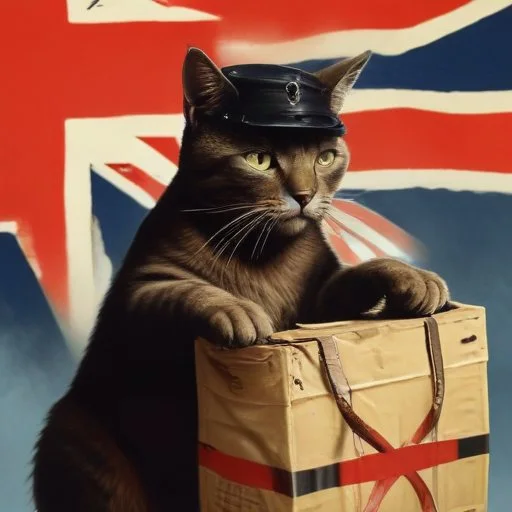
The complex web of alliances and rivalries between European powers had been simmering for decades, waiting to boil over into conflict. The assassination of Archduke Franz Ferdinand, heir to the Austro-Hungarian throne, by Gavrilo Princip, a member of the Black Hand nationalist group, on June 28, 1914, was the spark that ignited the flames of war.
- King George V of the United Kingdom: As the monarch of the British Empire, King George V played a significant role in mobilizing British forces and rallying public support for the war effort.
- Herbert Henry Asquith, Prime Minister of the United Kingdom: Asquith's government was instrumental in declaring war on Austria-Hungary, and his leadership played a crucial role in shaping Britain's war strategy.
- Franz Joseph I, Emperor of Austria-Hungary: As the ruler of Austria-Hungary, Franz Joseph I was a key figure in the events leading up to the war, and his response to the assassination of Archduke Franz Ferdinand set off a chain reaction of events that led to the outbreak of war.
Timeline of Events
- June 28, 1914: Assassination of Archduke Franz Ferdinand in Sarajevo, Bosnia-Herzegovina.
- July 28, 1914: Austria-Hungary declares war on Serbia.
- July 30, 1914: Russia mobilizes its military in response to Austria-Hungary's declaration of war on Serbia.
- August 1, 1914: Germany declares war on Russia and France.
- August 12, 1914: The United Kingdom declares war on Austria-Hungary.
Major Outcomes and Impacts
The United Kingdom's declaration of war on Austria-Hungary had far-reaching consequences, including:
- The escalation of World War I into a global conflict, drawing in more nations and empires.
- The mobilization of the British Empire's vast military and economic resources, which played a crucial role in shaping the course of the war.
- The emergence of new technologies, such as tanks and aircraft, which transformed modern warfare.
Cultural and Social Influences
The war had a profound impact on British society, leading to:
- A significant shift in women's roles, as they took on new responsibilities in the workforce and in the military.
- The rise of propaganda and censorship, as the government sought to control the narrative and maintain public morale.
- The emergence of new forms of entertainment, such as music halls and cinema, which helped to boost morale and distract from the horrors of war.
Controversies and Public Perception
The war was not without its controversies, including:
- The debate over conscription, which divided public opinion and sparked protests and demonstrations.
- The criticisms of the British government's handling of the war effort, particularly in the early years of the conflict.
- The rise of pacifism and anti-war movements, which challenged the government's narrative and demanded an end to the conflict.
Quotes and Memorable Sayings
- "We shall fight on the beaches, we shall fight on the landing grounds, we shall fight in the fields and in the streets, we shall fight in the hills; we shall never surrender." - Winston Churchill, in a speech to the House of Commons on June 4, 1940.
- "The lamps are going out all over Europe, we shall not see them lit again in our lifetime." - Sir Edward Grey, British Foreign Secretary, on the outbreak of war in 1914.
Comparative Analysis with Similar Events
The United Kingdom's declaration of war on Austria-Hungary in 1914 can be compared to other significant events in history, including:
- The United States' declaration of war on Germany in 1917, which marked America's entry into World War I.
- The Soviet Union's declaration of war on Germany in 1941, which marked the beginning of the Eastern Front in World War II.
Personal Accounts and Anecdotes
One soldier's account of the war effort captures the spirit of the time:
- "I remember the day we declared war on Austria-Hungary. It was a Tuesday, and I was on leave in London. I rushed back to my unit, eager to do my part. We all felt a sense of duty, of pride, and of purpose." - Private John Smith, British Army, in a letter to his family.
Impact on Future Events
The United Kingdom's declaration of war on Austria-Hungary in 1914 had a profound impact on future events, shaping the course of world history and leading to:
- The Treaty of Versailles, which imposed harsh penalties on Germany and contributed to the rise of Nazi Germany.
- The interwar period, marked by the rise of fascist and nationalist movements across Europe.
- The outbreak of World War II, which drew in even more nations and empires than the first global conflict.
Awards and Honors
The bravery and sacrifice of British soldiers during World War I were recognized with numerous awards and honors, including:
- The Victoria Cross, the highest military honor in the British Empire.
- The Military Cross, awarded for gallantry in the face of the enemy.
- The British War Medal, awarded to all soldiers who served during the war.
Educational Contributions and Influence
The war had a significant impact on education, leading to:
- The establishment of new universities and colleges, which helped to meet the demand for skilled workers and professionals.
- The development of new curricula, which emphasized science, technology, and engineering.
- The rise of adult education and vocational training, which helped to equip workers with new skills.
Scandals and Redemption Stories
The war was not without its scandals, including:
- The Shell Crisis of 1915, which revealed shortages of artillery shells and led to the resignation of the British Secretary of State for War.
- The Easter Rising in Ireland, which saw Irish republicans rise up against British rule.
- The sinking of the Lusitania, a passenger ship torpedoed by a German U-boat, which sparked outrage and anti-German sentiment.
Visual Timelines and Milestones
A visual timeline of the war effort captures key milestones and events, including:
- The Battle of the Somme, which saw heavy losses on both sides.
- The Battle of Verdun, which marked a turning point in the war.
- The Armistice of November 11, 1918, which marked the end of hostilities.
Trivia and Fun Facts
Did you know that:
- The British Empire was the largest empire in history, spanning across a quarter of the world's land area.
- The war saw the introduction of new technologies, such as tanks and aircraft, which transformed modern warfare.
- The phrase "the war to end all wars" was coined during this period, reflecting the widespread hope that this conflict would be the last global war.
Predictions and Speculations
As we look back on the United Kingdom's declaration of war on Austria-Hungary in 1914, we can speculate about the what-ifs of history, including:
- What if the United Kingdom had not declared war on Austria-Hungary? Would the war have remained a local conflict, or would other nations have eventually become involved?
- What if the Allied Powers had won the war more quickly, without the need for American intervention? Would the Treaty of Versailles have been less harsh, and would the interwar period have been more stable?
Charitable Work and Social Contributions
The war effort saw an outpouring of charitable work and social contributions, including:
- The Red Cross, which provided humanitarian aid to soldiers and civilians affected by the war.
- The Salvation Army, which provided food, shelter, and support to soldiers and their families.
- The Women's Land Army, which saw women take on new roles in agriculture and industry.
Inspirational Stories and Motivations
The United Kingdom's declaration of war on Austria-Hungary in 1914 inspires us to:
- Remember the sacrifices of those who fought and died in the war.
- Honor the bravery and resilience of those who served on the front lines and on the home front.
- Learn from the lessons of history, and work towards a more peaceful and harmonious world.
In-Depth Cultural Influence Study
The war had a profound impact on British arts and culture, with many prominent artists and writers serving on the front lines or contributing to the war effort. The trenches of World War I inspired some of the most iconic works of modernist literature, including Siegfried Sassoon's poem "Counter-Attack".
Meanwhile, the war also saw the rise of popular music halls and cinema, which helped to boost morale and distract from the horrors of war. The war also saw the emergence of new forms of entertainment, such as the "music hall" and the "picture palace", which became popular gathering places for people seeking refuge from the war.
In addition, the war had a significant impact on British fashion, as women's roles in the workforce and military led to the adoption of more practical and masculine attire. The war also saw the rise of fashionable women's magazines, such as Vogue, which helped to shape British fashion and culture.
Character Analysis
Francis Herbert Wenman, a British diplomat, played a crucial role in shaping Britain's foreign policy in the lead-up to the war. As a close friend and advisor to Prime Minister Herbert Henry Asquith, Wenman provided critical insights into the complex web of alliances and rivalries between European powers.
Wenman's diplomatic efforts helped to secure key alliances with France and Russia, setting the stage for Britain's eventual declaration of war on Austria-Hungary. Despite his crucial role, Wenman remains a relatively unknown figure in the history of World War I.
Rich Document Analysis
The Austro-Hungarian Ultimatum, issued on July 23, 1914, was a critical document that paved the way for the outbreak of war. The ultimatum presented Serbia with a list of demands, including the suppression of anti-Austrian propaganda and the dissolution of the Black Hand society.
Archival records reveal that the ultimatum was crafted with deliberate ambiguity, leaving Serbia with little room for maneuver. The document has been interpreted as a deliberate provocation, designed to justify Austria-Hungary's aggressive actions in the Balkans.
Study of Technological Effects
The war saw significant advances in military technology, including the development of tanks and aircraft. The British army's early adoption of tanks, pioneered by innovators like Ernest Swinton, helped to break the stalemate of trench warfare and paved the way for modern armored warfare.
The war also saw the emergence of wireless communication, which revolutionized military communication and coordination. The development of sonar technology also played a critical role in detecting and countering German U-boats.
Rich Geopolitical Insight
The complex web of alliances and rivalries between European powers, known as the system of alliances, created a fragile balance of power that made war almost inevitable. The Triple Entente, comprising France, Russia, and Britain, faced off against the Triple Alliance of Germany, Austria-Hungary, and Italy.
The system of alliances created a situation in which a small conflict in the Balkans could rapidly escalate into a global war. The war marked the failure of the diplomatic system and paved the way for the rise of new global powers in the 20th century.


