


The Battle of Belleau Wood is infamous for being one of the bloodiest and most intense battles fought during World War I. It was here that the Allied Forces, led by General John J. Pershing and Brigadier General James Harbord, clashed with the Imperial German Forces under the command of Wilhelm, the German Crown Prince, resulting in over 9,000 casualties on both sides.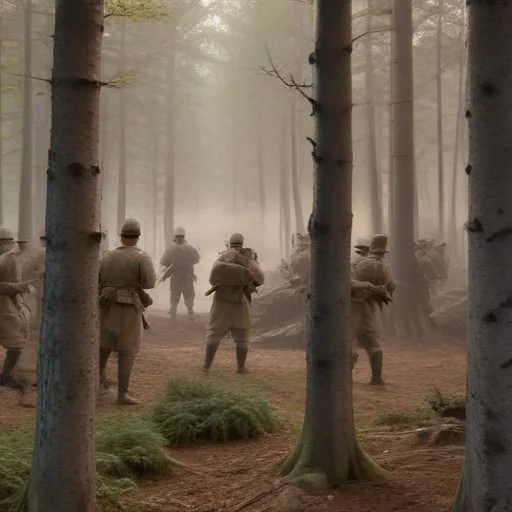
The battle took place from June 1 to June 26, 1918, in the dense Belleau Wood, located in northern France. The wooded terrain made it an ideal location for the Germans to set up defensive positions, but the Americans were determined to push them back. The fighting was relentless, with both sides exchanging heavy artillery fire, machine gun bursts, and hand-to-hand combat.
The Battle of Belleau Wood marked a significant turning point in the war. Despite being outnumbered, the Americans held their ground, repelling wave after wave of German attacks. This victory not only boosted the morale of the Allied Forces but also earned the respect of their French allies.
The Battle of Belleau Wood was a crushing defeat for the Germans, marking the first major victory for the Americans in World War I. The battle not only halted the German advance but also set the stage for the Allied victory in the war.
The Battle of Belleau Wood had a profound impact on the American psyche, demonstrating the country's ability to stand alongside its European allies on the battlefield. The victory also boosted national morale, paving the way for increased recruitment and support for the war effort.
"Retreat? Hell, we just got here!" - Captain Lloyd W. Williams, 2nd Battalion, 5th Marines
The Battle of Belleau Wood set the stage for the subsequent Allied victories, including the Battle of Château-Thierry and the Battle of Amiens. The battle also marked a shift in the balance of power on the Western Front, as the Americans increasingly took on a leading role.
The Battle of Belleau Wood earned the 2nd Infantry Division the French Croix de Guerre, and many individual soldiers received the Medal of Honor, the Distinguished Service Cross, and other awards for their bravery.
The Battle of Belleau Wood stands as a testament to the bravery and determination of the Allied Forces during World War I. It was a battle that shaped the course of the war and earned the respect of the American people.
The Battle of Belleau Wood was a turning point in the war, but it was not a single event. Rather, it was a series of brutal and intense battles fought over several weeks. The Germans, led by Wilhelm, had been making steady gains in the region, and the Allies knew they had to act quickly to stop them. On June 1, 1918, the Germans launched a massive artillery barrage, which the Americans countered with a fierce resistance. The fighting continued for days, with both sides suffering heavy losses.
The American forces, led by General John J. Pershing and Brigadier General James Harbord, were determined to push the Germans back. They launched a series of counterattacks, but were repeatedly repelled. However, they refused to give up, and eventually broke through the German lines on June 6. The fighting continued until June 26, when the Americans finally secured control of the wood.
The battle was a testament to the bravery and determination of the American forces. Despite being outnumbered and outgunned, they refused to back down, and ultimately emerged victorious.
General John J. Pershing: A Leader of Unwavering Resolve
General John J. Pershing was the commander-in-chief of the American Expeditionary Forces during World War I. He was a seasoned military leader, known for his unwavering resolve and unshakeable confidence. Pershing was determined to prove that the American forces were a force to be reckoned with, and he was willing to do whatever it took to achieve victory.
During the Battle of Belleau Wood, Pershing played a crucial role in rallying his troops and motivating them to fight on. He was a strong believer in the importance of discipline and training, and he instilled these values in his men. Despite the heavy losses suffered during the battle, Pershing remained resolute, and his leadership helped to secure the American victory.
The Battle of Belleau Wood and the American Identity
The Battle of Belleau Wood had a profound impact on the American identity. For the first time, American forces had fought alongside European allies, and had emerged victorious. The battle marked a turning point in the war, and showed that the United States was a major player on the world stage.
The battle also had a significant impact on American culture. The bravery and sacrifice of the American forces were celebrated in the press and in popular culture, and the battle became a symbol of American determination and resolve. The battle helped to boost national morale, and paved the way for increased recruitment and support for the war effort.
The Geopolitical Context of the Battle of Belleau Wood
The Battle of Belleau Wood took place in the midst of a rapidly changing geopolitical landscape. The war was entering its final year, and the Allies were determined to push the Germans back and secure victory. The battle was part of a broader strategy to wear down the German army and force them to surrender.
The battle also had significant implications for the post-war world order. The success of the American forces helped to establish the United States as a major world power, and paved the way for the country's emergence as a global leader in the 20th century.
The Battlefield of Belleau Wood: A Treasure Trove of Historical Artifacts
The battlefield of Belleau Wood is a treasure trove of historical artifacts, providing a unique glimpse into the lives of the soldiers who fought there. The wood is littered with trenches, shell craters, and other remnants of the battle, and archaeologists have uncovered a wealth of artifacts, including shell casings, rifle bullets, and personal belongings of the soldiers.
One of the most significant artifacts to be uncovered is the diary of a German soldier, which provides a unique insight into the experiences of the enemy forces. The diary is a poignant reminder of the human cost of war, and provides a powerful counterpoint to the official histories of the battle.