


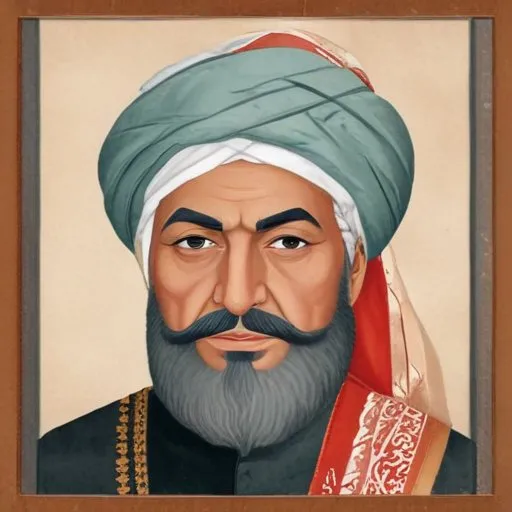
Shah of Persia who ruled from 1588 to 1629, known for his military campaigns, administrative reforms, and cultural achievements, including the development of Isfahan as a capital city.
Abbas I of Persia, also known as Abbas the Great, is renowned for transforming his kingdom into a glorious empire that rivaled the greatest civilizations of the ancient world. He is famously credited with establishing Isfahan as the capital of Persia, a move that would shape the country's architectural, cultural, and economic landscape for centuries to come.
Born in 1557, Abbas I was the fifth ruler of the Safavid dynasty, a Shia Muslim empire that dominated Persia from 1501 to 1736. Upon ascending to the throne in 1588, Abbas I set out to reform and strengthen his kingdom, which had been weakened by internal power struggles and foreign invasions.
Through a series of military campaigns, Abbas I expanded the Safavid Empire, conquering territories in modern-day Turkey, Iraq, and Afghanistan. He also implemented a range of reforms, including the creation of a standing army, the promotion of trade and commerce, and the development of a new administrative system.
One of Abbas I's most enduring legacies is the city of Isfahan, which he transformed into a stunning example of Persian architecture. The city's majestic mosques, palaces, and public squares, including the iconic Naqsh-e Jahan Square, continue to inspire wonder and awe in visitors from around the world.
Abbas I's architectural innovations extended beyond Isfahan, as he commissioned numerous public works projects across the empire, including roads, bridges, and caravanserais. His commitment to urban planning and design helped to establish Persia as a center of cultural and economic excellence.
Under Abbas I's leadership, Persia experienced a period of rapid economic growth, fueled by the expansion of trade and commerce. The empire's strategic location on the Silk Road, a network of ancient trade routes, enabled it to become a hub for merchants and traders from Europe, Asia, and Africa.
The growth of international trade led to a significant increase in revenue, which Abbas I invested in public infrastructure, the arts, and education. The empire's financial prosperity also enabled the ruler to attract scholars, artists, and intellectuals from across the Islamic world, further enhancing Persia's cultural and intellectual reputation.
Abbas I was a devout Shia Muslim and a patron of scholarship and learning. He encouraged the development of Islamic philosophy, particularly the school of thought known as Illuminationism, which emphasized the pursuit of spiritual knowledge and enlightenment.
The ruler's philosophical inclinations are reflected in his architectural legacy, as many of his buildings feature intricate designs and calligraphy that reflect the harmony between faith and reason.
Abbas I's legacy extends far beyond his own time and empire. His architectural innovations, cultural achievements, and economic reforms have inspired generations of leaders, scholars, and artists in the Islamic world and beyond.
Today, Persia's rich cultural heritage is a testament to the enduring power of Abbas I's vision, which continues to shape the country's identity and inform its relationships with the wider world.
Abbas I's reign marked the zenith of the Safavid Empire, a period of unparalleled cultural, economic, and political growth that elevated Persia to the rank of a global power.
As a ruler, Abbas I embodied the ideals of wisdom, justice, and compassion, earning him a revered place in Persian history and a lasting impact on the development of Islamic civilization.
Born in 1772
The second ruler of the Qajar dynasty, he's known for his military campaigns, administrative reforms, and cultural achievements, including the development of Persian literature and art. He also established Tehran as the capital of Iran.
Born in 1898
The last ruler of the Qajar dynasty, he's known for his attempts to modernize Persia and his country's tumultuous relationship with European powers during his reign.
