


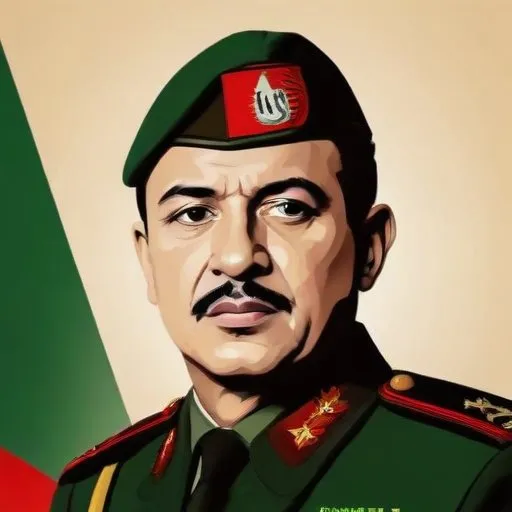
The 5th President of Algeria, a key figure in the country's struggle for independence and a dominant force in its politics for over two decades, known for his role in ending the country's civil war.
Abdelaziz Bouteflika, the seventh President of Algeria, left an indelible mark on the country's politics, serving for nearly two decades and overseeing significant transformations in the nation's history. He is perhaps best known for his role in ending the Algerian Civil War in 2002, a feat that cemented his position as a dominant figure in Algerian politics.
Born on March 2, 1937, in Oujda, Morocco, Bouteflika was the son of Mansouria Ghezlaoui and Ahmed Bouteflika from Tlemcen, Algeria. He came from a large family, with three half-sisters and four brothers. Bouteflika's early life was shaped by his experiences during the Algerian War, which sparked his interest in politics and diplomacy.
Bouteflika's presidency, which spanned from 1999 to 2019, was marked by significant accomplishments, including the end of the Algerian Civil War and the lifting of emergency rule in 2011. However, his later years in office were marred by protests and controversy, ultimately leading to his resignation in 2019.
Bouteflika's presidency was not without controversy. He was criticized for his authoritarian rule, and allegations of corruption surrounded his administration. In 2013, he suffered a stroke, which led to concerns about his health and ability to lead the country.
Bouteflika's legacy continues to shape Algerian politics and society. His efforts to end the civil war and promote national reconciliation have had a lasting impact on the country's development. However, his authoritarian rule and allegations of corruption have also left a more complex and nuanced legacy.
Bouteflika's life and presidency are deeply intertwined with Algeria's complex history. From the Algerian War to the Arab Spring, he navigated the country through tumultuous times, leaving behind a legacy that is both admired and criticized.
Abdelaziz Bouteflika's life was a testament to the complexities of Algerian politics and the enduring legacy of a nation's leader. Despite controversies and criticisms, his impact on Algeria's history remains significant, shaping the country's future for generations to come.
Born in 1916
Led Algeria to independence from France, serving as the country's first president and playing a key role in the African independence movement. He's known for his strong anti-colonial stance and socialist policies.
85 Years Old
The 4th President of Algeria, a military officer who ruled the country from 1994 to 1999, known for his efforts to end the Algerian Civil War and restore stability to the nation.
80 Years Old
The 8th President of Algeria, serving since 2019, known for his efforts to reform the country's political and economic systems, and for his role in navigating the country through a period of significant social unrest.
Born in 1916
A French lawyer and politician who served as the 21st President of France, known for his socialist policies and role in shaping the European Union. He's also remembered for his controversial past and complex personality.
93 Years Old
A French military officer and statesman who served as President of France from 1995 to 2007, known for his opposition to the US-led invasion of Iraq and his efforts to strengthen the European Union.
71 Years Old
The 23rd President of France, a lawyer-turned-politician who led the country from 2007 to 2012, known for his efforts to reform the EU and his controversial domestic policies.
