


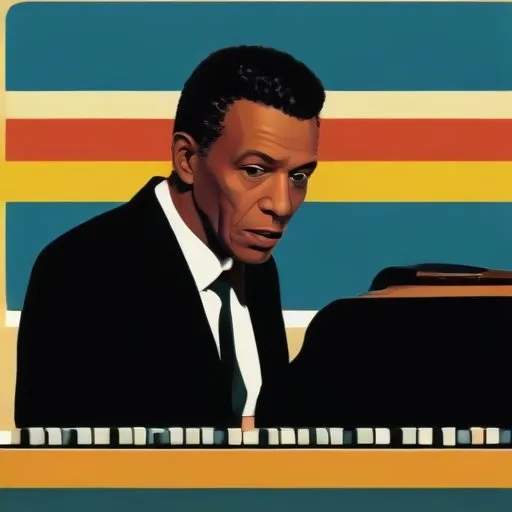
A renowned jazz pianist and composer, blending African and Western musical traditions to create a unique sound, inspiring generations of musicians.
Abdullah Ibrahim, formerly known as Dollar Brand, is a South African pianist and composer renowned for his unique blend of traditional African songs, gospel, ragas, jazz, and Western styles, earning him the title of the leading figure in the subgenre of Cape jazz. His iconic piece, "Mannenberg," has become an anti-apartheid anthem, cementing his place in the annals of jazz history.
Born Adolph Johannes Brand on October 9, 1934, in Cape Town, South Africa, Ibrahim was exposed to a rich cultural heritage that would shape his music. His mother, a church pianist, introduced him to the sounds of the African Methodist Episcopal Church, while his youth in the multicultural port areas of Cape Town acquainted him with marabi, mbaqanga, and American jazz. He began piano lessons at the age of seven and made his professional debut at 15.
In the late 1950s, Ibrahim was part of the influential Jazz Epistles group, alongside saxophonists Kippie Moeketsi, in Sophiatown. However, as the apartheid era intensified, Ibrahim fled to New York City in the 1960s, where he remained in exile until the early 1990s. During this period, he collaborated with jazz legends such as Max Roach, Carlos Ward, and Randy Weston, and toured extensively around the world.
Ibrahim's music reflects the eclectic influences of his childhood, from traditional African songs to American jazz. Thelonious Monk and Duke Ellington are notable influences on his work, which often features complex harmonies and rhythms. His unique Cape jazz style has been praised for its ability to blend seemingly disparate elements into a cohesive and captivating sound.
Ibrahim is married to jazz singer Sathima Bea Benjamin, with whom he has two children, including the New York underground rapper Jean Grae. Throughout his career, he has collaborated with a variety of musicians, from classical orchestras in Europe to renowned jazz artists.
Ibrahim's contributions to jazz have been recognized with numerous awards and accolades. He has won several South African Music Awards, and his album, "African Piano," was nominated for a Grammy Award. Ibrahim's influence on modern jazz is undeniable, and his legacy continues to inspire new generations of musicians.
"Music is the only universal language, and it can heal and unite people across cultures and borders."
Abdullah Ibrahim's remarkable career serves as a testament to the power of music to transcend boundaries and inspire generations. As a pioneer of Cape jazz, he continues to leave an indelible mark on the world of jazz, ensuring his legacy as a true maestro of his craft.
87 Years Old
A legendary South African jazz master and anti-apartheid activist, known for his soulful trumpet playing and iconic songs like "Grazing in the Grass" and "Bring Him Back Home".
94 Years Old
A legendary singer-songwriter and actress who used her powerful voice to fight against apartheid and racism, becoming a symbol of hope and freedom for many.
Born in 1918
A South African lawyer and politician who fought against apartheid, becoming the country's first black president and a symbol of racial reconciliation, earning a Nobel Peace Prize. He's a beacon of hope and freedom.
Born in 1917
A leading figure in the fight against apartheid, he served as President of the African National Congress and played a crucial role in mobilizing international opposition to the racist regime.
Born in 1912
A leading figure in the fight against apartheid, he was a co-founder of the African National Congress and spent 25 years in prison for his activism. He played a key role in shaping South Africa's transition to democracy.
97 Years Old
A South African anti-apartheid activist who spent 26 years in prison, including 18 years on Robben Island with Nelson Mandela, fighting for racial equality and democracy.
Born in 1926
A Lithuanian-born South African revolutionary who fought against apartheid, leading the armed wing of the African National Congress and playing a key role in the country's transition to democracy.
