


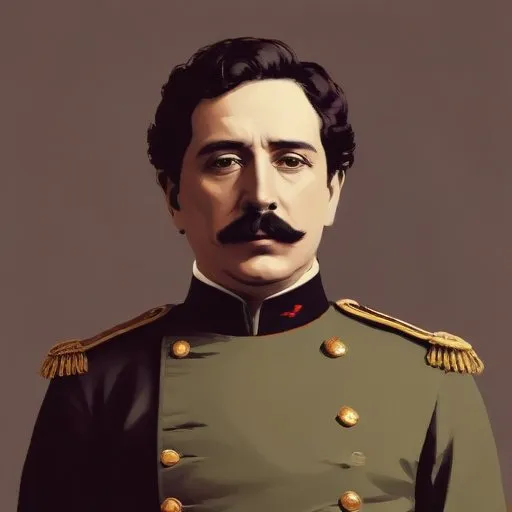
American Civil War general credited with firing the first shot at Fort Sumter, starting the war, and often mistakenly attributed with inventing baseball.
Abner Doubleday is famously known for firing the first shot in defense of Fort Sumter, sparking the American Civil War, and later playing a pivotal role in the Battle of Gettysburg. However, his legacy extends far beyond the battlefield, with contributions to the development of cable car railways and a notable presence in the Theosophical Society.
Born on June 26, 1819, in Ballston Spa, New York, Doubleday was the son of Ulysses F. Doubleday and Hester Donnelly. His family's rich history of military service and public office would shape his future endeavors. Doubleday's great-grandfather, Peter Donnelly, was a Minuteman, and his maternal grandfather, Thomas Donnelly, was a mounted messenger for George Washington.
Doubleday graduated from the United States Military Academy in 1842, 24th in a class of 56 cadets. He was commissioned a brevet second lieutenant in the 3rd U.S. Artillery and went on to serve in the Mexican-American War. During the American Civil War, Doubleday played a crucial role in the Battle of Fort Sumter, firing the first shot in defense of the fort. He later fought in the Battle of Gettysburg, where his leadership skills earned him recognition.
After the war, Doubleday moved to San Francisco, where he obtained a patent for the cable car railway system that still operates today. He also became a prominent member of the Theosophical Society, eventually serving as its president.
In 1908, 15 years after Doubleday's death, the Mills Commission declared that he had invented the game of baseball. However, Doubleday never made such a claim, and this assertion has been thoroughly debunked by baseball historians.
Abner Doubleday's contributions to the American Civil War, his innovative spirit, and his commitment to spiritual growth have left an indelible mark on American history. His legacy serves as a testament to the power of perseverance and dedication to one's passions.
Abner Doubleday's remarkable life was marked by bravery, innovation, and a deep commitment to his country. As we reflect on his legacy, we are reminded of the power of human spirit and the impact one person can have on the world.
Born in 1822
Led the Union Army to victory in the Civil War and later became President, known for issuing the Emancipation Proclamation and strengthening federal authority.
Born in 1807
Led the Confederate States Army during the American Civil War, surrendering to Union forces at Appomattox, marking the war's effective end.
Born in 1826
A Union general during the American Civil War, he's infamous for his cautious tactics and disagreements with President Lincoln, later becoming a governor of New Jersey.
Born in 1820
A renowned Union general during the American Civil War, he's infamous for his scorched earth tactics and march through the Confederacy, leaving destruction in his wake.
Born in 1808
The President of the Confederate States of America during the American Civil War, leading the secessionist movement and fighting to preserve slavery. He's infamous for his role in the Civil War and its aftermath.
Born in 1818
A Confederate general who played a pivotal role in the American Civil War, particularly during the Battle of Fort Sumter, and is often credited with starting the war.
Born in 1824
A Confederate general during the American Civil War, he's renowned for his unconventional tactics and bravery, earning him a legendary status among military historians.
Born in 1815
Led the Union Army to victory in the Battle of Gettysburg, a turning point in the American Civil War, and later oversaw the construction of the Washington Aqueduct.
