


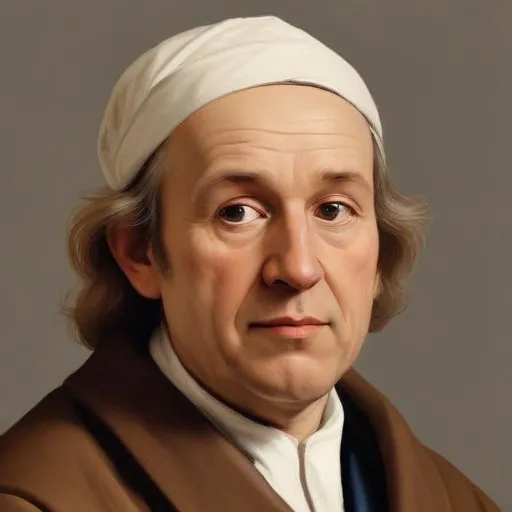
A Flemish painter of the 17th century, known for his genre scenes and landscapes, often depicting peasant life and rustic landscapes with great detail and realism.
Abraham Teniers, a 17th-century Flemish painter and engraver, is renowned for his captivating genre paintings that transport viewers to the picturesque villages, lively inns, and intriguing monkey scenes of his time. His works, characterized by meticulous attention to detail and a dash of humor, have captivated art enthusiasts for centuries.
Born on March 1, 1629, in Antwerp, Abraham Teniers was destined for greatness, being part of the esteemed Teniers family of artists. His father, David Teniers the Elder, was a prominent genre painter, and his brothers, David the Younger, Juliaan III, and Theodoor, were also accomplished painters in their own right.
Under the guidance of his father and older brother David, Abraham honed his skills, eventually becoming a master painter in his own right. In 1646, he was admitted as a wijnmeester (son of a master) in the Antwerp Guild of Saint Luke, a testament to his artistic prowess.
Abraham's talent did not go unnoticed, and he soon found favor at the court in Brussels. The art-loving Archduke Leopold Wilhelm of Austria, governor of the Southern Netherlands, appointed him as court painter, a position previously held by his brother David.
Teniers' paintings, often humorous and anecdotal, captured the essence of peasant life, rendering him a favorite among the aristocracy and middle class alike. His works, characterized by their vivid colors, intricate details, and sense of narrative, continue to delight audiences to this day.
Abraham Teniers is perhaps best known for his genre paintings, which fall into three broad categories: village scenes, inn scenes, and monkey scenes. His village scenes, depicting peasants dancing, playing music, or engaging in everyday activities, are imbued with a sense of community and warmth.
In his inn scenes, Teniers masterfully captures the revelry and camaraderie of peasants indulging in drink, food, and smoking, often accompanied by monkeys, which added a touch of whimsy to the proceedings.
Monkey scenes, a unique feature of Teniers' oeuvre, showcase his skill in depicting the mischievous primates in various settings, from stealing food to playing musical instruments, bringing a smile to the viewer's face.
Abraham Teniers' contributions to the art world are undeniable. His mastery of genre paintings not only influenced his contemporaries but also paved the way for future generations of artists. His works, now housed in esteemed institutions like the Prado Museum, continue to inspire and delight art enthusiasts worldwide.
As we reflect on Teniers' remarkable life and artistic achievements, we are reminded of the power of art to transport us to another time and place, to evoke emotions, and to spark the imagination.
Abraham Teniers may have left us on September 26, 1670, but his artistic legacy lives on, a testament to the power of creativity and innovation.
Born in 1577
A renowned Flemish painter and diplomat, famous for his vivid and emotive Baroque-style masterpieces, particularly his lush nudes and dramatic altarpieces.
Born in 1599
A renowned Flemish-English painter and etcher, famous for capturing the essence of 17th-century European aristocracy through his exquisite portraits, characterized by dramatic lighting and subtle emotional depth.
Born in 1610
A Flemish painter of everyday life and landscapes, capturing the charm of 17th-century Europe with vivid colors and detailed scenes.
Born in 1471
A Renaissance master of intricate woodcuts and engravings, known for precise and detailed depictions of nature and human form, influencing art and mathematics for centuries.
