


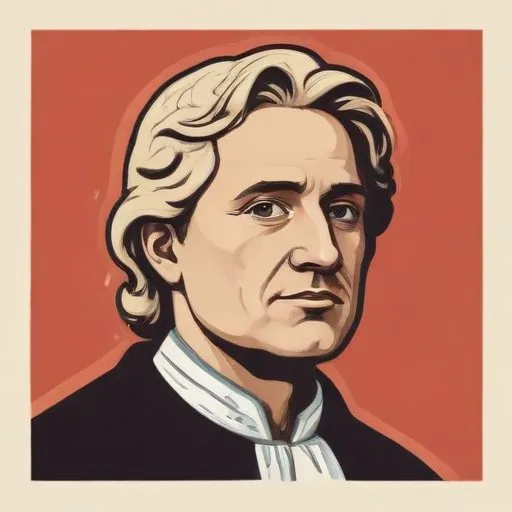
A 16th-century German physician and astrologer who wrote influential medical and astrological texts, including a treatise on the plague. His works were widely read and respected in his time.
Achilles Gasser was a German physician, astrologer, and humanistic scholar, born on November 3, 1505, in Lindau. He is renowned for his support of Copernicus and Rheticus, and his contributions to the fields of medicine, astronomy, and cartography.
Gasser's thirst for knowledge led him to study mathematics, history, and philosophy, as well as astronomy, in various universities across Europe, including Wittenberg, Vienna, Montpellier, and Avignon. He was a student under Johannes Sapidus in Slestat, where he laid the foundation for his future achievements.
In 1528, German cartographer Sebastian Mnster appealed to scientists across the Holy Roman Empire to assist him with his description of Germany. Gasser responded to this call and was later recognized by Mnster as a close collaborator for his cartography of the country. Gasser's connection with Rheticus, whose father Georg Iserin was executed on sorcery charges, led him to take over the practice in Feldkirch and teach Rheticus astrology, as well as help with his education.
In 1540, Rheticus printed the first published account of the Copernican heliocentric system, Narratio Prima, in Danzig. Gasser was among the first to receive a copy and promptly undertook a second edition in 1541, Basel, with his own introduction in the form of a letter to Georg Vogelin of Konstanz. This edition played a significant role in disseminating Copernicus' revolutionary ideas.
Gasser's contributions to the fields of medicine, astronomy, and cartography, as well as his support for Copernicus and Rheticus, have left an indelible mark on the scientific community. He was part of a humanist circle around Kaspar von Niedbruck, which aimed to recover monastic manuscripts, and his works continue to inspire scholars to this day.
Achilles Gasser's life and achievements are a testament to the power of curiosity, collaboration, and innovation, and his legacy continues to inspire and educate generations of scholars and scientists.
Born in 1514
A pioneering figure in the study of human anatomy, known for performing detailed dissections and creating accurate drawings of the body's inner workings, revolutionizing medical understanding.
Born in 1578
Discovered the circulatory system and described how blood flows through the body, revolutionizing understanding of human physiology.
Born in 1501
A 16th-century German physician and botanist who wrote a seminal book on medicinal plants, De Historia Stirpium, which described and illustrated over 400 plant species. His work laid the foundation for modern botany and pharmacology.
