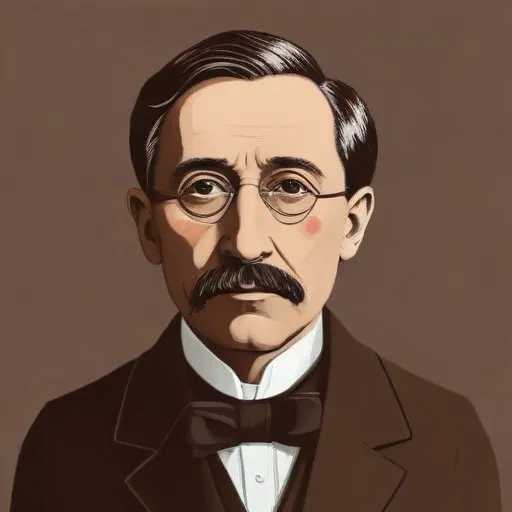
Adelbert von Chamisso: The Poet, Writer, and Botanist Extraordinaire
A Life of Literary and Scientific Pursuits
Adelbert von Chamisso is renowned for his pioneering contributions to the realms of poetry, literature, and botany. As a German poet, writer, and botanist, Chamisso left an indelible mark on the intellectual landscape of his time, leaving behind a legacy that continues to inspire and fascinate scholars and enthusiasts alike.
Early Life and Education
Born on January 30, 1781, at the Château de Boncourt in Ante, France, Chamisso was the son of Louis Marie, Count of Chamisso, and Anne Marie Gargam. Following the French Revolution, his family was forced to flee France, eventually settling in Berlin, Prussia. Chamisso's early life was marked by a lack of formal education, but he compensated for this through his own intense self-study, particularly in the fields of natural science.
Military Career and Literary Beginnings
In 1798, Chamisso entered the Prussian infantry regiment as an ensign, embarking on a military career that would last for several years. During this period, he also began to explore his passion for writing, publishing his first verses in the Berliner Musenalmanach, a literary journal he co-founded with Varnhagen von Ense in 1803.
Literary Contributions and Achievements
Chamisso's literary output was remarkable, with his poetry and short stories showcasing his mastery of language and depth of emotional insight. His most famous work, the novel "Peter Schlemihl," published in 1814, tells the tale of a man who sells his shadow to the devil, exploring themes of identity, morality, and the human condition. This work cemented Chamisso's reputation as a leading literary figure of his time.
Botanical Pursuits and Expeditions
In addition to his literary endeavors, Chamisso was an accomplished botanist, with a particular interest in the flora of the Pacific Islands. In 1815, he embarked on a scientific expedition to the Pacific Ocean, accompanying the Russian explorer Otto von Kotzebue on a voyage that lasted for three years. During this journey, Chamisso collected and cataloged numerous plant species, making significant contributions to the field of botany.
Legacy and Impact
Adelbert von Chamisso's legacy extends far beyond his own lifetime, with his work influencing generations of writers, poets, and scientists. His unique blend of literary and scientific pursuits has inspired countless individuals to explore the intersections between art and science. Today, Chamisso is remembered as a true polymath, whose contributions to literature, botany, and exploration continue to captivate and inspire us.
Key Works and Publications
- "Peter Schlemihl" (1814) - a novel exploring themes of identity and morality
- "Berliner Musenalmanach" (1803-1806) - a literary journal co-founded with Varnhagen von Ense
- "Reise um die Welt mit der Romanzoffischen Entdeckungs-Expedition" (1821) - an account of his Pacific expedition
Personal Life and Milestones
- 1790: Chamisso's family flees France due to the French Revolution
- 1798: Chamisso enters the Prussian infantry regiment as an ensign
- 1801: Chamisso becomes a lieutenant
- 1805: Chamisso's family returns to France, but he remains in Prussia
- 1815-1818: Chamisso participates in a scientific expedition to the Pacific Ocean
- 1838: Chamisso passes away on August 21st
FAQ
What was Adelbert von Chamissos contribution to botany?
Adelbert von Chamisso was a pioneer in the field of botany, discovering and describing many new plant species during his travels around the world. His work laid the foundation for modern botanical classification and taxonomy.
What was Adelbert von Chamissos literary career like?
Adelbert von Chamisso was a prolific writer, producing novels, poetry, and essays that explored themes of love, nature, and the human condition. His most famous work is the novel Peter Schlemihl, which tells the story of a man who sells his shadow to the devil.
What was Adelbert von Chamissos relationship with his native Germany?
Adelbert von Chamisso was deeply attached to his native Germany, and his work often reflected his love of the German countryside and culture. Despite his international travels, he remained deeply rooted in his German heritage.
What was Adelbert von Chamissos role in the scientific community?
Adelbert von Chamisso was a respected member of the scientific community, serving as a curator at the Berlin Botanical Museum and contributing to numerous scientific journals and publications.
What was Adelbert von Chamissos later life and legacy?
Adelbert von Chamissos later life was marked by personal struggles and financial difficulties, but he continued to write and work until his death. His legacy is that of a pioneering botanist and writer who explored the intersection of art and science.