


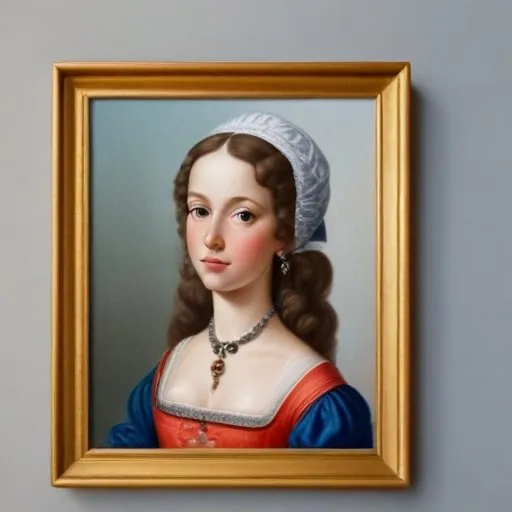
A pioneering female artist of 18th-century France, renowned for her exquisite miniature portraits and large-scale paintings of aristocrats and intellectuals. Her work showcased exceptional skill and attention to detail.
Adlade Labille-Guiard was a renowned French miniaturist and portrait painter, celebrated for her advocacy of women's rights to become accomplished artists. She was one of the first women to be admitted to the Royal Academy and the first female artist to establish a studio at the Louvre, paving the way for future generations of women artists.
Born on April 11, 1749, in Paris, Adlade Labille-Guiard was the daughter of Claude-Edme Labille, a haberdasher. Despite the societal norms of the 18th century, which deemed women incapable of following instruction alongside men, Labille-Guiard pursued her passion for art.
She began her training in miniature painting with oil painter François-Élie Vincent and later apprenticed with pastel master Quentin de la Tour until 1774. Her early work was exhibited at the Académie de Saint-Luc, showcasing her exceptional talent.
Labille-Guiard's artistic style was characterized by her mastery of miniatures, pastels, and oil paintings. Her work often featured delicate, intricate details and a keen sense of observation.
Her art was influenced by her childhood friend and later husband, François-André Vincent, who taught her oil painting techniques. Together, they shared a deep passion for art and supported each other's careers.
Adlade Labille-Guiard's pioneering spirit and artistic talent paved the way for future generations of women artists. Her admission to the Royal Academy and establishment of a studio at the Louvre set a precedent for women's involvement in the arts.
Her advocacy for women's rights to pursue careers in the arts helped to create a more inclusive and equitable environment for female artists. Today, Labille-Guiard is celebrated as a trailblazer, inspiration, and icon in the world of art.
Labille-Guiard married Louis-Nicolas Guiard in 1769, but the couple separated eight years later. She later married François-André Vincent in 1799, and the couple remained together until her death on April 24, 1803.
Throughout her life, Labille-Guiard remained dedicated to her art, continuing to produce exceptional works until her passing. Her legacy lives on, inspiring generations of artists and art lovers alike.
Born in 1755
The last queen of France before the French Revolution, known for her extravagance and mismanagement of the French economy, which contributed to the downfall of the monarchy.
Born in 1755
A prominent female artist of the 18th century, she was a portrait painter to European aristocracy, capturing the elegance and refinement of her subjects. Her works are celebrated for their beauty, charm, and historical significance.
Born in 1748
A French painter and illustrator who revolutionized Neoclassicism with his realistic and emotive works, creating iconic pieces like "Oath of the Horatii" and "Napoleon Crossing the Alps".
Born in 1732
A prolific Rococo painter and etcher, renowned for his delicate, whimsical, and often erotic works that capture the carefree spirit of 18th-century French aristocracy. His art often featured lush landscapes, gentle colors, and playful scenes of love and leisure.
Born in 1703
A prominent artist of the Rococo style, known for his delicate and ornate paintings, often depicting mythological and pastoral scenes, as well as designing sets for the Paris Opera.
Born in 1656
A prominent 18th-century French painter and academic, known for his exquisite portraits of European aristocracy, showcasing remarkable attention to detail and realism.
Born in 1725
A French painter and educator renowned for his sentimental and moralizing genre scenes, often depicting young women in domestic settings, which captivated 18th-century audiences.
