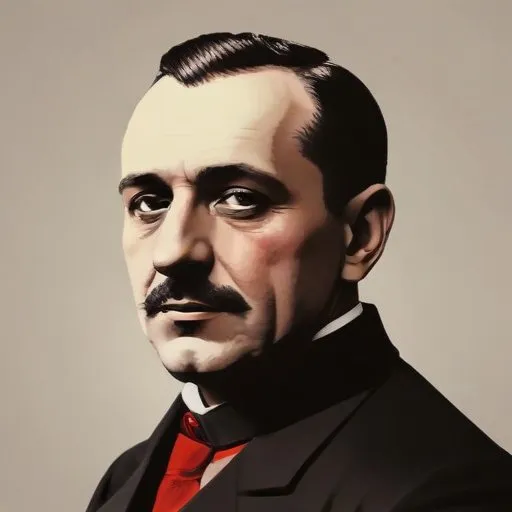
Adolf Eberle

Adolf Eberle

Adolf Eberle was born on January 11th, 1843

Full Name: Adolf Eberle
Place of Birth: Munich, Germany
Nationality: German
Occupation: Painter
Style: Realism
Notable Works: Genre Scenes
Career Span: 1865-1914
Influences: Munich School

A German Romantic painter, known for his dramatic and emotive landscapes, often featuring turbulent skies and rugged mountains. His works evoke a sense of awe and mystery.

Written by: Penelope Wildwood Penelope Wildwood

Adolf Eberle: The Master of Genre Painting

A legacy of Bavarian and Tyrolean Captivation

Adolf Eberle, a German painter, immersed himself in the world of genre painting, specializing in the vibrant lives of Bavarian and Tyrolean farmers and huntsmen. With a brush stroke of realism and a dash of whimsy, Eberle transported art lovers to the rolling hills and rustic charm of rural Germany and Austria.

Early Life and Training

Born in Munich on January 11, 1843, Eberle's creative journey began under the guidance of his father, Robert Eberle, also a painter. In 1860, he enrolled in the Academy of Fine Arts, Munich, where he honed his skills under the tutelage of Karl von Piloty. This seeds of this early training would soon sprout into a blooming career.

Rise to Prominence

The year 1861 marked a turning point with the creation of Pfndung der letzten Kuh (Mortgaging the Last Cow), a work that earned him recognition and critical acclaim. The painting's success can be attributed to its evocative portrayal of rural life, capturing the essence of struggle and perseverance.

Eberle's fascination with the Thirty Years War and the Seven Years War led him to explore the lives of soldiers, but it was his subsequent return to Bavarian and Tyrolean peasant life that truly showcased his artistic prowess. His masterpiece, Erster Rehbock (First Stag), exhibited at the 1879 international exposition in Munich, solidified his reputation as a master of genre painting.

  • Pfndung der letzten Kuh (1861) - Mortgaging the Last Cow
  • Erster Rehbock (1879) - First Stag
  • Feldschule in Wallensteins Lager (Field Instruction in Wallenstein's Camp)
  • Die verunglückte Musikprobe (Music Test Gone Wrong)
  • Der Hochzeitstag (Wedding Day)
  • Nach der Taufe (After the Baptism)
  • Zitherunterricht (Zither Lesson)
  • Das Tischgebet (Grace)
  • Verspätetes Mittagessen des heimgekehrten Försters (Forester's Late Lunch After Returning Home)

A Lasting Legacy

Adolf Eberle's artistic contributions continue to captivate audiences, with his works fetching notable prices at auctions. In 2007, Childhood Fun sold for $16,800 at Bonhams in San Francisco, while The Day's Bag fetched $7,500 at Christie's in London in 2012.

In 1952, Eberlestrae in the Solln neighborhood of Munich was named in his honor, a testament to his enduring influence on the art world. As we gaze upon his paintings, we are transported to a bygone era, one that Eberle masterfully captured with his brushstrokes of wonder.

Adolf Eberle's legacy is a poignant reminder that the beauty of rural life, when distilled through the lens of art, can transcend time and inspire generations to come.

Timeline
1845
Birth of Adolf Eberle
Adolf Eberle was born in Germany, eventually becoming a prominent painter.
1866
Studied Art in Munich
Adolf studied art in Munich, developing his skills as a painter and artist.
1874
Settled in Munich
Adolf settled in Munich, becoming a prominent figure in the citys artistic community.
1885
Exhibited at the Glaspalast
Adolfs work was exhibited at the Glaspalast in Munich, showcasing his talent to a broader audience.
1914
Death
Adolf passed away, leaving behind a legacy as a skilled and accomplished painter.
Adolf Eberle

Adolf Eberle Quiz

What style of painting is Adolf Eberle primarily associated with?

Score: 0/5
FAQ
What characterized Adolf Eberles painting style?
Adolf Eberles painting style was marked by its lyricism, sensitivity, and attention to detail. He was particularly known for his landscapes, still lifes, and portraits, which often featured subtle color palettes and delicate brushstrokes.
How did Adolf Eberles artistic training influence his work?
Adolf Eberles artistic training in Munich and Paris exposed him to various styles and techniques, including Impressionism and Realism. He incorporated these influences into his own unique approach, creating a distinctive visual language.
What themes did Adolf Eberle explore in his art?
Adolf Eberles art often explored themes of everyday life, nature, and the human experience. His paintings frequently featured tranquil landscapes, quiet domestic scenes, and introspective portraits, inviting viewers to contemplation and reflection.
How did Adolf Eberles work reflect his German heritage?
Adolf Eberles art was deeply rooted in his German heritage, drawing inspiration from the countrys rich cultural and artistic traditions. His work often incorporated elements of German Romanticism and Biedermeier-era aesthetics.
What is Adolf Eberles legacy in German art?
Adolf Eberles legacy in German art is that of a devoted craftsman and sensitive observer of life. His paintings continue to charm audiences with their beauty, subtlety, and emotional depth, earning him a place among the countrys most beloved artists.

Related People:

Lovis Corinth

Born in 1858

A German painter who blended Impressionism and Expressionism to create vibrant, emotive works that explored the human condition, often focusing on portraits and landscapes.

Otto Dix

Born in 1891

A German painter and illustrator renowned for his harsh, realistic depictions of Weimar Republic society and the brutality of World War I, often using distorted forms and vibrant colors.