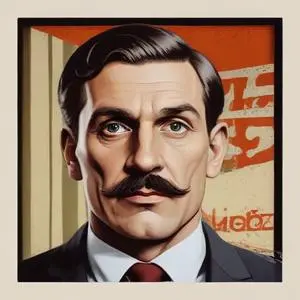
Otto Dix

Otto Dix

Otto Dix was born on December 2nd, 1891

Full Name: Wilhelm Heinrich Otto Dix
Nationality: German
Profession: Painter and illustrator
Art Movement: New Objectivity
Birth Year: 1891
Death Year: 1969
Birth Place: Gera, German Empire
Notable Works: Portrait of the Dancer Anita Berber

A German painter and illustrator renowned for his harsh, realistic depictions of Weimar Republic society and the brutality of World War I, often using distorted forms and vibrant colors.

Timeline
1891
Born in Gera
Otto Dix was born in Gera, German Empire.
1910
Began Artistic Career
Dix began his artistic career, initially focusing on Expressionism and Fauvism.
1920
Co-Founded Dresdner Sezession
Dix co-founded the Dresdner Sezession, a group of artists who sought to promote modern art in Dresden.
1933
Classification as Degenerate Artist
Dix was classified as a degenerate artist by the Nazi regime, and his work was removed from public display.
1969
Died in Singen
Otto Dix died in Singen, West Germany, leaving behind a legacy as a prominent German artist.
Otto Dix

Otto Dix Quiz

What style of art is Otto Dix known for?

Score: 0/5
FAQ
What was Otto Dixs contribution to German art?
Otto Dix was a prominent German painter and illustrator who made significant contributions to modern German art. He is known for his realistic and often provocative depictions of German society.
What were Otto Dixs views on German society?
Otto Dix was a critic of German society, particularly during the Weimar Republic. He saw his art as a way to comment on the social and political issues of his time.
What was Otto Dixs role in the New Objectivity movement?
Otto Dix was a leading figure in the New Objectivity movement, a art movement that emerged in Germany in the 1920s. The movement sought to reject the romanticism of Expressionism and instead focus on a more realistic and critical depiction of modern life.
How did Otto Dixs art reflect his views on German society?
Otto Dixs art reflected his views on German society by depicting the harsh realities of life in Germany during the Weimar Republic. His paintings often featured scenes of poverty, violence, and social unrest.
What was Otto Dixs legacy in modern German art?
Otto Dixs legacy in modern German art is that of a pioneering artist who helped to shape the course of modern German art. His work continues to be celebrated for its provocative and insightful commentary on German society.

Related People:

George Grosz

Born in 1893

A German painter and illustrator known for his biting satire and caricatures of Berlin's decadent society during the Weimar Republic, often depicting politicians and businessmen as grotesque, corrupt figures.

John Heartfield

Born in 1891

A pioneer of photomontage, creating provocative anti-Nazi and anti-fascist artworks that combined photography and collage to convey powerful political messages.

Käthe Kollwitz

Born in 1867

A pioneering artist who captured the human cost of war and poverty through powerful, emotive works, often featuring mothers and children. Her prints and sculptures continue to evoke strong emotions and spark social commentary.

Lyonel Feininger

Born in 1871

A German-American painter and illustrator who blended cubism and futurism to create vibrant, abstracted cityscapes and seascapes, influencing the development of modern art.

Franz Marc

Born in 1880

A German soldier-turned-painter who pioneered Expressionism, capturing the emotional essence of animals and landscapes in vibrant, abstracted forms. His work continues to inspire artists and art lovers alike.

August Macke

Born in 1887

A pioneering expressionist painter who captured the vibrant spirit of early 20th-century Europe through bold, colorful works that blended Fauvism and Cubism. His innovative style continues to inspire artists today.

Emil Nolde

Born in 1867

A pioneering Expressionist artist, known for vibrant, emotive paintings and prints that explored the human condition, often with a focus on spirituality and the natural world.