


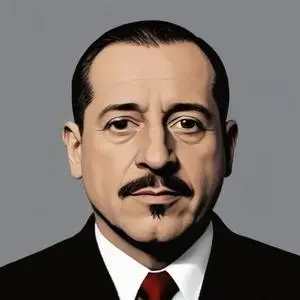
A pioneer of photomontage, creating provocative anti-Nazi and anti-fascist artworks that combined photography and collage to convey powerful political messages.
John Heartfield, a pioneering German visual artist, is renowned for his pioneering use of art as a powerful tool to confront and critique authoritarian regimes, particularly the Nazi party. Through his innovative photomontage technique, Heartfield created searing anti-fascist statements that still resonate today, making him one of the most influential artists of the 20th century.
Born Helmut Herzfeld on June 19, 1891, in Berlin-Schmargendorf, Germany, Heartfield's early life was marked by turmoil. His parents, Franz Herzfeld, a socialist writer, and Alice Stolzenburg, a textile worker and political activist, abandoned him and his siblings in the woods in 1899 after Franz was accused of blasphemy. The children were later taken in by an uncle in the small Austrian town of Aigen.
Heartfield's desire to challenge the status quo was evident from an early age. In 1908, he studied art at the Royal Bavarian Arts and Crafts School in Munich, where he was influenced by commercial designers Albert Weisgerber and Ludwig Hohlwein. However, it was during World War I that Heartfield's anglicized his name to protest against anti-British sentiment in Germany, a decision that reflected his burgeoning commitment to challenging authority.
In 1916, Heartfield, along with his brother Wieland and George Grosz, founded the Malik publishing house in Berlin. It was during this period that he and Grosz experimented with pasting pictures together, a technique that would later become known as photomontage. This innovative approach allowed Heartfield to create powerful, often satirical, images that critiqued the rising Nazi party and fascist ideology.
Heartfield's photomontages were designed to provoke and challenge the Nazi regime. His works often featured juxtaposed images, blending the mundane with the absurd, to highlight the contradictions and hypocrisies of fascist ideology. One of his most famous works, "Hurrah, the Butter is Finished!" (1935), depicts a swastika-emblazoned plate overflowing with garbage, satirizing the Nazi promise of prosperity.
In addition to his photomontages, Heartfield designed stage sets for prominent playwrights such as Bertolt Brecht and Erwin Piscator. He also created book jackets for authors like Upton Sinclair, further expanding his portfolio and cementing his status as a versatile artist.
John Heartfield's pioneering use of art as a political weapon has inspired generations of artists, designers, and activists. His work continues to resonate today, serving as a powerful reminder of the importance of challenging authority and promoting critical thinking. As a testament to his enduring influence, Heartfield's photomontages remain a powerful symbol of resistance against oppressive regimes.
John Heartfield's remarkable life and work continue to inspire artists, designers, and activists today, serving as a testament to the power of art to challenge and transform society.
Born in 1898
A pioneering playwright and poet who revolutionized theater with his epic style, blending politics and art to create socially conscious works that continue to influence contemporary drama.
Born in 1893
A pioneer of epic theater, he developed a politically engaged and experimental style of production that incorporated film, photography, and machinery, influencing the development of modern theater.
Born in 1900
A pioneering actress of German theater, known for her powerful performances and her marriage to Bertolt Brecht, with whom she co-founded the Berliner Ensemble.
Born in 1890
A German-Swedish journalist and author who wrote satirical and humorous articles, novels, and poems, critiquing politics and society during the Weimar Republic era.
Born in 1893
A German painter and illustrator known for his biting satire and caricatures of Berlin's decadent society during the Weimar Republic, often depicting politicians and businessmen as grotesque, corrupt figures.
Born in 1878
A German literary figure who wrote provocative plays and poetry that critiqued societal norms and authority, inspiring anarchist and anti-war movements.
Born in 1867
A pioneering artist who captured the human cost of war and poverty through powerful, emotive works, often featuring mothers and children. Her prints and sculptures continue to evoke strong emotions and spark social commentary.
Born in 1889
A pioneering artist of the Dada movement, known for creating innovative photomontages that challenged societal norms and blurred the lines between art and politics.
