


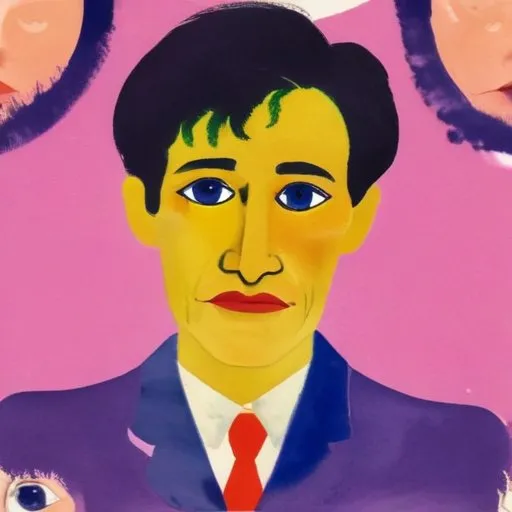
A pioneering Expressionist artist, known for vibrant, emotive paintings and prints that explored the human condition, often with a focus on spirituality and the natural world.
Emil Nolde, a German-Danish painter and printmaker, is renowned for his bold, vibrant, and expressive works of art that epitomize the essence of Expressionism. With his innovative use of color and brushwork, Nolde created a visual language that continues to inspire and influence artists to this day.
Born Hans Emil Hansen on August 7, 1867, in Southern Jutland, Denmark, Nolde grew up on a farm with his devout Protestant parents and three brothers. However, it was clear that he was destined for a life beyond the fields, and his artistic inclinations led him to pursue a career in woodcarving and illustration.
In 1889, Nolde gained entrance into the School of Applied Arts in Karlsruhe, marking the beginning of his artistic journey. He worked as a drawing instructor in St. Gallen, Switzerland, from 1892 to 1898, before deciding to pursue his dream of becoming an independent artist. Although he was rejected by the Munich Academy of Fine Arts in 1898, Nolde persevered, taking private painting lessons and eventually finding his unique voice.
Nolde's art is characterized by its bold, vibrant colors and expressive brushwork, which gave his paintings a sense of energy and emotion. His palette often featured golden yellows and deep reds, imbuing his works with a sense of luminosity and depth. This distinctive style earned him recognition as one of the first Expressionists and a pioneer of 20th-century oil painting and watercolor.
Nolde's intense preoccupation with flowers reflected his deep admiration for Vincent van Gogh's work. His floral watercolors are a testament to this fascination, showcasing his ability to capture the intricate beauty and vibrancy of nature.
Despite his artistic genius, Nolde's life was not without controversy. He was a staunch supporter of Nazi Germany and held racist and anti-Semitic views, which led to his inclusion in the infamous Entartete Kunst (Degenerate Art) exhibition in 1937. This dichotomy between his artistic innovations and problematic beliefs continues to spark debate and discussion among art historians and enthusiasts.
Nolde's contributions to modern art are undeniable. His bold colors, expressive brushwork, and innovative approach to watercolor and oil painting have inspired generations of artists. Despite his controversial beliefs, Nolde's art remains a testament to the power of creativity and the enduring legacy of Expressionism.
Emil Nolde's artistic legacy continues to captivate audiences worldwide, inviting us to explore the complexities of his life and art while celebrating the vibrancy and emotion of his masterpieces.
Born in 1863
A Norwegian painter who created iconic, emotionally charged works that explored the human experience, including the famous piece "The Scream".
Born in 1890
Austrian soldier and painter who captured the intensity of human emotion through bold, expressive portraits and landscapes, often exploring themes of death, sexuality, and the human condition.
Born in 1886
Austrian-Swiss artist who pioneered Expressionism through vibrant, emotive paintings and plays that explored the human condition. His works often featured distorted forms and bold colors.
Born in 1880
A German soldier-turned-painter who pioneered Expressionism, capturing the emotional essence of animals and landscapes in vibrant, abstracted forms. His work continues to inspire artists and art lovers alike.
Born in 1887
A pioneering expressionist painter who captured the vibrant spirit of early 20th-century Europe through bold, colorful works that blended Fauvism and Cubism. His innovative style continues to inspire artists today.
Born in 1866
A pioneer of abstract art, creating vibrant, expressive works that explored the emotional and spiritual properties of color, and wrote extensively on art theory.
Born in 1879
A Swiss-German artist and educator who blended fantasy and reality in his vibrant, whimsical paintings, exploring the emotional and expressive qualities of color. His unique style has inspired generations of artists.
Born in 1871
A German-American painter and illustrator who blended cubism and futurism to create vibrant, abstracted cityscapes and seascapes, influencing the development of modern art.
