


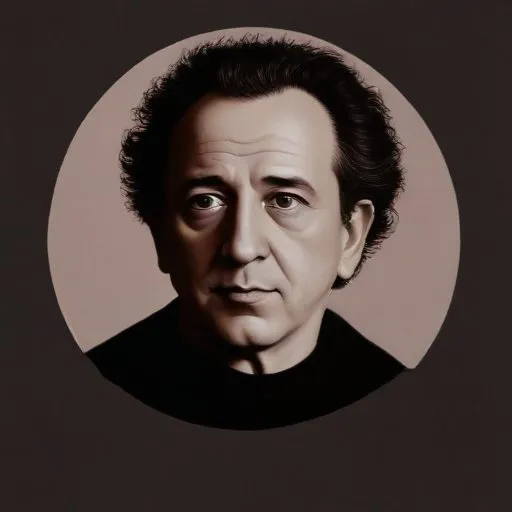
A pioneer of Abstract Expressionism, creating vibrant, symbolic paintings and sculptures that explored the subconscious and emotional depths of human experience.
Renowned for his bold, expressive paintings that blended surrealism and formalist abstraction, Adolph Gottlieb was a pioneering figure in the Abstract Expressionist movement. As one of the first-generation Abstract Expressionists, Gottlieb's works continue to inspire and influence artists to this day.
Born on March 14, 1903, in New York City to Jewish parents, Gottlieb's artistic journey began at a young age. He studied at the Art Students League of New York from 1920 to 1921, before leaving high school at 17 to work on a merchant ship and travel to Europe.
During his year-long sojourn in Europe, Gottlieb immersed himself in the art and culture of France and Germany, visiting the Louvre Museum daily and auditing classes at the Académie de la Grande Chaumière. He also spent time traveling in Austria, Czechoslovakia, and other parts of Central Europe, visiting museums and art galleries.
During this nine-month period, Gottlieb's style transformed, combining elements of surrealism and formalist abstraction. He began to use objects and scenes from his desert surroundings, creating a unique and innovative style that would come to define his oeuvre.
In 1935, Gottlieb joined a group of artists known as The Ten, which included Ben-Zion, Joseph Solman, Ilya Bolotowsky, Ralph Rosenborg, Louis Harris, Mark Rothko, and Louis Schanker. Together, they exhibited their works until 1940, shaping the development of Abstract Expressionism.
Gottlieb's friendship with fellow artists, such as Barnett Newman, Mark Rothko, and David Smith, played a significant role in his artistic growth. These relationships fostered a sense of community and experimentation, allowing Gottlieb to explore new ideas and techniques.
Gottlieb's artistic career spanned over four decades, during which he created numerous iconic works, including the "Pictograph" series and the "Burst" series. These works showcased his unique ability to balance spontaneity and control, creating bold, expressive paintings that continue to captivate audiences.
Throughout his career, Gottlieb received numerous awards and honors, including the Corcoran Gold Medal in 1963 and a Guggenheim Fellowship in 1967. His works are held in high esteem, with pieces featured in prominent museums and private collections worldwide.
Adolph Gottlieb's pioneering work in Abstract Expressionism continues to inspire generations of artists. His innovative approach to painting, which blended surrealism and formalist abstraction, paved the way for a new era of artistic expression.
Gottlieb's legacy extends beyond the art world, too. His unwavering commitment to his artistic vision, despite facing numerous challenges, serves as a testament to the power of creativity and perseverance.
Through his life and work, Adolph Gottlieb left an indelible mark on the world of art, inspiring generations to come.
Born in 1903
A pioneer of abstract expressionism, creating bold, rectangular color fields that evoke emotions and spark introspection. His works are a testament to the power of art to transcend language and culture.
Born in 1905
A pioneer of Abstract Expressionism, creating bold, color-field paintings that evoke emotions and spirituality. His iconic "zip" paintings feature vibrant, vertical stripes that seem to pulse with energy.
Born in 1904
A pioneering abstract expressionist, creating large-scale, gestural paintings that explored the human experience and the American West. Known for his bold, expressive brushstrokes and vibrant color palette.
Born in 1915
A pioneer of abstract expressionism, creating bold, expressive works that explored the subconscious and emotional depths of human experience. Known for his iconic "Elegy to the Spanish Republic" series.
Born in 1912
Pioneering abstract expressionist artist who splattered and dripped paint to create dynamic, emotive works that redefined modern art. Known for chaotic, intricate pieces that evoke raw emotion.
Born in 1904
A pioneering abstract expressionist, he revolutionized modern art with bold, expressive brushstrokes and vibrant colors, creating dynamic, emotive pieces that continue to inspire.
Born in 1910
A prominent figure in the abstract expressionist movement, known for bold, expressive brushstrokes and vibrant colors that evoked intense emotions.
97 Years Old
A pioneering abstract expressionist artist, known for her innovative "soak-stain" technique, which involved pouring thinned paint onto raw canvas to create vibrant, lyrical works. Her style blurred the lines between painting and printmaking.
