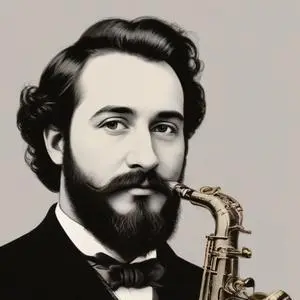
Adolphe Sax: The Maestro of Brass and Woodwind Instruments
The Inventor of the Saxophone
Adolphe Sax, a Belgian inventor and musician, is renowned for creating one of the most iconic and versatile instruments in the music world - the saxophone. Patented in 1846, this revolutionary instrument has become an integral part of various genres, from jazz and blues to rock and pop.
Early Life and Influences
Born on November 6, 1814, in Dinant, Belgium, Adolphe Sax was destined to follow in his parents' footsteps. His father, Charles-Joseph Sax, and mother, Marie-Joseph Masson, were both instrument designers who made significant contributions to the development of the French horn. Growing up in a family of instrument makers, Adolphe was exposed to the world of music and instrument craftsmanship from a very young age.
Instrumental Prodigy
At the tender age of 15, Adolphe entered two of his flutes and a clarinet into a competition, showcasing his early talent as an instrument maker. He went on to study performance on the flute, clarinet, and voice at the Royal Conservatory of Brussels, where he honed his skills as a musician.
A Brush with Death
Adolphe Sax's life was not without its share of close calls and near-death experiences. As a child, he fell from a three-story height, drank acidic water mistaking it for milk, and even swallowed a pin. He faced numerous other accidents, including a gunpowder explosion and a fall into a river. His mother once said, "He's a child condemned to misfortune; he won't live." Despite these tribulations, Adolphe persevered and channeled his energy into his passion for music and instrument making.
Innovative Inventions
Adolphe Sax's most notable inventions include the saxotromba, saxhorn, and saxtuba, in addition to his iconic saxophone. He also redesigned the bass clarinet, a design still used today. His creations not only expanded the possibilities of brass and woodwind instruments but also paved the way for new musical styles and genres.
Legacy and Impact
Adolphe Sax's contributions to the world of music have been profound and far-reaching. His instruments have been adopted by musicians across genres, from classical to jazz, and have inspired generations of composers and performers. Today, the saxophone is an integral part of many musical ensembles, and its unique sound is instantly recognizable.
Personal Milestones and Key Life Events
- 1814: Born in Dinant, Belgium
- 1829: Entered two flutes and a clarinet into a competition at the age of 15
- 1840s: Invented the saxophone and patented it in 1846
- 1850s: Redesigned the bass clarinet
- 1894: Passed away on February 7th
Trivia and Fun Facts
- Adolphe Sax was often referred to as "little Sax, the ghost" due to his numerous brushes with death.
- The saxophone was originally intended for military bands and orchestras, but it later gained popularity in jazz and popular music.
- Sax's instruments were known for their unique blend of brass and woodwind characteristics, creating a distinctive sound.
In conclusion, Adolphe Sax's remarkable life and inventions have left an indelible mark on the world of music. His legacy continues to inspire musicians and composers, ensuring that his instruments remain an integral part of the musical landscape.
FAQ
What instrument did Adolphe Sax invent?
Adolphe Sax invented the saxophone, a family of woodwind instruments that revolutionized music in the 19th century.
How did Adolphe Saxs instrument inventions impact music?
Adolphe Saxs instrument inventions, including the saxophone, had a profound impact on music, enabling the creation of new sounds and styles in classical, jazz, and popular music.
What was Adolphe Saxs background and training?
Adolphe Sax was born in Belgium and trained as a instrument maker and musician. He was exposed to a range of musical instruments and styles from an early age, which influenced his inventions.
How did Adolphe Saxs saxophone become popular?
The saxophone became popular through Adolphe Saxs tireless promotion and demonstrations of the instrument. It was initially adopted by military bands and later by jazz musicians, who popularized it worldwide.
What is Adolphe Saxs legacy in music history?
Adolphe Saxs legacy in music history is that of a visionary instrument maker who created a new family of instruments, transforming the sound of music and enabling new forms of musical expression.