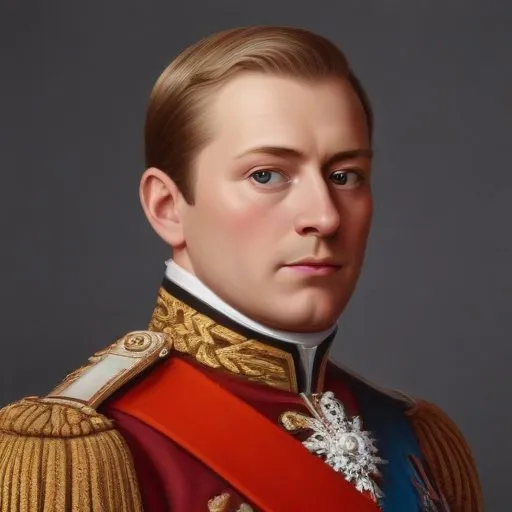
Adolphus Frederick VI, Grand Duke of Mecklenburg-Strelitz: A Life of Luxury and Legacy
The Grand Duke of Mecklenburg-Strelitz
Adolphus Frederick VI, Grand Duke of Mecklenburg-Strelitz, was a member of the House of Mecklenburg-Strelitz and the last ruling Grand Duke of Mecklenburg-Strelitz. He is best known for his brief reign from 1914 to 1918, during which he faced the tumultuous period of World War I and the subsequent abolition of the German monarchy.
Early Life and Education
Born on June 17, 1882, in Neustrelitz, Grand Duchy of Mecklenburg-Strelitz, Adolphus Frederick VI was the only son of
Adolphus Frederick V, Grand Duke of Mecklenburg-Strelitz, and Princess Elisabeth of Anhalt. He received a traditional German education, focusing on history, politics, and military science.
Reign and World War I
Adolphus Frederick VI succeeded his father as Grand Duke of Mecklenburg-Strelitz in 1914, shortly before the outbreak of World War I. During the war, he served as a cavalry officer in the German Army and was wounded in combat. Despite his efforts, Mecklenburg-Strelitz was eventually occupied by the Allies, and Adolphus Frederick VI was forced to abdicate on November 13, 1918, marking the end of the German monarchy.
Personal Life and Marriage
In 1914, Adolphus Frederick VI married Princess Jutta of Mecklenburg-Strelitz, his cousin. The couple had no children, and their marriage was marked by periods of separation due to Adolphus Frederick's military service.
Legacy and Later Life
After his abdication, Adolphus Frederick VI lived in exile in Denmark, where he died on February 24, 1934, at the age of 51. Although his reign was brief, he played a significant role in Mecklenburg-Strelitz's history, and his legacy continues to be felt in the region.
Trivia and Fun Facts
- Adolphus Frederick VI was a direct descendant of Emperor Frederick III of the Holy Roman Empire.
- He was an accomplished horse breeder and owned several prominent stables in Mecklenburg-Strelitz.
- During World War I, he was awarded the Iron Cross, a prestigious German military honor.
Historical Context and Legacy
Adolphus Frederick VI's reign was marked by the tumultuous period of World War I, which ultimately led to the downfall of the German monarchy. Despite his brief reign, he played a significant role in Mecklenburg-Strelitz's history, and his legacy continues to be felt in the region. His story serves as a reminder of the complexities and challenges faced by European monarchies during the early 20th century.
FAQ
What was Adolphus Frederick VIs role in Mecklenburg-Strelitz?
Adolphus Frederick VI was the Grand Duke of Mecklenburg-Strelitz, a region in northern Germany. He ruled from 1914 until 1918, during which he implemented several reforms aimed at modernizing the region.
How did Adolphus Frederick VIs reign impact the people of Mecklenburg-Strelitz?
Adolphus Frederick VIs reign was marked by efforts to promote economic development, improve education, and enhance the regions cultural scene. He was popular among his subjects, who appreciated his commitment to their welfare.
What were Adolphus Frederick VIs interests and hobbies?
Adolphus Frederick VI was an avid hunter and outdoorsman, and he maintained a strong interest in agriculture and forestry. He also supported the arts, particularly music and literature.
How did Adolphus Frederick VIs family impact his reign?
Adolphus Frederick VIs family, including his wife and children, played an important role in his reign. They were involved in various charitable and cultural activities, which helped to promote the regions well-being.
What is Adolphus Frederick VIs lasting legacy in Mecklenburg-Strelitz?
Adolphus Frederick VIs commitment to modernization and reform has left a lasting impact on Mecklenburg-Strelitz. His efforts to promote economic development, education, and culture continue to benefit the region to this day.