


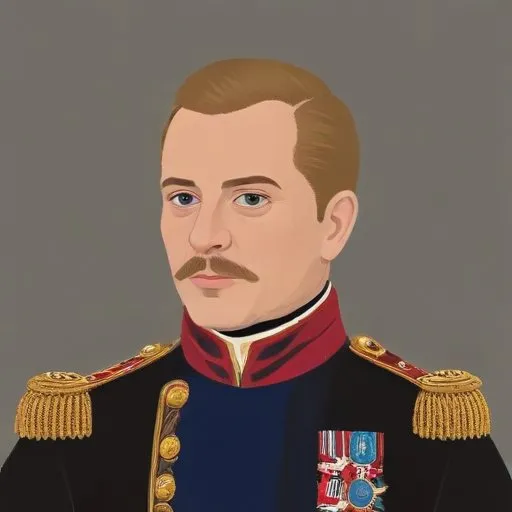
Grand Duke of Mecklenburg-Strelitz, a German monarch who ruled from 1904 to 1914 and was a distant relative of the British royal family. He's known for his brief reign and the eventual abolition of the monarchy in his state.
Adolphus Frederick V, Grand Duke of Mecklenburg-Strelitz, is renowned for his remarkable reign, spanning over four decades, and his significant contributions to the cultural and economic development of his grand duchy. As a member of the House of Mecklenburg, he played a vital role in shaping the fate of his region, leaving an indelible mark on European history.
Born on September 22, 1848, Adolphus Frederick V was the second son of Grand Duke Frederick William and Grand Duchess Augusta of Cambridge. From a young age, he was groomed to assume the responsibilities of his esteemed position, receiving an education that emphasized the importance of duty, honor, and leadership.
Ascended to the throne in 1904, Adolphus Frederick V embarked on a journey to modernize and strengthen his grand duchy. He implemented various reforms, focusing on infrastructure development, education, and economic growth. His ambitious projects included the expansion of the railroad network, the establishment of new industries, and the promotion of arts and culture.
Adolphus Frederick V was a strong advocate for the values of duty, loyalty, and patriotism. His reign was characterized by a deep sense of responsibility towards his people, and he worked tirelessly to maintain the integrity and unity of his grand duchy. He believed in the importance of preserving cultural heritage and promoting the arts, which is evident in his numerous patronages and initiatives.
Adolphus Frederick V's remarkable reign and accomplishments place him among the most notable figures of the House of Mecklenburg. His influence extended beyond the borders of his grand duchy, shaping the fate of European history during the early 20th century. His commitment to progress, culture, and duty has left a lasting legacy, ensuring his place in the annals of history.
The grand duke's emphasis on education, economic growth, and infrastructure development has had a lasting impact on the modern society of Mecklenburg-Strelitz. His patronage of the arts and culture has contributed to the region's rich cultural heritage, with many institutions and landmarks bearing witness to his enduring legacy.
"A leader's true greatness is measured by the prosperity of his people, not the extent of his dominion."
This quote, attributed to Adolphus Frederick V, encapsulates his vision for his grand duchy and his commitment to the welfare of his people.
Adolphus Frederick V was known for his warm and cordial relations with his contemporaries, earning the respect and admiration of European royalty and dignitaries. His marriage to Princess Elisabeth of Anhalt was a testament to his devotion to family and his commitment to strengthening alliances.
The grand duke's patronage of the arts and culture has inspired numerous works of literature, art, and music, shaping the cultural landscape of Mecklenburg-Strelitz and beyond.
Adolphus Frederick V was decorated with numerous honors, including the Order of the Golden Fleece and the Order of the Black Eagle, in recognition of his outstanding contributions to his region and the wider European community.
In conclusion, Adolphus Frederick V, Grand Duke of Mecklenburg-Strelitz, left an indelible mark on European history, shaping the fate of his region and influencing the course of modern society. His remarkable reign, philosophical contributions, and personal milestones have cemented his place as one of the most notable figures of the 20th century.
Born in 1484
A German nobleman who ruled Brandenburg-Ansbach from 1486 to 1515, known for his military campaigns and territorial expansions. He played a significant role in shaping the region's history.
Born in 1875
King of Belgium from 1909 to 1934, leading the country through World War I and its aftermath, earning him the nickname "The Hero King" for his bravery and leadership.
Born in 1603
The future king of Denmark, married to Princess Mary, and first in line to the throne, known for his royal duties and charitable work.
