


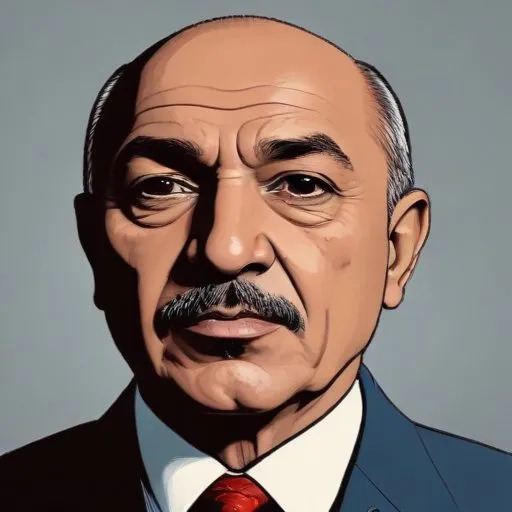
Turkish politician who served as the Mayor of Istanbul from 1994 to 1998 and was a key figure in the country's Islamist movement. He's known for his efforts to promote Islamic values in Turkish politics.
Ahmet Piritina was a Turkish politician who served as the Mayor of Izmir from 1999 to 2004, earning a reputation for being an honest and dedicated public servant. During his tenure, he launched several projects to resolve the structural problems of Izmir and protect its natural resources and cultural heritage.
Ahmet Piritina was born on April 8, 1952, in Izmir, Turkey. His family was of Albanian descent, originating from the city of Prishtina. Despite his roots, Piritina remained deeply connected to his birthplace, Izmir, and went on to make significant contributions to the city.
Piritina was elected as the Mayor of Izmir in 1999 and re-elected in 2004, a testament to his popularity and dedication to the city. During his terms of office, he focused on resolving the structural problems of Izmir, including the development of urban areas, architectural character, and environmental concerns.
This competition aimed to encourage innovative ideas for the development of urban areas and the architectural character of the Izmir port area. The project resulted in the construction of a new city center in the port area, earning international recognition.
This project focused on collecting domestic and industrial wastewater throughout Izmir, purifying it, and discharging it into the Gulf of Izmir. The project significantly reduced pollution levels in the gulf, preserving the region's natural resources.
Piritina created over 1.3 million square meters of open spaces, improving the city's aesthetic appeal and providing recreational areas for its residents. He also grassed over street refuges and viaducts, further enhancing the city's beauty.
The Izmir Metro, constructed during Piritina's tenure, reduced traffic congestion and became a model for other cities. The high-technology system showcased Izmir's commitment to modernization and sustainability.
In response to rapid immigration and unplanned construction, Piritina initiated the Car Park Project, aiming to provide organized parking solutions and reduce traffic chaos.
Ahmet Piritina's untimely death on June 15, 2004, at the age of 52, was met with an outpouring of grief from the people of Izmir. Over a million people attended his funeral, and his image was draped over buildings, monuments, boats, and buses as a tribute to his dedication and honesty.
Piritina's legacy continues to inspire future generations of politicians and public servants. His commitment to resolving the structural problems of Izmir, protecting its natural resources, and preserving its cultural heritage serves as a model for effective governance.
In conclusion, Ahmet Piritina's remarkable achievements and dedication to the people of Izmir cement his place as one of Turkey's most respected politicians, remembered for his integrity, vision, and contributions to the city he loved.
72 Years Old
The 12th President of Turkey, a dominant figure in Turkish politics, known for his Islamist roots and authoritarian leadership style, shaping Turkey's modern political landscape.
76 Years Old
The 11th President of Turkey, a politician and academic who played a key role in shaping Turkey's modern politics and foreign policy, known for his efforts to strengthen Turkey's ties with the EU.
Born in 1925
A Turkish journalist, scholar, and politician who served as the 16th Prime Minister of Turkey, known for his progressive policies and literary works. He played a significant role in shaping Turkey's modern politics and culture.
99 Years Old
A Turkish engineer and politician who served as the 8th President of Turkey, known for implementing economic reforms and liberalizing the country's economy. He's also credited with modernizing Turkey's infrastructure and industry.
Born in 1924
A Turkish engineer-turned-politician who served as the country's 9th President, known for his efforts to modernize Turkey's economy and infrastructure. He played a key role in shaping Turkey's politics and economy during the latter half of the 20th century.
Born in 1926
The first Islamist Prime Minister of Turkey, serving from 1996 to 1997, known for his efforts to increase Islamic influence in Turkish politics and society.
Born in 1884
Led Turkey's transition to a secular, democratic state, and played a key role in the country's modernization. He's remembered for his efforts to establish a strong, independent Turkey.
