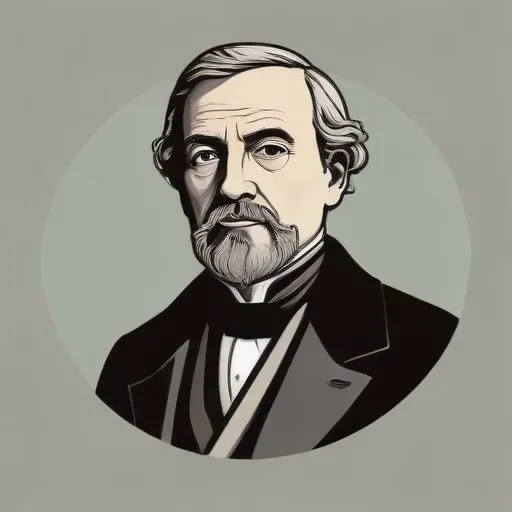
Alan Bullock: The Pioneering Historian of Adolf Hitler
The Unparalleled Expertise of Hitler's Biographer
Alan Bullock, a British historian, is renowned for his seminal work
Hitler: A Study in Tyranny, the first comprehensive biography of
Adolf Hitler, published in 1952. This magnum opus has had a profound impact on the study of Hitler and the Third Reich, influencing numerous subsequent biographies and historical accounts.
Early Life and Academic Pursuits
Born on December 13, 1914, in Trowbridge, Wiltshire, England, Bullock was the son of Reverend Frank Allen Bullock and Edith Brand Bullock. He was educated at Bradford Grammar School and later at Wadham College, Oxford, where he read classics and modern history. After graduating in 1938, Bullock worked as a research assistant for
Winston Churchill, assisting him in writing his
History of the English-Speaking Peoples.
War Years and Academic Career
During World War II, Bullock worked for the European Service of the British Broadcasting Corporation (BBC). Following the war, he returned to Oxford as a history fellow at New College. In 1952, he became the censor of St Catherine's Society, Oxford, and later founded St Catherine's College, Oxford, serving as its master from 1962 to 1981. Bullock's tenure was marked by significant fundraising efforts to develop the college.
Academic Leadership and Public Service
Bullock served as the first full-time Vice-Chancellor of Oxford University from 1969 to 1973. He also chaired several prominent committees, including the National Advisory Committee on the Training and Supply of Teachers, the Schools Council, and the Committee of Inquiry into Reading and the Use of English.
Legacy and Impact
Alan Bullock's
Hitler: A Study in Tyranny remains a seminal work in the field of Hitler studies. His meticulous research and engaging writing style have made the book a classic in the genre. Bullock's contributions to the field of history have been recognized with numerous honors, including a life peerage in 1976.
Awards and Honors
- Life peerage (1976)
- Fellow of the British Academy (1964)
- Honorary fellow of Wadham College, Oxford (1973)
Philosophical Contributions and Beliefs
Bullock's work on Hitler and the Third Reich reflects his concern with the dangers of totalitarianism and the importance of understanding the complexities of human nature. His approach to history highlights the significance of individual agency and the role of ideology in shaping human events.
Personal Milestones and Key Life Events
- Married to Hilda Handy in 1940
- Had two daughters, Sarah and Rachel
- Died on February 2, 2004, at the age of 89
Influence on Modern Society
Alan Bullock's work has had a profound impact on our understanding of Adolf Hitler and the Third Reich. His commitment to rigorous research and engaging writing has inspired generations of historians, scholars, and readers. Bullock's legacy continues to shape our understanding of the complexities of human nature and the dangers of totalitarianism.
FAQ
What is Alan Bullocks most famous historical work?
Alan Bullocks most famous historical work is his 1952 biography of Adolf Hitler, which is still considered a definitive work on the subject.
What was Alan Bullocks area of historical expertise?
Alan Bullocks area of historical expertise was modern German history, particularly the Nazi era and the life of Adolf Hitler.
What is the significance of Alan Bullocks work on Hitler?
Alan Bullocks work on Hitler is significant because it provides a thorough and nuanced understanding of the dictators life and reign. Bullocks biography is considered a classic of historical scholarship.
What academic position did Alan Bullock hold?
Alan Bullock held the position of Vice-Chancellor of Oxford University from 1969 to 1973. He was also a fellow of New College, Oxford.
What honors did Alan Bullock receive for his work?
Alan Bullock received numerous honors for his work, including a knighthood in 1972 and the Wolfson History Prize in 1984.