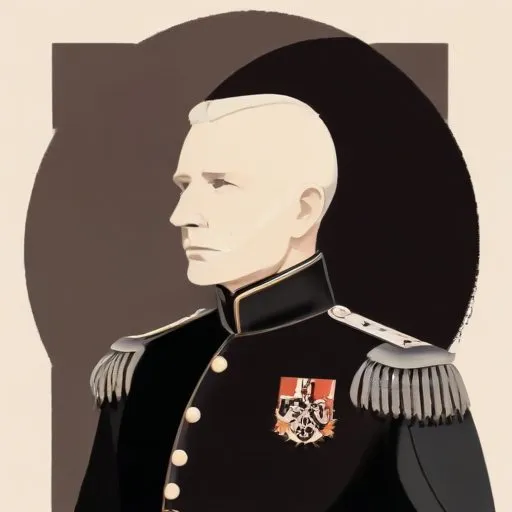
Albert, Duke of Prussia: The Visionary Leader Who Shaped the Course of History
A Champion of Protestantism and Architect of the Duchy of Prussia
Albert, Duke of Prussia, is renowned for being the first European ruler to establish Lutheranism as the official state religion, paving the way for the dissemination of Protestantism across the continent. As the 37th Grand Master of the Teutonic Knights, he transformed the Monastic State of the Teutonic Knights into the secular Duchy of Prussia, a move that would have far-reaching consequences for the region and beyond.
A Life of Diplomacy and Leadership
Born on May 17, 1490, Albert was a member of the Brandenburg-Ansbach branch of the House of Hohenzollern, a prominent German royal house. His great-grandfather, Jogaila of Poland and Lithuania, had vanquished the Teutonic Knights at the Battle of Grunwald, making Albert's ascension to power all the more remarkable. Albert's diplomatic prowess and leadership skills helped him become the Grand Master of the Teutonic Knights, a position he held from 1510 to 1525.
The Turning Point: Conversion to Lutheranism
Albert's sympathy for
Martin Luther's teachings led him to rebel against the Roman Catholic Church and the Holy Roman Empire. In 1525, he converted the Teutonic state into a Protestant and hereditary realm, the Duchy of Prussia, paying homage to his uncle, Sigismund I, King of Poland. This bold move was confirmed by the Treaty of Kraków, which invested Albert with the duchy for himself and his heirs.
A Golden Era of Prosperity
Albert's rule in Prussia was marked by relative prosperity, despite some tensions with the peasantry. He cleverly utilized the confiscated lands and treasures of the Catholic Church to appease the nobles and fund the newly established Prussian court. His active participation in imperial politics, including his membership in the League of Torgau in 1526, further solidified his position as a prominent leader.
Legacy and Impact
Albert's groundbreaking decision to establish Lutheranism as the state religion had a profound impact on the spread of Protestantism in Europe. His vision and leadership paved the way for the emergence of Prussia as a major power, shaping the course of European history. Today, Albert is remembered as a champion of religious freedom and a testament to the power of visionary leadership.
Personal Milestones and Key Life Events
- May 17, 1490: Born in Ansbach, Germany
- 1510: Became the 37th Grand Master of the Teutonic Knights
- 1525: Converted to Lutheranism and established the Duchy of Prussia
- 1525: Signed the Treaty of Kraków, confirming his ownership of the duchy
- 1526: Joined the League of Torgau
- March 20, 1568: Passed away at the age of 77
A Lasting Legacy
Albert, Duke of Prussia, left an indelible mark on the annals of history. His courage, vision, and leadership transformed the face of Europe, paving the way for the rise of Protestantism and the emergence of Prussia as a major power. As we reflect on his remarkable life, we are reminded of the power of individual action to shape the course of human history.
FAQ
What was Albert, Duke of Prussias role in the Teutonic Knights?
Albert, Duke of Prussia was the last Grand Master of the Teutonic Knights, leading the order during a period of significant reform and secularization.
How did Alberts secularization of the Teutonic Knights impact Prussia?
Alberts decision to secularize the Teutonic Knights led to the transformation of Prussia into a hereditary dukedom, marking a significant turning point in the regions history.
What were Alberts relationships with other European monarchs?
Alberts diplomatic efforts established alliances with other European monarchs, including the King of Poland and the Holy Roman Emperor, solidifying his position in the region.
How did Alberts reign impact the history of Lutheranism?
Alberts support for Lutheranism helped establish the Protestant Reformation in Prussia, shaping the regions religious and cultural identity.
What is Alberts legacy in Prussian history?
Alberts reforms and secularization of the Teutonic Knights laid the foundations for Prussias emergence as a major power in Europe, shaping the regions future development.