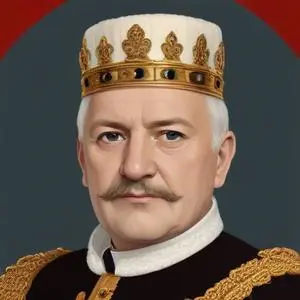
The Soldier King: Frederick William I of Prussia
A Legacy of Military and Administrative Reform
Frederick William I of Prussia, known as the Soldier King, left an indelible mark on European history with his 27-year reign that transformed Prussia into a regional power. He is renowned for his military prowess, administrative reforms, and unyielding commitment to absolute monarchy, which cemented his legacy as a shrewd and effective leader.
Early Life and Political Awakening
Born on August 14, 1688, in Berlin, Frederick William was raised by the Huguenot governess Marthe de Roucoulle. His political awakening occurred during the Great Northern War and the subsequent plague outbreak in Prussia, which exposed the corruption and inefficiency of the government. This experience sparked his determination to challenge the status quo and implement much-needed reforms.
Military Reforms and Expansion
Frederick William's most significant contribution was his military reform, which grew the Prussian Army significantly. He believed in the importance of a strong military and invested heavily in its development. His efforts led to the conquest of the port of Stettin and the foundation of the Canton system, a recruitment system that ensured a steady supply of soldiers.
Administrative Reforms and Financial Reorganization
The Soldier King implemented a series of administrative reforms aimed at reducing corruption and inefficiency. He imposed taxes and stringent regulations on public servants, which helped to reduce crime and centralize his authority. Additionally, he made efforts to reorganize the state's finances, which led to significant economic growth during his reign.
Personal Life and Health Issues
Despite his effective rule, Frederick William was known for his harsh nature, which was exacerbated by his health issues. He suffered from a range of ailments, including gout, rheumatism, and epilepsy, which often left him bedridden.
Colonial Affairs and Legacy
Frederick William's focus on military expansion came at the cost of colonial investments. He sold Prussian overseas colonies, prioritizing military development over colonial pursuits. His death in 1740 marked the end of an era, and he was succeeded by his son,
Frederick the Great, who would go on to build upon his legacy.
Net Worth and Financial Impact
Frederick William's financial reforms and military expansion had a significant impact on Prussia's economy. He left behind a thriving economy, which continued to grow under the rule of his son. His net worth, although unknown, was undoubtedly considerable, given the significant economic growth during his reign.
Quotes and Memorable Sayings
"The more I exercise my authority, the more I am loved by my people." - Frederick William I
Historical Context and Legacy
Frederick William I's reign marked a significant turning point in Prussian history. His military and administrative reforms transformed Prussia into a powerful state, paving the way for his son's future conquests. His legacy continues to inspire leaders around the world, serving as a testament to the power of effective governance and military prowess.
Comparative Analysis with Contemporaries
Frederick William I's reign can be compared to that of his contemporaries, such as
Augustus II of Poland and Charles VI of Austria. While they were focused on maintaining their power and influence, Frederick William was busy transforming Prussia into a regional power. His focus on military and administrative reforms set him apart from his contemporaries, cementing his legacy as a visionary leader.
Trivia and Fun Facts
- Frederick William I was known for his simplicity and frugality, often wearing simple clothes and living a modest lifestyle.
- He was a strong advocate for education and established several schools during his reign.
- He was a skilled military strategist and personally led his troops into battle on several occasions.