


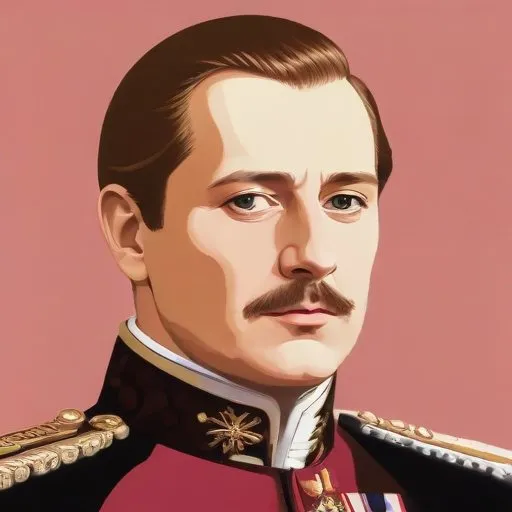
Ruler of Austria from 1395 to 1404, known for his attempts to strengthen the Habsburg dynasty and expand its territories. He played a significant role in shaping the region's politics and history.
Albert IV, Duke of Austria, is renowned for his tumultuous yet transformative reign, which spanned from 1395 to 1404. As the ruler of Austria, he orchestrated a complex web of alliances, rivalries, and conflicts that shaped the medieval European landscape.
Born on September 19, 1377, in Vienna, Albert IV was the son of Albert III of Austria and Beatrix of Nuremberg. His maternal grandmother, Elisabeth of Meissen, descended from the esteemed Babenberg dukes of Austria, solidifying his claim to the throne.
Albert IV's rule was marked by a series of power struggles with his relatives from the Leopoldinian Line of the Habsburg family and the Luxemburg dynasty. The Duke's territory encompassed modern-day Lower Austria and most of Upper Austria, making him a significant player in medieval politics.
In 1390, Albert IV married Joanna Sophia of Bavaria, daughter of Albrecht I, Duke of Bavaria-Straubing and Margarete of Brieg. Their union produced two children:
Albert IV's life was cut short when he died on September 14, 1404, at Klosterneuburg, Lower Austria. He was buried in the Ducal Crypt in Vienna's Stephansdom, alongside his ancestors. Despite the turmoil that characterized his reign, Albert IV's legacy endured, with his son Albert V continuing the Habsburg dynasty's dominance in Austria.
Albert IV's reign unfolded against the backdrop of medieval Europe's complex power dynamics. His rivalries with the Luxemburg dynasty and the Habsburg family's internal conflicts reflected the era's characteristic political instability. Nevertheless, his rule laid the groundwork for the eventual rise of the Habsburgs as a dominant European power.
Throughout his life, Albert IV navigated a series of significant events that defined his reign:
Through his life and reign, Albert IV, Duke of Austria, left an indelible mark on the medieval political landscape, setting the stage for the Habsburgs' future dominance in Europe.
Born in 1218
King of the Germans from 1273 to 1291, known for his role in ending the Great Interregnum, a period of imperial instability, and establishing the Habsburg dynasty's power in Europe.
Born in 1397
King of the Romans and Duke of Austria, known for his brief reign and attempts to unify the German states. He was a member of the Habsburg dynasty and played a significant role in European politics during the 14th century.
