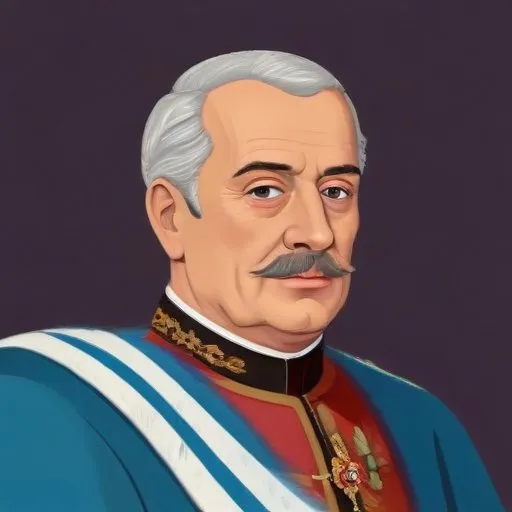
Albert V, Duke of Bavaria: A Champion of Catholicism and Power
A Legacy of Conviction and Ambition
Albert V, Duke of Bavaria, is remembered as a staunch defender of Catholicism and a shrewd politician who navigated the complex web of 16th-century European politics with ease. From 1550 until his death in 1579, Albert ruled Bavaria with a firm hand, earning him a reputation as a leader who would stop at nothing to preserve the power and influence of his dynasty.
Early Life and Education
Born on February 29, 1528, in Munich, Albert was the son of
William IV, Duke of Bavaria, and Maria Jacoba of Baden. He received a traditional Catholic education at Ingolstadt, where he was tutored by renowned Catholic scholars. This early indoctrination laid the foundation for his future role as a champion of Catholicism.
A Strategic Union and Rise to Power
In 1546, Albert married Anna of Austria, daughter of
Ferdinand I, Holy Roman Emperor, in a union designed to forge a peace treaty between Austria and Bavaria. This strategic alliance propelled Albert onto the stage of European politics and paved the way for his succession as Duke of Bavaria in 1550, following the death of his father.
A Leader of the German Counter-Reformation
As a devout Catholic, Albert was instrumental in promoting Catholicism in his dominions. He worked tirelessly to suppress Protestantism, earning him the reputation as a leader of the German Counter-Reformation. Despite his personal inclinations towards a life of luxury and leisure, Albert recognized the importance of upholding Catholic values in the face of growing Protestant influence.
Political Machinations and Intrigue
Albert's reign was marked by a series of political maneuverings, as he sought to secure his family's power and influence. He played a significant role in the events leading up to the Peace of Passau (1552) and the Peace of Augsburg (1555), using his diplomatic prowess to further Catholic interests.
Familial Ambitions and Legacy
Albert's ambitions extended beyond his own reign, as he worked to secure a prominent role for his son,
Ernest of Bavaria, in the Catholic Church. Although his efforts did not bear fruit during his lifetime, Ernest would eventually become the Archbishop-Elector of Cologne, with members of the Wittelsbach house holding the position for nearly two centuries.
A Legacy of Power and Influence
Albert V, Duke of Bavaria, left an indelible mark on European history. His unwavering commitment to Catholicism, combined with his shrewd political instincts, ensured the continued dominance of the Wittelsbach dynasty in Bavaria. His legacy serves as a testament to the power of conviction and ambition in shaping the course of history.
Timeline of Key Events
- 1528: Born on February 29 in Munich
- 1546: Married Anna of Austria
- 1550: Succeeded his father as Duke of Bavaria
- 1552: Played a role in the Peace of Passau
- 1555: Contributed to the Peace of Augsburg
- 1560: Became administrator and owner of the mortgage of the county of Glatz
- 1567: Returned the redeemed county to Emperor Maximilian II
- 1579: Died on October 24
FAQ
What was Albert V, Duke of Bavarias role in the War of the Austrian Succession?
Albert V, Duke of Bavaria played a key role in the War of the Austrian Succession, supporting the Prussian army and eventually becoming the King of Bohemia.
What was Albert V, Duke of Bavarias relation to the Habsburgs?
Albert V, Duke of Bavaria was a rival to the Habsburg dynasty, challenging their authority and seeking to expand his own territories.
What were Albert V, Duke of Bavarias military achievements?
Albert V, Duke of Bavaria was a successful military leader, winning several battles against the Habsburgs and securing key territories for Bavaria.
What was Albert V, Duke of Bavarias impact on Bavarian politics?
Albert V, Duke of Bavaria centralized power in Bavaria, reformed the government, and promoted the arts and education during his reign.
What was Albert V, Duke of Bavarias family life like?
Albert V, Duke of Bavaria was married to Anna of Austria and had several children, including his successor, Albert VI, Duke of Bavaria.