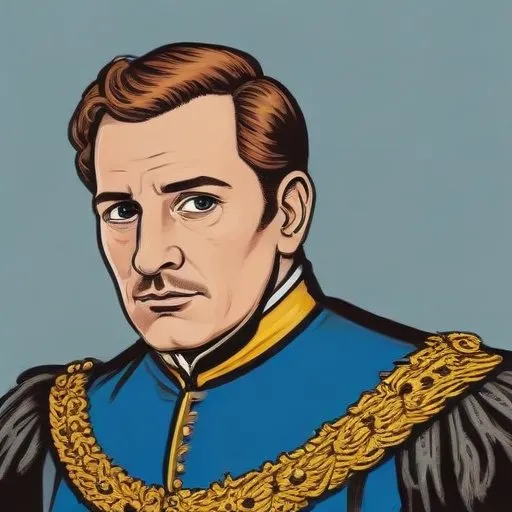
William II, Duke of Bavaria: The Powerbroker of the Middle Ages
A Life of Conflict and Conquest
William II, Duke of Bavaria, is known for his fierce determination to expand his territories and secure his family's legacy. As the ruler of Bavaria-Straubing, count of Holland, Hainaut, and Zeeland, he forged alliances, fought battles, and negotiated treaties to strengthen his position in the volatile landscape of 15th-century Europe.
Early Life and Family
Born on April 5, 1365, William II was the son of Albert I of Bavaria and Margaret of Brieg. His family history was marked by power struggles and internal conflicts, which would shape his own destiny as a ruler.
Rise to Power
In 1404, William succeeded his father as count of Holland, Hainaut, and Zeeland, and duke of Bavaria-Straubing. However, his reign was soon marred by internal strife, as he faced opposition from his own nobles and neighboring regions.
Battles and Alliances
One of William's most notable military achievements was the Battle of Othe in 1408, where he,
John the Fearless of Burgundy, and Louis VII of Bavaria defeated the citizens of Liège, who had revolted against William's brother, the bishop of Liège. This victory allowed William to break free from his obligation to pay homage to the bishop.
Throughout his reign, William formed and broke alliances with various dukes and nobles, often using military force to assert his dominance. In 1412, he conquered Arkel, a region that had long opposed him, and annexed it to Holland.
Claim to Friesland
William's ambition extended to the region of Friesland, which had resisted conquest by previous counts. Although he launched several expeditions, he was unable to fully subdue the Frisians, who regained control of Stavoren in 1414.
Family and Legacy
William married Margaret, daughter of Philip the Bold, in 1385, and had only one child, Jacqueline. Before his death in 1417, he ensured that his nobles swore allegiance to his daughter, hoping to secure her succession. However, this move sparked a war of succession between Jacqueline and William's brother, John, the bishop of Liège, ultimately leading to the absorption of Holland and Hainaut into Burgundian hands.
Lasting Impact
William II's reign was marked by turmoil and conflict, yet he managed to expand his territories and leave a lasting legacy in the complex tapestry of medieval European politics. His story serves as a testament to the intrigues and power struggles that shaped the destiny of nations.
- Key Dates:
- 1365: Birth of William II, Duke of Bavaria
- 1404: William succeeds his father as count of Holland, Hainaut, and Zeeland, and duke of Bavaria-Straubing
- 1408: Battle of Othe
- 1412: Conquest of Arkel
- 1417: Death of William II and outbreak of war of succession
FAQ
Who was William II, Duke of Bavaria?
William II, Duke of Bavaria was the duke of Bavaria from 1404 to 1417. He was born in 1365 and died in 1417.
What was William II, Duke of Bavarias family background?
William II, Duke of Bavaria was born into the Wittelsbach dynasty, which ruled Bavaria. His father was Albert I, Duke of Bavaria, and his mother was Margaret of Brieg.
What were William II, Duke of Bavarias accomplishments?
William II, Duke of Bavaria is credited with strengthening the duchy of Bavaria and promoting culture and education. He also established the University of Ingolstadt to promote education.
How did William II, Duke of Bavaria deal with the Holy Roman Empire?
William II, Duke of Bavaria had to deal with the Holy Roman Empire, which sought to assert its authority over Bavaria. He maintained the independence of Bavaria and protected its interests.
What was William II, Duke of Bavarias legacy?
William II, Duke of Bavarias legacy is that of a ruler who tried to strengthen his duchy and promote culture and education. He is also remembered for his efforts to maintain the independence of Bavaria.