


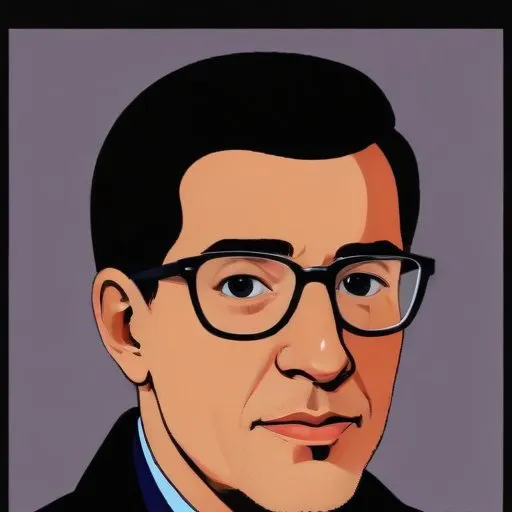
Alberto Caldern, an Argentine mathematician, is renowned for developing the theory of singular integral operators alongside his mentor, Antoni Zygmund, at the University of Chicago. This groundbreaking work gave rise to the Chicago School of hard Analysis, also known as the Caldern-Zygmund School, which has had a profound impact on various fields, including signal processing, geophysics, and tomography.
Alberto Pedro Caldern was born on September 14, 1920, in Mendoza, Argentina, to Don Pedro Caldern, a physician-urologist, and Haydeé. He had several siblings, including a younger brother, Calixto Pedro Caldern, who also pursued a career in mathematics. Encouraged by his father, Caldern developed a strong foundation in mathematics from an early age.
Following his mother's unexpected death at the age of twelve, Caldern spent two years at the Montana Knabeninstitut, a boys' boarding school near Zurich, Switzerland. There, he was mentored by Save Bercovici, who fostered his interest in mathematics. He then completed his high school studies in Mendoza.
Contrary to his desire to pursue mathematics, Caldern was persuaded by his father to study engineering at the University of Buenos Aires. He graduated in civil engineering in 1947 and landed a job at the research laboratory of the geophysical division of the state-owned oil company, Yacimientos Petrolíferos Fiscales (YPF).
While working at YPF, Caldern became acquainted with the mathematicians at the University of Buenos Aires, including Julio Rey Pastor, the first professor in the Institute of Mathematics, and his assistant, Alberto. This exposure sparked his interest in pursuing a career in mathematics.
Caldern's work spanned a broad range of topics, including:
His work has had a profound impact on practical applications, including signal processing, geophysics, and tomography. The Chicago School of hard Analysis, founded by Caldern and Zygmund, has become a benchmark for mathematical excellence.
Caldern's work has far-reaching implications in various fields, including:
Caldern received numerous awards and honors for his contributions to mathematics, including:
Alberto Caldern's work has left an indelible mark on the field of mathematics, inspiring generations of mathematicians and scientists. His legacy continues to shape our understanding of the world, driving innovation and advancement in various fields.
Through his tireless pursuit of knowledge, Caldern has demonstrated the power of human ingenuity and the importance of fundamental research. His work serves as a testament to the impact that mathematics can have on our daily lives, and his influence will be felt for generations to come.
Born in 1887
A renowned mathematician and educator who made significant contributions to various mathematical fields, including geometry, probability, and game theory, and is also known for his humorous and accessible writing style.
Born in 1903
Pioneering mathematician and physicist who developed the concept of the modern computer architecture and made significant contributions to quantum mechanics and game theory. His work laid the foundation for modern computing and artificial intelligence.
Born in 1882
A pioneering mathematician and physicist who revolutionized abstract algebra and made groundbreaking contributions to modern physics, particularly in the development of Einstein's theory of general relativity.
Born in 1862
A renowned mathematician and academic who developed infinite-dimensional vector spaces and laid the foundation for quantum mechanics and relativity. He's also famous for his 23 unsolved math problems that shaped 20th-century mathematics.
Born in 1868
A renowned mathematician and academic who developed the concept of Hausdorff dimension, a fundamental idea in fractal geometry, and made significant contributions to set theory and topology.
Born in 1906
A French mathematician and academic who made significant contributions to number theory, algebraic geometry, and the development of modern mathematics, leaving a lasting impact on the field.
Born in 1917
A renowned mathematician who made significant contributions to number theory, particularly in the development of the Selberg trace formula, and was awarded the Fields Medal and the Abel Prize.
