


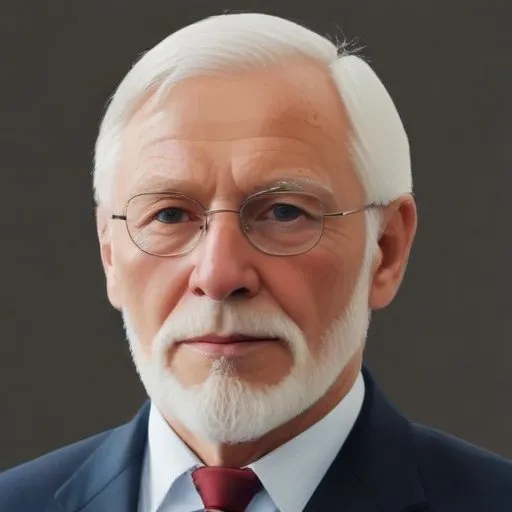
A renowned mathematician who made significant contributions to number theory, particularly in the development of the Selberg trace formula, and was awarded the Fields Medal and the Abel Prize.
Atle Selberg, a Norwegian mathematician, is renowned for his groundbreaking contributions to analytic number theory and the theory of automorphic forms. He is particularly famous for bringing these two concepts into relation with spectral theory, earning him the prestigious Fields Medal in 1950 and an honorary Abel Prize in 2002.
Born on June 14, 1917, in Langesund, Norway, Selberg was the son of teacher Anna Kristina Selberg and mathematician Ole Michael Ludvigsen Selberg. His family's mathematical heritage was strong, with two of his three brothers, Sigmund and Henrik, also becoming mathematicians, and his other brother, Arne, becoming a professor of engineering.
Selberg's fascination with mathematics began early, and he was heavily influenced by the work of Srinivasa Ramanujan. During his school days, he discovered an exact analytical formula for the partition function, a result that was later published by Hans Rademacher.
Selberg pursued his academic interests at the University of Oslo, where he completed his Ph.D. in 1943. However, his academic progress was hindered by World War II, during which Norway was occupied by Germany. Despite the challenges, Selberg continued to work in isolation, making significant breakthroughs in his research.
During the war, Selberg also fought against the German invasion of Norway and was imprisoned several times. Despite these obstacles, he remained committed to his work, and after the war, his accomplishments became known to the mathematical community.
After the war, Selberg shifted his focus to sieve theory, a previously neglected area of research. In a 1947 paper, he introduced the Selberg sieve, a method that provided auxiliary upper bounds and contributed to Chen's theorem, among other significant results.
In 1948, Selberg submitted two papers to Annals of Mathematics, in which he proved, by elementary means, the theorems for primes in arithmetic progression and the density of prime numbers in arithmetic progression.
Selberg's work has had a profound impact on modern number theory, and his contributions continue to influence mathematicians today. His introduction of the Selberg sieve and his work on analytic number theory and automorphic forms have opened up new avenues for research and exploration.
Through his remarkable journey, Selberg has inspired generations of mathematicians, and his legacy will continue to shape the course of mathematical discovery.
Atle Selberg's remarkable life and contributions have left an indelible mark on the world of mathematics, and his legacy will continue to inspire and influence future generations of mathematicians.
Born in 1898
A pioneer in algebraic number theory, he developed the Artin reciprocity law, a fundamental concept in modern number theory. His work has far-reaching implications for cryptography and coding theory.
Born in 1917
A renowned mathematician who made significant contributions to number theory, particularly in the development of the Selberg trace formula, and was awarded the Fields Medal and the Abel Prize.
Born in 1913
A prolific mathematician who traveled the world, collaborating with others to solve problems and create new theories, producing over 1,500 papers and inspiring a new generation of mathematicians. Known for his eccentric personality and love of coffee.
Born in 1906
A French mathematician and academic who made significant contributions to number theory, algebraic geometry, and the development of modern mathematics, leaving a lasting impact on the field.
98 Years Old
A pioneer in algebraic geometry, revolutionizing the field with innovative ideas and abstract approaches, shaping modern mathematics and influencing generations of mathematicians.
Born in 1915
Developed the theory of distributions, a fundamental concept in mathematics, and was awarded the Fields Medal in 1950 for his work. His contributions have had a lasting impact on modern mathematics and physics.
Born in 1926
A renowned mathematician and academic, he is most known for his groundbreaking work in algebraic geometry and number theory, earning him a Fields Medal in 1954.
