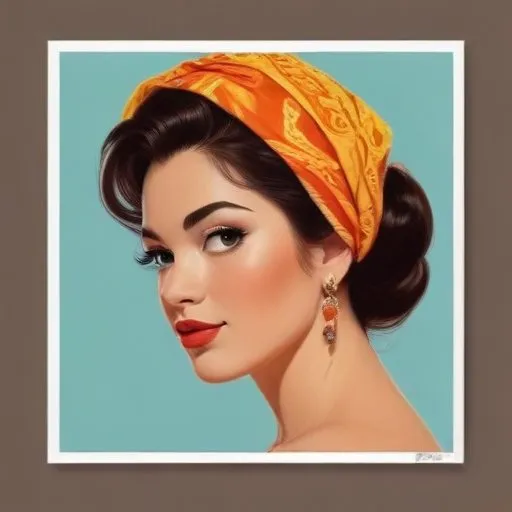
The King of Pin-Up Art: Alberto Vargas
A Master of Beauty and Seduction
Alberto Vargas is renowned for his captivating pin-up girls, which have become an integral part of American popular culture. As one of the pioneers of airbrush art, Vargas' creations have been admired and coveted by millions, selling for tens of thousands of dollars around the world.
Early Life and Inspiration
Born on February 9, 1896, in Arequipa, Peru, Alberto Vargas was the son of noted Peruvian photographer Max T. Vargas. His early fascination with art led him to study in Europe, particularly in Zurich and Geneva, prior to World War I. During this time, he discovered the French magazine La Vie Parisienne, featuring a cover by Raphael Kirchner, which significantly influenced his work.
American Dreams and Early Career
In 1916, Vargas moved to the United States, where he began his career as an artist for the Ziegfeld Follies and various Hollywood studios. His early work included a painting of
Olive Thomas, which was hung at the Ziegfeld Theater, marking one of the earliest examples of a "Vargas Girl." Another notable work from this period is the poster for the 1933 film "The Sin of Nora Moran," featuring a near-naked Zita Johann in a pose of desperation, considered one of the greatest movie posters ever made.
The Vargas Girls Era
Vargas' most iconic work began in the 1940s when he created pin-ups for Esquire magazine. During this period, he produced an astonishing 180 paintings, which became synonymous with the World War II era. The US military even adapted these pin-ups as nose art for aircraft, further cementing Vargas' status as a cultural phenomenon.
Controversy and Legacy
Vargas' work was not without controversy, as the US Post Office attempted to revoke Esquire's second-class mailing permit due to the perceived risqué nature of his pin-ups. However, Esquire prevailed in the case, which went to the Supreme Court. Today, Vargas' art is celebrated for its beauty, sensuality, and nostalgic value, solidifying his place as one of the most famous pin-up artists of all time.
Awards and Accolades
- Inducted into the Illustrators Hall of Fame (2001)
- Received a Lifetime Achievement Award from the Academy of Illustration (1980)
Influence on Pop Culture
Vargas' art has inspired numerous artists, designers, and filmmakers, including
Hugh Hefner, founder of Playboy magazine. His work has also influenced the pin-up genre as a whole, paving the way for other notable artists like
George Petty and Gil Elvgren.
Philosophical Contributions
Vargas' art embodies a sense of beauty, sensuality, and empowerment, which has contributed to the evolution of American popular culture. His work has also been seen as a reflection of the changing attitudes towards female sexuality and empowerment during the 1940s.
Personal Milestones
- Married Anna Mae Clift in 1930, and remained married until her death in 1974
- Died on December 30, 1982, at the age of 86
Trivia and Fun Facts
- Vargas was known for his perfectionism, often spending up to 80 hours on a single painting
- His paintings often featured hidden messages or symbols, adding an extra layer of depth to his work
In conclusion, Alberto Vargas' legacy extends far beyond his breathtaking pin-up girls. As a pioneer of airbrush art and a master of beauty and seduction, his work continues to inspire and captivate audiences to this day.
FAQ
What made Alberto Vargas a renowned pin-up artist?
Alberto Vargas was a Peruvian-American painter and illustrator famous for his glamorous pin-up girls, which graced the pages of Esquire magazine and became an iconic symbol of American pop culture.
What was Alberto Vargass artistic style?
Vargass artwork was characterized by his use of watercolors, precision, and attention to detail, creating sensual, yet tasteful, depictions of the feminine form.
What inspired Alberto Vargass pin-up girls?
Vargas drew inspiration from 1930s Hollywood, fashion, and music, as well as his own Latin American heritage, to create his signature style.
How did Alberto Vargas contribute to the pin-up art movement?
Vargas was one of the pioneers of the pin-up art movement, influencing generations of artists and contributing to the genres popularization.
What was Alberto Vargass career path like?
Vargas began his career as a commercial artist, then moved to Hollywood to work on film sets, before becoming a renowned pin-up artist and eventually publishing his own art book.