


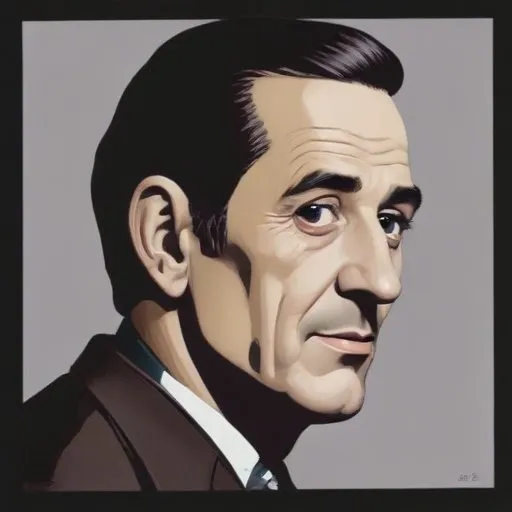
Creator of iconic pin-up girls and dreamy, idealized women, blending art and fantasy in his work. His illustrations adorned numerous magazine covers, captivating audiences with their beauty and charm.
George Petty's sultry, swoon-worthy pin-up girls adorned the pages of Esquire, Fawcett Publications, and calendars, captivating the hearts of men and women alike in the mid-20th century. As a pioneer of the pin-up art genre, Petty's work popularized the concept of the "centerfold spread," making him a household name in the world of art and entertainment.
Born on April 27, 1894, in Abbeville, Louisiana, George Brown Petty IV was the second child of George Brown Petty III and Sarah Petty. The family relocated to Chicago, Illinois, when George was just a child, where his father established a successful photography business. It was here that George's artistic talents began to flourish, inspired by his father's work with images of young women and nudes.
George's high school years were marked by a passion for art, which outweighed his interest in academics. He was the staff artist for the school newspaper and enrolled in evening classes at the Chicago Academy of Fine Arts, where he received tutelage from Ruth VanSickle Ford. It was during this time that he developed his skills in airbrush technique, which would later become a hallmark of his work.
In 1916, Petty traveled to Paris to study art at the Académie Julian, where he was mentored by renowned artists like Jean-Paul Laurens. However, the outbreak of World War I forced him to return to the United States, where he continued to hone his craft.
Back in Chicago, Petty worked as a freelance artist, creating calendar girls and magazine covers for The Household. His big break came in 1926, when he opened his own studio, marking the beginning of a career that would span over four decades.
Petty's signature style, known as the "Petty Girl," was characterized by curvaceous, confident, and captivating women. His use of vibrant colors, intricate details, and airbrush techniques set him apart from his contemporaries and earned him a devoted following.
During World War II, Petty's work took on a new significance as his "Petty Girls" were reproduced and used as nose art on military aircraft, including the iconic Memphis Belle. This fusion of art and patriotism cemented Petty's status as a cultural icon.
George Petty's influence on popular culture extends far beyond his pin-up art. He paved the way for future generations of artists, photographers, and models, and his work continues to inspire and influence contemporary creatives.
Today, Petty's art is highly sought after by collectors and enthusiasts, with his original works selling for tens of thousands of dollars. His legacy serves as a testament to the power of art to transcend time and captivate the human imagination.
George Petty may have passed away on July 21, 1975, but his artistic legacy lives on, continuing to inspire and delight audiences around the world.
Born in 1896
Creator of iconic pin-up girls and glamorous illustrations that epitomize femininity and sensuality, blending art deco and realism styles.
