


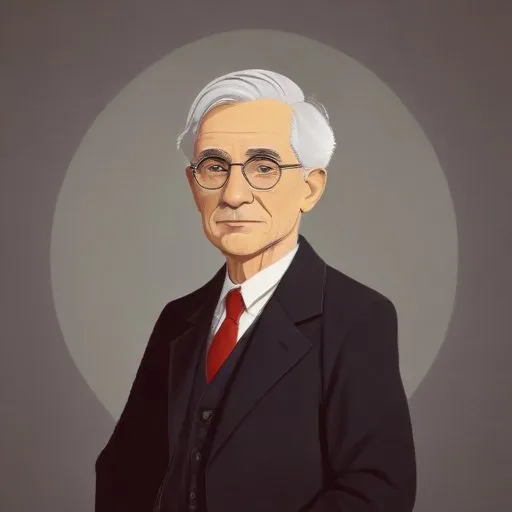
Pioneering agricultural reformer and writer who introduced scientific farming practices to Europe, increasing crop yields and transforming the industry.
Albrecht Thaer, a German agronomist, is renowned for his groundbreaking work on the humus theory for plant nutrition, revolutionizing the field of agriculture in the 18th century. His innovative approaches to soil management and crop rotation laid the foundation for modern agricultural practices, earning him the title of "Father of German Agriculture."
Born on May 14, 1752, in Celle, Hanover, Thaer was the eldest child of Johann Friedrich Thaer, a physician to the Court, and Sophie Elisabeth Saffe. His early life was marked by a strong curiosity and passion for nature, which would later manifest in his dedication to agricultural science.
Thaer pursued his studies in medicine at the University of Göttingen, eventually practicing as a physician in his native town. However, it was his fascination with botany and horticulture that ultimately led him to abandon his medical career and focus on agriculture. His garden, once a mere hobby, became a testing ground for his innovative ideas, earning him recognition and admiration from his community.
Thaer's most significant contribution to agriculture was his advocacy for the humus theory, which posits that plant growth is facilitated by the decomposition of organic matter in soil. This concept, though not entirely novel, was largely neglected at the time. Thaer's work helped popularize and refine the theory, leading to significant improvements in crop yields and soil fertility.
In 1795, Thaer established an experimental farm in Möglin, near Berlin, where he implemented his theories and conducted rigorous experiments. The farm became a hub for agricultural innovation, attracting visitors from across Europe and solidifying Thaer's reputation as a leading authority in the field.
Thaer's work had a profound impact on modern agriculture, influencing generations of agronomists and farmers. His emphasis on soil conservation, crop rotation, and the use of organic fertilizers continues to shape sustainable agricultural practices today.
Thaer's contributions to German agriculture earned him numerous honors, including the title of "Physicus" (Physician) to the King of Prussia in 1804. His work also led to the establishment of the first agricultural college in Germany, solidifying his legacy as a pioneer in the field.
In 1786, Thaer married Miss von Wellich, the daughter of a nobleman, and had several children. Throughout his life, he maintained a strong connection to his family and community, often hosting agricultural seminars and workshops at his farm.
Albrecht Thaer's tireless dedication to agricultural science and his passion for improving the human condition continue to inspire generations of scientists, farmers, and environmentalists. His groundbreaking work remains a testament to the power of human ingenuity and the importance of preserving our planet's natural resources.
Thaer's remarkable story serves as a reminder that even the most seemingly ordinary individuals can leave an indelible mark on human history, shaping the course of science and improving the lives of countless people.
Born in 1803
Developed groundbreaking theories on organic chemistry and agriculture, revolutionizing farming practices and earning the title "Father of Fertilizers".
Born in 1783
Developed the "Isolated State" model, which explains how transportation costs affect the location of agricultural production and settlement patterns. Known for his pioneering work in spatial economics and urban planning.
Born in 1659
Developed the phlogiston theory, a precursor to modern chemistry, and made significant contributions to the field of medicine.
Born in 1743
Father of modern chemistry, discovered oxygen, and developed a systematic method of chemical nomenclature. He laid the foundation for modern chemistry and paved the way for future scientific discoveries.
Born in 1744
A French soldier, biologist, and academic who developed a theory of inheritance of acquired characteristics, proposing that organisms adapt to their environment and pass on those traits to their offspring.
Born in 1707
Developed the system of binomial nomenclature, which is still used today to classify and name living organisms. This system has had a profound impact on the fields of biology, ecology, and conservation.
Born in 1769
A pioneering geographer and explorer who mapped much of South America and discovered the Caspian Sea's connection to the Black Sea, greatly advancing our understanding of the natural world.
