


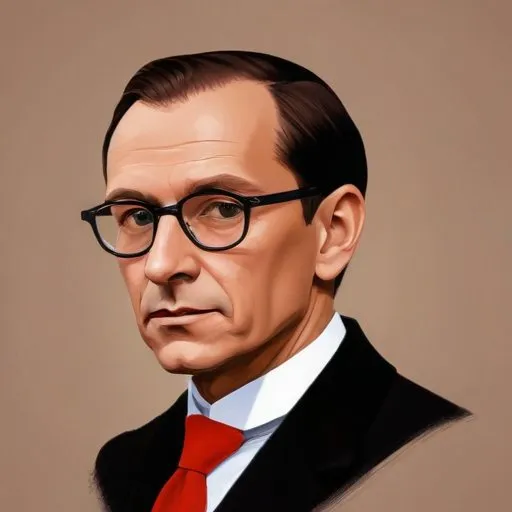
Developed the "Isolated State" model, which explains how transportation costs affect the location of agricultural production and settlement patterns. Known for his pioneering work in spatial economics and urban planning.
Johann Heinrich von Thünen, a 19th-century economist, is renowned for his groundbreaking contributions to the field of agricultural economics and economic geography. His work laid the foundation for understanding the relationship between land use, rent, and wages, earning him the title of one of the founders of agricultural economics.
Von Thünen was born on June 24, 1783, on his father's estate, Canarienhausen, in Mecklenburg-Strelitz, Germany. After losing his father at the age of two, his mother remarried a merchant, and the family moved to Hooksiel. This early life experience influenced von Thünen's decision to study practical farming, which ultimately led him to develop his economic ideas.
One of the significant influences on von Thünen's work was Albrecht Thaer, a renowned German agronomist. Thaer's ideas on agricultural management and soil science had a profound impact on von Thünen's development of the theory of marginal productivity.
In 1826, von Thünen published the first volume of his treatise, The Isolated State, which presented a revolutionary approach to spatial economics and economic geography. His work connected the theory of rent with the concept of land use, providing a mathematical formula to calculate land rent:
R = Yp - c - Fm, where:
R represents land rentY represents yield per unit of landp represents market price per unit of commodityc represents production expenses per unit of commodityF represents freight rate per agricultural unit, per milem represents distance to marketThis formula, known as the "von Thünen model," demonstrated the relationship between land use, transportation costs, and market prices, providing a foundation for understanding the economics of agricultural production.
Von Thünen's work had a profound impact on the development of economics, influencing notable economists such as Carl Menger and Leon Walras. His ideas on marginal productivity and land use have been applied in various fields, including urban planning, regional development, and environmental economics.
In recognition of his contributions, von Thünen is considered one of the founders of agricultural economics and economic geography. His work continues to inspire research and inform policy decisions in these fields.
In 1806, von Thünen married and went on to have a family. He died on September 22, 1850, leaving behind a legacy of pioneering work in economics.
Throughout his life, von Thünen remained committed to his research and writing, publishing several works on economics and agriculture. His dedication to his craft has earned him a place among the most influential economists of the 19th century.
61 Years Old
A lawyer and politician who served in the U.S. House of Representatives from 1987 to 1997, known for his moderate Republican views and advocacy for environmental issues.
Born in 1772
A British economist and politician who developed the concept of comparative advantage, which revolutionized international trade and shaped modern economic theory.
Born in 1806
A prominent 19th-century thinker who championed individual liberty, free speech, and women's rights, and is best known for his influential book "On Liberty".
Born in 1818
A 19th-century philosopher who developed the theory of communism, arguing that capitalism would eventually be replaced by a socialist society. He's known for his critique of capitalism and the concept of class struggle.
Born in 1820
A 19th-century philosopher and economist who co-authored "The Communist Manifesto" with Karl Marx, shaping modern socialist and communist thought. He also wrote extensively on economics, history, and politics.
Born in 1919
Founded Marshalls, a popular off-price department store chain offering discounted brand-name products, revolutionizing retail shopping experiences.
Born in 1834
Developed the concept of general equilibrium theory, which describes how markets reach equilibrium, and is considered one of the founders of the neoclassical school of economics.
Born in 1902
A pioneer of dimension theory, this mathematician developed the concept of Menger sponge, a fractal curve, and made significant contributions to topology and geometry.
