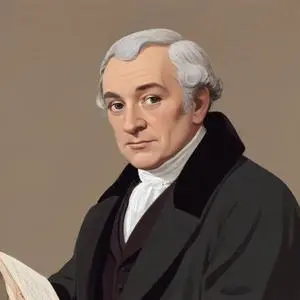
David Ricardo: The Father of Classical Economics
A Life of Economic Wisdom and Reform
David Ricardo, a British political economist, politician, and member of the Parliament of Great Britain and Ireland, is renowned for his profound contributions to the field of economics. As one of the most influential classical economists, alongside
Adam Smith, Thomas Malthus, and
James Mill, Ricardo's work continues to shape modern economic thought.
Early Life and Family
Born on April 18, 1772, in London, Ricardo was the third surviving child of a successful stockbroker and his wife. He came from a Sephardic Jewish family of Portuguese origin. At the age of 21, Ricardo eloped with a Quaker, Priscilla Ann Wilkinson, and converted to Unitarianism, causing estrangement from his family.
Financial Success and Philanthropy
Ricardo made his fortune financing government borrowing and later retired to an estate in Gloucestershire. He served as High Sheriff of Gloucestershire and bought a seat in Parliament as an earnest reformer. Ricardo's wealth and influence enabled him to support various causes, including the abolition of slavery.
Economic Contributions and Beliefs
Ricardo's most significant contribution to economics is his concept of comparative advantage, which advocates for countries to specialize in producing goods for which they have a lower opportunity cost. He believed that free trade increases the wellbeing of people by making goods more affordable. Ricardo opposed the Corn Laws, which he saw as barriers to economic growth.
- Ricardo wrote his first economics article at age 37, advocating for a reduction in the note-issuing of the Bank of England.
- He worked on fixing issues in Adam Smith's Labour Theory of Value, stating that the value of a commodity is determined by the labour required to produce it.
Personal Relationships and Influences
Ricardo was friends with prominent figures like James Mill,
Jeremy Bentham, and Thomas Malthus, engaging in debates over various topics. His friend John Louis Mallett described Ricardo's conviction in his beliefs, though he expressed doubts about Ricardo's disregard for experience and practice.
Legacy and Impact
Ricardo died on September 11, 1823, at the age of 51, from an ear infection that led to septicaemia (sepsis). He left behind a considerable fortune and a lasting legacy. His free trade views eventually became public policy in Britain. Ricardo's work continues to influence modern economic thought, shaping policies and informing debates.
Notable Quotes and Memorable Sayings
- "The interest of the landlord is always opposed to that of the consumer and manufacturer."
- "The only thing that can make a man rich is the possession of a useful skill."
Historical Context and Comparative Analysis
Ricardo's work was instrumental in shaping the classical economics movement, which laid the foundation for modern economic thought. His ideas on free trade and comparative advantage continue to influence economic policies and debates. In comparison to his contemporaries, Ricardo's work was more focused on the practical applications of economic theories.
Impact on Modern Society
Ricardo's ideas on free trade and specialization have had a profound impact on modern society. His concepts continue to shape international trade policies, influencing the way nations interact and conduct business.
Trivia and Fun Facts
- Ricardo was a member of The Geological Society.
- His youngest sister was an author.
David Ricardo's legacy continues to inspire and inform, shaping the course of economic thought and policy. His work remains a testament to the power of human ingenuity and the importance of rigorous intellectual inquiry.
FAQ
What was David Ricardos contribution to economics?
David Ricardo was a prominent economist, and his work had a significant impact on the development of economic theory. He is best known for his concept of comparative advantage, which is still a central idea in economics today.
What was David Ricardos role in the development of classical economics?
David Ricardo was a key figure in the development of classical economics, and his work built on the ideas of Adam Smith and Thomas Malthus. He is considered one of the most important economists of the early 19th century.
What was David Ricardos relationship with the British government?
David Ricardo had a close relationship with the British government, and he served as a Member of Parliament from 1819 to 1823. He was known for his advocacy of free trade and his criticism of the Corn Laws.
What was David Ricardos legacy in economic history?
David Ricardos legacy in economic history is significant, and he is remembered as one of the most important economists of the 19th century. His work continues to influence economic policy and theory today.
What was David Ricardos business career like?
David Ricardos business career was successful, and he made a fortune as a stockbroker and speculator. He was known for his shrewdness and his ability to navigate complex financial situations.