


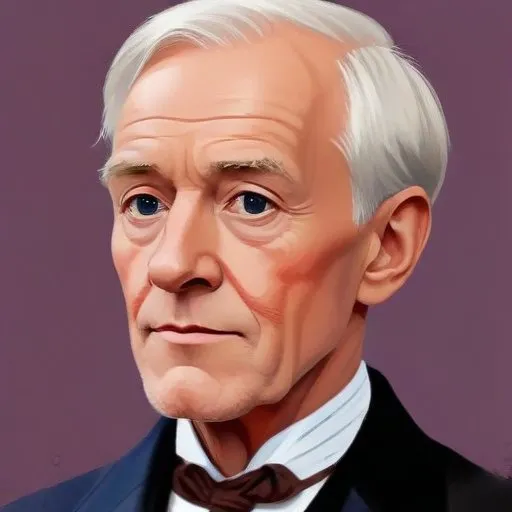
A Scottish historian, economist, and philosopher who contributed significantly to the development of classical economics, utilitarianism, and the British East India Company, shaping modern economic thought.
James Mill, a Scottish historian, economist, and philosopher, is best known for his influential work, The History of British India (1817), which divided Indian history into three distinct periods: Hindu, Muslim, and British. This classification has had a profound impact on the field of Indian historical studies, shaping the way historians and scholars approach the subject to this day.
Born James Milne on April 6, 1773, in Northwater Bridge, Angus, Scotland, Mill was the son of a shoemaker and small farmer. His mother, Isabel Fenton, recognized his intellectual potential and ensured he received a superior education. Mill attended the Montrose Academy until the age of 17 and a half, before entering the University of Edinburgh, where he excelled as a Greek scholar.
In October 1789, Mill was ordained as a minister of the Church of Scotland, but he failed to find success in this role. According to his son, John Stuart Mill's autobiography, James Mill had rejected the beliefs of Revelation and Natural Religion through his own studies and reflections. Between 1790 and 1802, Mill supported himself through various tutorships, while pursuing historical and philosophical studies.
In 1802, Mill moved to London, where he devoted himself to his literary work. He is credited with founding the Ricardian school of economics, which emphasized the importance of free trade and laissez-faire policies. Mill's magnum opus, The History of British India, not only introduced a new periodization of Indian history but also provided a comprehensive account of the region's past, which remains essential reading for historians today.
Mill's personal life was marked by his relationships with esteemed figures, including Sir John Stuart of Fettercairn. He was also the father of John Stuart Mill, a prominent philosopher of liberalism and utilitarianism. James Mill's legacy extends beyond his literary contributions, as his work has shaped the way we understand Indian history, economics, and colonialism.
Mill's philosophical contributions were largely shaped by his rejection of traditional religious beliefs and his emphasis on reason and individual liberty. He was an advocate for free trade and minimal government intervention, which aligned with the principles of liberalism and utilitarianism.
Mill's work was not without controversy, as his colonial approach to Indian history has been criticized for its imperialist undertones. Despite this, his contributions to the field of economics and history remain unparalleled, and his influence can be seen in the works of subsequent scholars and economists.
Mill's writings are characterized by their clarity and insight, as evident in his statement: "The notion of a people's being governed by their own consent, is one of those fictions, which, though not true, are necessary to the peace of human society."
Mill's work must be understood within the context of the late 18th and early 19th centuries, a period marked by colonial expansion and economic transformation. His legacy extends beyond his own lifetime, as his ideas continue to influence contemporary debates on economics, history, and colonialism.
Mill's contributions can be compared to those of his contemporaries, such as David Ricardo and Adam Smith, who also shaped the field of economics. While their ideas differed, they shared a commitment to individual liberty and free trade, which characterized the intellectual landscape of their time.
Mill's relationships with his son, John Stuart Mill, and Sir John Stuart of Fettercairn, provide valuable insights into his personal life and character. These relationships not only influenced his work but also shaped the intellectual and social circles in which he moved.
Mill's work continues to influence contemporary debates on economics, history, and colonialism. His ideas on free trade and individual liberty remain essential to understanding the complexities of modern society, and his legacy can be seen in the works of scholars and economists today.
Born in 1806
A prominent 19th-century thinker who championed individual liberty, free speech, and women's rights, and is best known for his influential book "On Liberty".
Born in 1772
A British economist and politician who developed the concept of comparative advantage, which revolutionized international trade and shaped modern economic theory.
61 Years Old
A lawyer and politician who served in the U.S. House of Representatives from 1987 to 1997, known for his moderate Republican views and advocacy for environmental issues.
Born in 1748
Developed the concept of utilitarianism, which aims to maximize overall happiness and well-being, and is considered the founder of modern welfare economics.
Born in 1767
A French economist and academic who developed the concept of entrepreneurship and is credited with coining the term "economist," making significant contributions to classical economics. He is also known for Say's Law, which states that "supply creates its own demand."
