


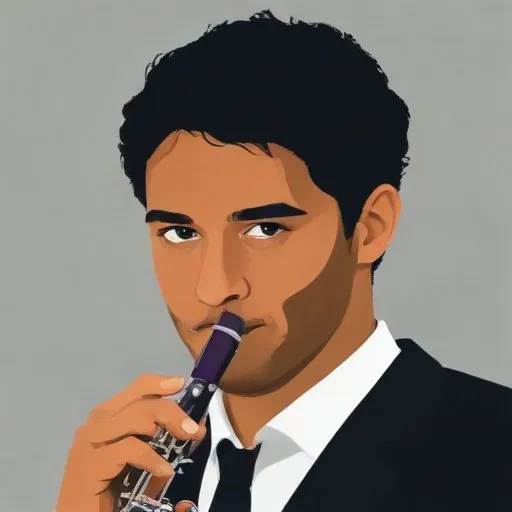
A pioneering jazz clarinetist, known for his innovative and expressive playing style, which helped shape the sound of early jazz.
Alcide Nunez, also known as Yellow Nunez, was a pioneering American jazz clarinetist who left an indelible mark on the genre. He was one of the first musicians from New Orleans to make audio recordings, setting the stage for the city's rich jazz heritage.
Born on March 17, 1884, in St. Bernard Parish, Louisiana, Nunez grew up in the vibrant city of New Orleans. His parents, Victor Nunez and Elisa Nunez Chalaire, were of Isleño and French Creole descent, respectively. The family moved to New Orleans when Nunez was a child, and he spent his formative years in the Marigny and Bywater districts.
Nunez's musical journey began when he joined several bands, playing guitar initially, but soon switching to clarinet around 1902. He rapidly became one of the top hot clarinetists in the city, known for his improvisational skills and ability to play multiple instruments.
By 1905, Nunez was a regular in Papa Jack Laine's band, and he also played with Tom Brown, occasionally leading bands of his own. His talent and versatility earned him a spot in the prestigious Steins Dixie Jass Band, which later became famous as the Original Dixieland Jass Band. Although he left the band before they made their first recordings, Nunez's contribution to the development of jazz was already evident.
In 1917, Nunez filed a copyright claim for a sheet music version of "Livery Stable Blues" alongside Ray Lopez, sparking a lawsuit from Nick LaRocca and the Original Dixieland Jass Band. The lawsuit was eventually thrown out, with the judge ruling that musicians who couldn't read written music couldn't be said to have written anything. This controversy highlights the complex and often contentious nature of jazz's early days.
Despite this setback, Nunez continued to play with Tom Brown's band in Chicago and later with Bert Kelly's band in New York City. His influence on the evolution of jazz is undeniable, and his legacy as a pioneering clarinetist and improviser remains unwavering.
Alcide Nunez's contributions to jazz paved the way for future generations of musicians. His improvisational skills and ability to play multiple instruments helped shape the genre's distinctive sound. Today, Nunez is recognized as a crucial figure in the development of New Orleans jazz, an integral part of the city's cultural heritage.
In conclusion, Alcide Nunez's life and career serve as a testament to the power of innovation and creativity. As a pioneering clarinetist and improviser, he left an indelible mark on the world of jazz, ensuring his legacy as one of the genre's most important figures.
Born in 1897
A pioneering jazz musician who blended traditional and experimental styles, creating a unique sound that influenced generations of jazz artists.
Born in 1901
A legendary jazz musician who revolutionized the genre with his unique trumpet playing and raspy vocals, leaving an indelible mark on American music.
Born in 1899
A legendary jazz pianist, composer, and bandleader who revolutionized the genre with his unique style and iconic compositions, such as "Take the A Train" and "Mood Indigo".
Born in 1904
A legendary jazz pianist and bandleader who led a iconic orchestra, blending swing and blues to create a unique sound that influenced generations of musicians. Known for his distinctive "less-is-more" style and hits like "April in Paris" and "One O'Clock Jump".
Born in 1909
A virtuosic clarinetist and bandleader, known as the "King of Swing," who revolutionized jazz music with his energetic and sophisticated style, leading a racially integrated orchestra in the 1930s.
Born in 1910
A virtuosic clarinetist and innovative bandleader, he revolutionized the swing era with his unique sound and iconic hits like "Begin the Beguine" and "Stardust".
Born in 1913
A legendary jazz musician and bandleader, known for his virtuosic saxophone and clarinet playing, and leading his iconic orchestra through the swing and bebop eras.
Born in 1904
A pioneering jazz musician who revolutionized the saxophone's role in jazz, creating a rich, full-bodied sound that influenced generations of musicians.
