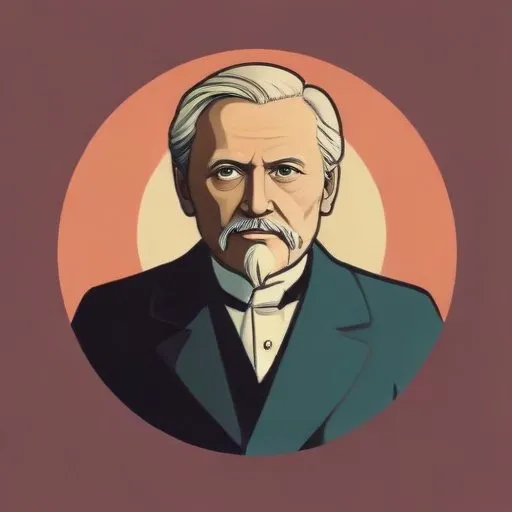
Alexander Bogdanov: The Polymath Revolutionary
The Visionary Behind Systems Theory and Blood Transfusion
Alexander Bogdanov, born Alexander Malinovsky, was a Russian and Soviet physician, philosopher, science fiction writer, and Bolshevik revolutionary who left an indelible mark on various fields. He is renowned for pioneering blood transfusion and general systems theory, as well as making significant contributions to cybernetics.
A Life of Versatility
Born on August 22, 1873, in Sokka, Russian Empire (now Poland), Bogdanov was the second of six children to a rural teacher's family. He attended the Gymnasium at Tula, where he was awarded a gold medal upon graduation. This early achievement set the stage for his future accomplishments, which would span multiple disciplines.
Philosophical Contributions and Beliefs
Bogdanov's philosophical pursuits led to the development of tectology, a precursor to systems theory. This novel philosophy explored the universal principles governing complex systems. As an economist and culture theorist, he delved into the intricacies of human society, analyzing the relationships between seemingly disparate entities.
Career Highlights and Major Works
- Red Star (1908) - a science fiction novel that explores a Martian utopia and critiques capitalism
- Engineer Menni (1913) - a utopian novel that envisions a future society where technology has resolved social conflicts
- Tectology: Universal Organizational Science (1913-1922) - a comprehensive work on systems theory and philosophy
Political Activism and Controversies
Bogdanov co-founded the Bolsheviks in 1903, alongside
Vladimir Lenin. However, their ideological differences led to his expulsion in 1909, prompting him to establish his own faction, Vpered. During the early years of the Soviet Union, Bogdanov emerged as a vocal critic of the Bolshevik government and Lenin's policies, advocating for a more leftist approach.
Influence on Modern Society
Bogdanov's pioneering work in systems theory has far-reaching implications for modern fields such as management, economics, and ecology. His ideas on blood transfusion have saved countless lives, and his science fiction writings have inspired generations of authors and thinkers.
Personal Milestones and Key Life Events
- 1909: Expelled from the Bolshevik party, leading to the formation of Vpered
- 1917: Returns to Russia after the February Revolution, becoming a prominent figure in the Soviet Union
- 1923: Founds the Institute for Blood Transfusion, pioneering the development of blood banks
- 1928: Dies on April 7, due to complications from an experiment involving blood transfusion
Legacy and Impact
Alexander Bogdanov's revolutionary ideas and achievements have left a lasting legacy, transcending disciplinary boundaries. His contributions to systems theory, blood transfusion, and science fiction have cemented his place as a visionary thinker and polymath. As a testament to his influence, Bogdanov's work continues to inspire and shape modern thought, a true embodiment of the Russian revolutionary spirit.
FAQ
Who was Alexander Bogdanov and what were his contributions to philosophy and medicine?
Alexander Bogdanov was a Russian physician, philosopher, and writer who made significant contributions to the development of philosophy, particularly in the areas of epistemology and philosophy of science.
What were Alexander Bogdanovs views on epistemology and philosophy of science?
Bogdanov believed that knowledge is based on experience and that scientific knowledge is a product of social and historical processes. He also argued that science should be grounded in empirical evidence and that metaphysics should be avoided.
How did Alexander Bogdanov influence the development of Russian philosophy?
Bogdanovs work had a significant impact on the development of Russian philosophy, particularly in the areas of epistemology, philosophy of science, and social philosophy. His ideas influenced later philosophers, including Vladimir Lenin and Leon Trotsky.
What was Alexander Bogdanovs role in the Bolshevik Revolution?
Bogdanov was a close associate of Vladimir Lenin and played a key role in the Bolshevik Revolution. He later became disillusioned with the Soviet regime and was eventually expelled from the Communist Party.
Is Alexander Bogdanov recognized as a prominent figure in Russian philosophy?
Yes, Bogdanov is recognized as a prominent figure in Russian philosophy, and his contributions to epistemology, philosophy of science, and social philosophy remain influential today.