


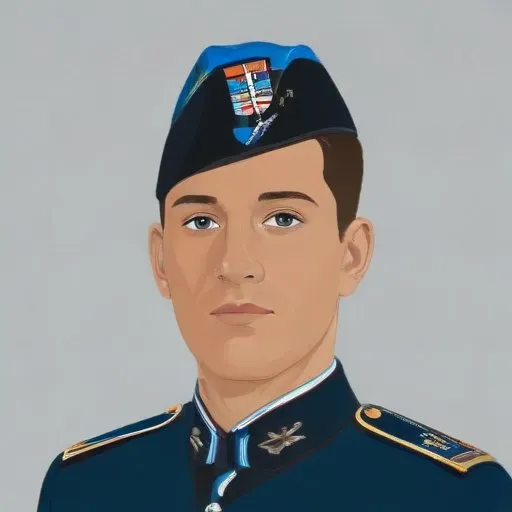
A heroic lieutenant who received the Medal of Honor for his bravery during World War II, particularly for his actions during the Battle of Tarawa. He is remembered for his selfless sacrifice and ultimate heroism.
Alexander Bonnyman Jr. is renowned for his valiant efforts during World War II, particularly for his Medal of Honor and Purple Heart awarded posthumously for his bravery during the Battle of Tarawa.
Born on May 2, 1910, in Atlanta, Georgia, Bonnyman's family relocated to Knoxville, Tennessee, when he was just a baby. His father, the president of Knoxville's Blue Diamond Coal Company, instilled in him a sense of duty and determination.
Bonnyman attended Princeton University, where he studied engineering and excelled in football. Although he dropped out after his sophomore year, he pursued his passion for flight by joining the Army Air Corps in June 1932. Despite being discharged three months later due to "flying deficiency," his character was deemed excellent. He later worked in the coal industry before moving to New Mexico, where he established a thriving copper mining business.
When World War II broke out, Bonnyman, despite being exempt from military service due to his role in producing vital war materials, chose to enlist in the U.S. Marine Corps as a private in Phoenix, Arizona.
He received his recruit training at Marine Corps Recruit Depot San Diego, California. In October 1942, Bonnyman sailed for the South Pacific aboard the SS Matsonia, where he distinguished himself at the Battle of Guadalcanal as part of a Marine pioneer unit.
In February 1943, he received a battlefield commission to the rank of second lieutenant in recognition of his exceptional leadership skills. His unique blend of civilian background, temperament, and skills would prove instrumental in the upcoming Battle of Tarawa.
During the Battle of Tarawa in November 1943, Bonnyman was assigned to a shore party handling beachhead logistics. As the assault troops struggled to breach the Japanese defenses, Bonnyman volunteered to lead a group of men in an attempt to destroy a bombproof shelter.
Undeterred by heavy enemy fire, Bonnyman repeatedly exposed himself to danger, directing his team with courage and precision. Despite being severely wounded, he continued to inspire his comrades, ultimately sacrificing his life to secure the shelter's destruction.
Bonnyman's selfless act of heroism earned him the Medal of Honor and Purple Heart, awarded posthumously to his family. His bravery and sacrifice will forever be remembered as a testament to the unwavering dedication of the United States Marine Corps.
Alexander Bonnyman Jr.'s remarkable story serves as a beacon of inspiration, reminding us of the unrelenting spirit of those who have fought to protect our freedom.
Born in 1925
A decorated war hero and Hollywood star, known for bravery in World War II and starring in films like "The Red Badge of Courage" and "To Hell and Back".
Born in 1887
A heroic World War I soldier who single-handedly captured 132 German soldiers, earning the Medal of Honor for his bravery. He became a celebrated war hero and symbol of American patriotism.
Born in 1890
Led the Allied forces to victory in World War II and later served as President, maintaining peace and prosperity during the Cold War era. He's known for his strategic leadership and diplomatic skills.
Born in 1885
A renowned military leader who played a crucial role in World War II, particularly in the Allied victory in Europe, known for his bold tactics and unapologetic style.
Born in 1893
Led the US Army in World War II and became the last five-star general, playing a crucial role in shaping post-war American military strategy. He's also known for his humble and unassuming leadership style.
Born in 1885
Led the U.S. Pacific Fleet to victory in World War II, playing a crucial role in defeating Japan and ending the war. He was a highly respected and decorated naval leader.
Born in 1880
A highly decorated war hero and master strategist who led troops to victory in World War I and II, and later became a prominent figure in the occupation of Japan.
Born in 1922
A Japanese Imperial Army intelligence officer who refused to surrender after World War II, holding out in the jungle for 29 years, believing the war was still ongoing. He finally surrendered in 1974, becoming an international sensation.
