


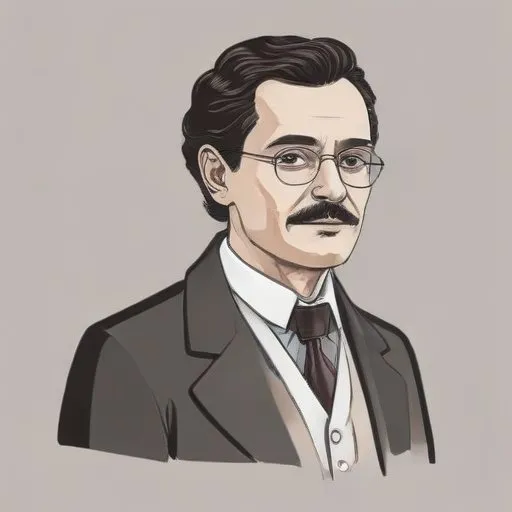
Developed the theory of chemical structure, which revolutionized organic chemistry, and discovered the compound formaldehyde.
Alexander Butlerov, a Russian chemist, is best known for his groundbreaking work in the theory of chemical structure, which laid the foundation for modern organic chemistry. In the mid-19th century, he introduced the concept of double bonds into structural formulas, revolutionizing the field of chemistry and paving the way for future discoveries.
Alexander Mikhaylovich Butlerov was born on September 15, 1828, into a landowning family in Russia. His early interest in chemistry led him to pursue higher education at the University of Kazan, where he graduated in 1850. He later earned his Ph.D. from the University of St. Petersburg in 1854.
Butlerov's most significant contributions to chemistry include:
Butlerov's work was recognized through various awards and honors, including the Demidov Prize in 1868. The crater Butlerov on the Moon is also named after him, a testament to his significant contributions to the field of chemistry.
Alexander Butlerov's work laid the foundation for modern organic chemistry, and his discoveries have had a lasting impact on the field. His contributions have paved the way for further research and discoveries, making him an iconic figure in the history of chemistry.
Butlerov's personal life was marked by significant milestones, including his marriage to Alexandra Mikhailovna and the birth of their two children. Despite his many achievements, Butlerov remained humble and dedicated to his work, leaving a lasting legacy in the world of chemistry.
Butlerov's work has had a profound impact on modern society, with his discoveries influencing various industries, including pharmaceuticals, chemicals, and materials science. His contributions have also inspired future generations of chemists, paving the way for new discoveries and innovations.
Alexander Butlerov's remarkable life and work serve as a testament to the power of dedication, hard work, and innovation. His legacy continues to inspire and influence the field of chemistry, ensuring his place as one of the most important figures in the history of science.
Born in 1834
Creator of the periodic table of elements, organizing them by properties and predicting unknown elements. This groundbreaking work revolutionized chemistry and remains a fundamental tool today.
Born in 1812
Pioneering organic chemist who discovered benzidine and developed a method for reducing nitro compounds to amines, significantly advancing the field of organic chemistry.
Born in 1803
Developed groundbreaking theories on organic chemistry and agriculture, revolutionizing farming practices and earning the title "Father of Fertilizers".
Born in 1779
Developed the modern system of chemical notation and discovered several elements, including silicon and selenium. He's considered the father of Swedish chemistry.
Born in 1818
Developed the theory of chemical structure and introduced the concept of synthetic chemistry, revolutionizing the field of organic chemistry.
