


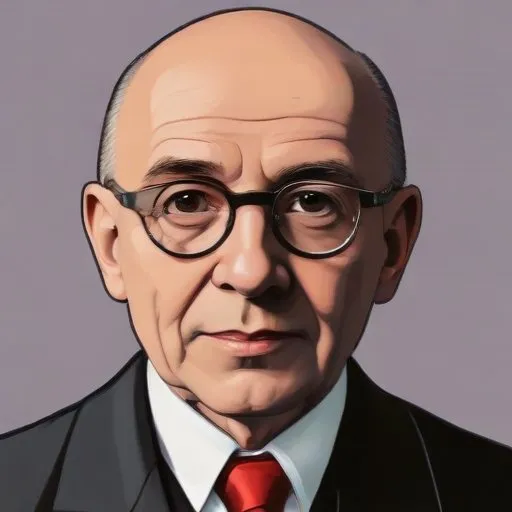
Developed the theory of chemical structure and introduced the concept of synthetic chemistry, revolutionizing the field of organic chemistry.
Hermann Kolbe is renowned for his groundbreaking contributions to the birth of modern organic chemistry, a field that has revolutionized the way we understand and interact with the natural world. He is credited with being the first to apply the term "synthesis" in a chemical context, thereby paving the way for the development of modern organic chemistry.
Kolbe was born on September 27, 1818, in Elliehausen, near Göttingen, Kingdom of Hanover, Germany, as the eldest son of a Protestant pastor. He developed a passion for the study of chemistry at a young age and pursued his education at the Göttingen Gymnasium, where he resided at the home of one of the professors.
Kolbe's most notable contributions include the synthesis of the organic substance acetic acid from carbon disulfide, which led to the philosophical demise of vitalism. He also made significant contributions to the development of structural theory through his modifications to the idea of radicals and accurate prediction of the existence of secondary and tertiary alcohols.
Kolbe is also recognized for his pioneering work on the Kolbe electrolysis of carboxylate salts, the Kolbe-Schmitt reaction in the preparation of aspirin, and the Kolbe nitrile synthesis. These discoveries not only expanded our understanding of organic chemistry but also paved the way for the development of new industrial processes and applications.
Kolbe's work had a profound impact on modern society, particularly in the fields of medicine, agriculture, and materials science. His discoveries enabled the development of new medicines, fertilizers, and materials that have transformed our daily lives.
In recognition of his contributions to the field of chemistry, Kolbe was elected to the Royal Swedish Academy of Sciences and awarded the Royal Society of London's Davy Medal in the year of his death, 1884.
Despite his numerous achievements, Kolbe was not without controversy. He was known for his vituperative essays on Kekulé's structure of benzene, van't Hoff's theory on the origin of chirality, and Baeyer's reforms of nomenclature, which were personally critical and linguistically violent.
Kolbe married Charlotte and had four children. He spent the later years of his life editing the Journal für Praktische Chemie, where he continued to contribute to the development of organic chemistry. Kolbe died of a heart attack in Leipzig at the age of 66, six years after the death of his wife.
Kolbe's work was driven by a strong philosophical belief in the unity of natural and organic chemistry. He was a vocal critic of vitalism, which posited that living organisms were fundamentally different from inorganic matter. Through his work, Kolbe demonstrated the power of human ingenuity and the importance of rigorous scientific inquiry.
Kolbe's legacy extends far beyond his own contributions to the field of organic chemistry. He trained and mentored many prominent chemists, including Zaitsev, Curtius, Beckmann, Graebe, and Markovnikov, who went on to make significant contributions of their own. Kolbe's work continues to inspire and influence modern chemists, ensuring that his impact will be felt for generations to come.
Born in 1800
German chemist and academic who synthesized urea, debunking the theory of vitalism, and made significant contributions to organic chemistry. He is considered one of the founders of modern organic chemistry.
Born in 1803
Developed groundbreaking theories on organic chemistry and agriculture, revolutionizing farming practices and earning the title "Father of Fertilizers".
Born in 1829
A German chemist and academic who discovered the structure of benzene and founded the theory of chemical structure, revolutionizing organic chemistry.
Born in 1835
German chemist and Nobel laureate who synthesized barbituric acid and developed the theory of organic dyes, revolutionizing the textile industry. His work laid the foundation for modern dye chemistry.
Born in 1847
A German chemist and academic who pioneered the field of alicyclic compounds and was awarded the Nobel Prize in Chemistry in 1910 for his work on alkaloids. He discovered and characterized many new compounds, significantly advancing the field of organic chemistry.
Born in 1853
A Latvian-German chemist and academic who pioneered work on catalysis, chemical equilibria, and reaction rates, earning a Nobel Prize in Chemistry in 1909. He's also credited with developing the Ostwald process for producing nitric acid.
Born in 1852
Pioneering chemist who discovered the laws of chemical equilibrium and osmotic pressure, revolutionizing our understanding of chemical reactions.
