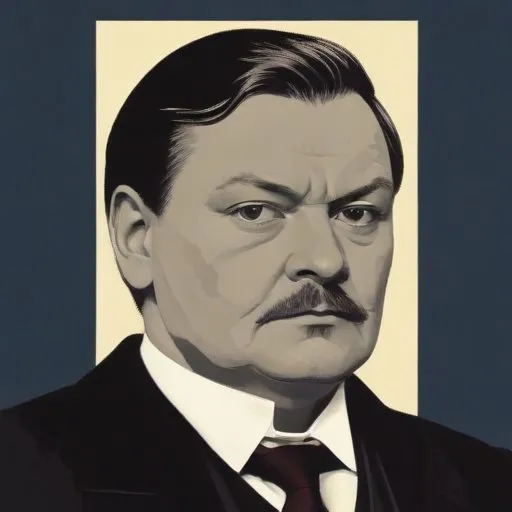
Alexander Glazunov: The Russian Maestro of Late Romantic Music
A Legacy of Nationalism and Cosmopolitanism
Alexander Glazunov is renowned for reconciling nationalism and cosmopolitanism in Russian music, leaving an indelible mark on the late Romantic period. As a composer, music teacher, and conductor, he successfully blended different influences to create a unique sound that captivated audiences worldwide.
Early Life and Training
Born on August 10, 1865, in Saint Petersburg, Russia, Glazunov was the son of a wealthy publisher. He began studying piano at the age of nine and started composing at 11. His talent was quickly recognized by
Mily Balakirev, former leader of the nationalist group The Five, who introduced him to Nikolai Rimsky-Korsakov.
Rise to Prominence
Under Rimsky-Korsakov's guidance, Glazunov honed his skills, and by the age of 16, he was already composing symphonies. His first symphony, written in 1882, was premiered by Rimsky-Korsakov himself. This marked the beginning of a long and fruitful career, with Glazunov going on to compose eight symphonies, five concertos, and numerous chamber music pieces.
Director of the Saint Petersburg Conservatory
In 1905, Glazunov became the director of the Saint Petersburg Conservatory, a position he held until 1928. During his tenure, he played a crucial role in reorganizing the institute into the Petrograd Conservatory, and later, the Leningrad Conservatory, following the Bolshevik Revolution. He continued to head the Conservatory until 1930, even after leaving the Soviet Union in 1928.
Influence on Modern Society
Glazunov's impact on modern society is multifaceted. He was instrumental in shaping the course of Russian music, encouraging younger composers like
Dmitri Shostakovich and Sergey Prokofiev. His own music, characterized by its lyricism, grandeur, and technical skill, continues to inspire musicians and composers today.
Career Highlights and Major Works
- Symphony No. 1 in E major (1882)
- Symphony No. 2 in F-sharp minor (1886)
- Piano Concerto No. 1 in F minor (1892)
- Violin Concerto in A minor (1904)
- The Seasons, a ballet in two acts (1899)
- Saxophone Concerto in E-flat major (1934)
Philosophical Contributions and Beliefs
Glazunov believed that music should be a reflection of the human experience, with all its complexities and contradictions. He advocated for the importance of national identity in music, while also embracing the cosmopolitan spirit of the late Romantic era.
Personal Milestones and Key Life Events
- 1882: Received hereditary nobility status
- 1899: Completed his iconic ballet, The Seasons
- 1905: Became director of the Saint Petersburg Conservatory
- 1928: Left the Soviet Union and continued to compose in exile
- 1936: Passed away on March 21, in Paris, France
Legacy and Impact
Glazunov's music continues to be performed and admired worldwide, with his symphonies and concertos remaining staples of the classical music repertoire. As a teacher and mentor, he inspired generations of composers, shaping the course of Russian music for decades to come. His legacy serves as a testament to the power of music to bring people together, transcending borders and boundaries.
FAQ
What is Alexander Glazunovs most famous composition?
Alexander Glazunovs most famous composition is his Violin Concerto in A minor, Op. 82, which is considered one of the most technically challenging and expressive works in the violin repertoire.
What was Alexander Glazunovs role in the Russian music scene?
Alexander Glazunov was a leading figure in the Russian music scene, serving as a composer, conductor, and educator, and playing a key role in shaping the countrys musical identity.
Who were Alexander Glazunovs mentors?
Alexander Glazunov was mentored by Nikolai Rimsky-Korsakov and Mily Balakirev, two prominent Russian composers who helped shape his musical style.
What is Alexander Glazunovs contribution to ballet music?
Alexander Glazunov made significant contributions to ballet music, composing scores for works such as Raymonda and The Seasons, which are still widely performed today.
What was Alexander Glazunovs relationship with the Belyayev Circle?
Alexander Glazunov was a key figure in the Belyayev Circle, a group of Russian composers and musicians who sought to promote Russian music and culture.