


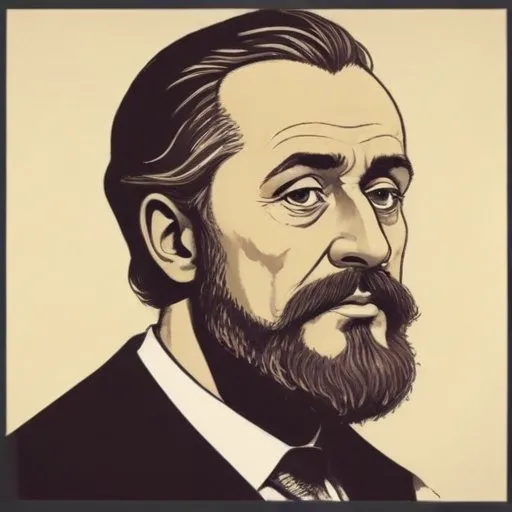
A 19th-century Russian literary mastermind who penned witty, satirical plays and poems that still resonate with audiences today, particularly his iconic comedy "Woe from Wit".
Russian literary circles revere Alexander Griboyedov as the brilliant mind behind the iconic verse comedy, "Woe from Wit," a masterpiece that has captivated audiences for centuries. This 19th-century poet, playwright, and diplomat played a pivotal role in shaping Russia's cultural identity, leaving an indelible mark on the country's literary and diplomatic landscapes.
Born in Moscow in 1795, Griboyedov's exact birthdate remains a topic of debate among biographers. He pursued a master's degree in philology from Moscow University, subsequently enrolling in the doctorate program. However, he abandoned his academic pursuits in 1812 to join the military, obtaining a commission in a hussar regiment.
Griboyedov's military stint was short-lived, as he resigned in 1816 to enter the civil service. His remarkable talent and linguistic prowess soon earned him an appointment as secretary of the Russian legation in Persia (modern-day Iran) in 1818. This marked the beginning of his illustrious diplomatic career, during which he played a crucial role in the ratification of the Treaty of Turkmenchay in 1828.
Griboyedov's diplomatic endeavors took him to Georgia, where he immersed himself in the local culture, developing a deep appreciation for its rich heritage. His experiences in Persia and Georgia profoundly influenced his literary works, infusing them with a unique blend of Eastern and Western sensibilities.
Griboyedov's literary legacy is exemplified by his iconic verse comedy, "Woe from Wit," a scathing satire that lampoons the societal ills of 19th-century Russia. This masterpiece, penned in 1823, cemented his reputation as a literary giant, offering a poignant commentary on the Russian aristocracy and its moral decay.
Beyond his literary prowess, Griboyedov was a gifted musician, composing several waltzes and vaudevilles. Although only two of his waltzes have survived to the present day, his musical talents were an integral part of his creative persona.
In 1829, Griboyedov's life was tragically cut short in a brutal massacre at the Russian embassy in Tehran. This senseless act of violence, fueled by anti-Russian sentiment, not only claimed his life but also those of his embassy staff. Despite this tragic end, Griboyedov's literary and diplomatic achievements continue to inspire generations of Russians and literature enthusiasts worldwide.
In conclusion, Alexander Griboyedov's extraordinary life and achievements serve as a testament to his boundless creativity, intellectual curiosity, and diplomatic acumen. His legacy continues to enrich Russian culture, offering a fascinating glimpse into the country's rich literary and diplomatic heritage.
Born in 1814
A 19th-century Russian literary giant, known for his poignant poetry and novels that explored the human condition, particularly in the context of Russian society. His works are still widely read and studied today.
Born in 1799
Russia's literary icon penned timeless tales of love, drama, and social commentary, leaving an indelible mark on the country's cultural heritage.
Born in 1783
A Russian literary giant who masterfully translated European classics into Russian, while also penning his own romantic poetry that captivated the nation's heart.
Born in 1803
A Russian philosopher and literary critic who wrote influential works on aesthetics, ethics, and social issues, and is considered a key figure in the development of Russian philosophical thought.
Born in 1769
A renowned Russian literary figure, celebrated for his witty and insightful fables that continue to captivate readers of all ages with their timeless wisdom and humor.
