


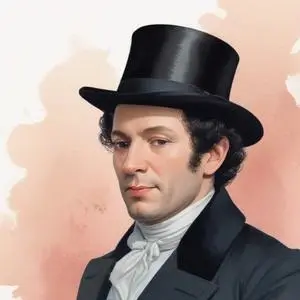
Russia's literary icon penned timeless tales of love, drama, and social commentary, leaving an indelible mark on the country's cultural heritage.
Alexander Pushkin, the luminary of Russian literature, is celebrated for his profound contributions to poetry, drama, and prose. As a pioneer of Romanticism, Pushkin's works are revered for their lyricism, depth, and intense emotional power, earning him the reputation as the greatest Russian poet and founder of modern Russian literature.
Pushkin was born on June 6, 1799, in Moscow, Russia, to a noble family. His father, Sergey Lvovich Pushkin, was a distant relative of theRussian nobility, while his mother, Nadezhda Ossipovna Gannibal, was descended from a German and Scandinavian noble lineage. Pushkin's maternal great-grandfather, Abram Petrovich Gannibal, was a nobleman of African origin who was kidnapped and eventually became a godson of the Russian Emperor.
Pushkin's literary talent blossomed at an early age. He published his first poem at 15 and was recognized by the literary establishment upon graduation from the Tsarskoye Selo Lyceum. His poem "Ode to Liberty," recited at his graduation, sparked controversy and led to his exile by Emperor Alexander I.
Pushkin's most celebrated works include:
Pushkin's works often reflected his philosophical perspectives on freedom, individuality, and the human condition. His poetry and prose critiqued the autocratic system, advocating for social change and human rights.
Pushkin's romantic life was marked by turmoil and tragedy. He was fatally wounded in a duel with Georges-Charles de Heeckeren d'Anthès, a French officer, on February 10, 1837. This tragic event has become an enduring symbol of Pushkin's rebellious spirit and dedication to his art.
Pushkin's literary legacy extends far beyond his native Russia. His works have inspired countless writers, poets, and artists worldwide. His emphasis on individuality, creativity, and social critique has influenced generations of intellectuals and dissidents.
Today, Pushkin's works continue to captivate readers and inspire new generations of writers, poets, and artists. His rebellious spirit, philosophical insights, and masterful writing have cemented his place as one of the greatest literary figures of all time.
Some of Pushkin's most profound quotes include:
These quotes encapsulate Pushkin's thoughts on creativity, literature, and individual freedom, reflecting his enduring relevance to modern readers.
Born in 1814
A 19th-century Russian literary giant, known for his poignant poetry and novels that explored the human condition, particularly in the context of Russian society. His works are still widely read and studied today.
Born in 1818
A Russian literary mastermind who crafted poignant novels and plays that explored the human condition, delving into themes of love, family, and social change.
Born in 1821
A Russian literary mastermind who penned psychologically complex novels that probed the human condition, exploring themes of morality, philosophy, and the darker aspects of human nature.
Born in 1828
A Russian literary giant who penned sweeping novels like "War and Peace" and "Anna Karenina", exploring the human condition with profound insight and masterful storytelling.
Born in 1899
A Russian-born novelist and critic, renowned for crafting intricate, lyrical prose and exploring themes of identity, morality, and the human condition through works like "Lolita" and "Pale Fire".
Born in 1860
A renowned Russian literary mastermind, celebrated for crafting poignant, psychologically nuanced tales that probe the human condition, and pioneering the modern short story genre.
Born in 1880
A Russian literary giant, known for pioneering the avant-garde movement in literature, blending poetry and prose to create innovative, symbolic works that explored the human experience.
