


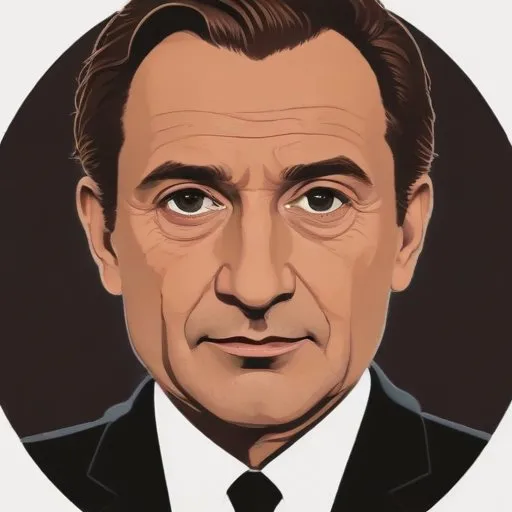
A pioneering filmmaker who brought epic stories to life on the big screen, producing and directing iconic movies like "The Thief of Bagdad" and "The Four Feathers".
Alexander Korda, a Hungarian-born British film director, producer, and screenwriter, is renowned for his remarkable contributions to the British film industry, producing iconic classics such as The Private Life of Henry VIII, Rembrandt, and The Thief of Baghdad. With a career spanning over four decades, Korda's innovative storytelling and visionary filmmaking style earned him a knighthood in 1942, making him the first filmmaker to receive this prestigious honor.
Born Sándor László Kellner on September 16, 1893, in Pusztatürptrsz, Austria-Hungary (now Hungary), Korda came from a Jewish family. After his father's death, he began writing film reviews to support his family and later changed the family name to Korda, derived from the Latin phrase "sursum corda" meaning "lift up your hearts".
Korda's early career in the Hungarian film industry led him to become an important figure, initially through his film magazines. He eventually transitioned to filmmaking, producing and directing numerous films in Hungary, Austria, and Germany during the silent film era.
In 1926, Korda moved to Hollywood, where he worked for several years before returning to Europe. During World War II, he returned to Hollywood and later settled in the UK, where he became a prominent figure in the British film industry. He founded London Films and later acquired British Lion Films, a film distribution company.
In recognition of his outstanding contributions to the film industry, Korda received numerous awards and honors, including his knighthood in 1942. He was also awarded the Grand Cross of the Royal Hungarian Order of Merit and the Hungarian Medal of Merit.
Korda was married twice, first to Hungarian film actress María Corda, and later to Merle Oberon, a British actress. His two younger brothers, Zoltan and Vincent, also worked in the film industry, often collaborating with him. Korda's remarkable life and career continue to inspire filmmakers and film enthusiasts alike, cementing his legacy as a pioneer in the British film industry.
Born in 1905
A pioneering filmmaker behind iconic movies like "Peeping Tom" and "The Red Shoes", known for his bold, visually stunning, and often controversial storytelling style.
Born in 1902
A Hungarian-English filmmaker behind iconic British movies, blending fantasy and reality, with a unique visual style and clever storytelling. He's most known for his work on classic films like "The Red Shoes" and "Black Narcissus".
Born in 1908
Acclaimed filmmaker behind epic, visually stunning movies like "Lawrence of Arabia" and "Doctor Zhivago", known for his meticulous attention to detail and sweeping cinematography.
Born in 1906
Acclaimed filmmaker behind classics like "The Third Man" and "Oliver!", known for his visually stunning and suspenseful storytelling style.
Born in 1899
Master of suspense, renowned for crafting iconic thrillers that blended psychological complexity with cinematic innovation, leaving an indelible mark on the film industry.
Born in 1889
A pioneer of silent film, he is renowned for his iconic "Little Tramp" character and groundbreaking work in writing, directing, and starring in his own movies.
Born in 1895
A pioneering silent film comedian, known for his deadpan expression and ingenious physical comedy, who wrote, directed, and starred in his own films.
Born in 1893
Pioneering silent film star and stunt master, known for performing daring physical comedy and iconic scenes, such as hanging from a clock tower.
