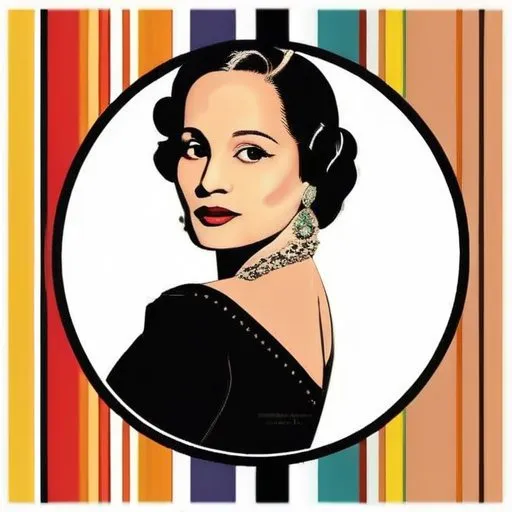
Merle Oberon: The Enigmatic Actress Who Defied Hollywood Conventions
A Pioneering Career in Hollywood
Merle Oberon was a British actress who left an indelible mark on Hollywood with her captivating performances and striking beauty. Best known for her iconic portrayal of Catherine Earnshaw in the 1939 film adaptation of Emily Brontë's
Wuthering Heights, Oberon's career spanned over four decades, earning her a reputation as one of the most versatile actresses of her time.
The Early Years: A Life of Deception and Discovery
Born Estelle Merle O'Brien Thompson on February 19, 1911, in Bombay, British India, Oberon's early life was shrouded in mystery. She was raised by her mother, Charlotte Selby, a Burgher from Ceylon (now Sri Lanka), and her father, Arthur Terrence O'Brien Thompson, a Welsh mechanical engineer. To conceal her mixed heritage, Oberon fabricated a story about being born in Tasmania, Australia, and claimed that her birth records were destroyed in a fire.
Rise to Stardom: From British Films to Hollywood Glamour
Oberon's film career began in Britain, where she landed a role as Anne Boleyn in
The Private Life of Henry VIII (1933). Her breakthrough performance in
The Scarlet Pimpernel (1934) led to a contract with Samuel Goldwyn in the United States. Her first American film,
The Dark Angel (1935), earned her an Academy Award nomination for Best Actress.
Iconic Roles and Box Office Successes
- Wuthering Heights (1939) - Oberon's portrayal of the fiery and passionate Catherine Earnshaw remains one of her most enduring performances.
- These Three (1936) - A drama about a love triangle, which showcased Oberon's ability to tackle complex characters.
- A Song to Remember (1945) - A biographical drama about the life of Frédéric Chopin, featuring Oberon as the composer's mistress, George Sand.
- Berlin Express (1948) - A thriller set in post-war Germany, which demonstrated Oberon's ability to adapt to different genres.
- Désirée (1954) - A romantic drama opposite Marlon Brando, which marked one of the last notable films of her career.
Personal Struggles and Triumphs
In 1937, Oberon suffered a devastating traffic accident that left her with facial injuries, which could have ended her career. However, she recovered and continued to work in film and television until 1973. Oberon's personal life was marked by secrets and scandals, including her concealed mixed heritage and a tumultuous marriage to director
Alexander Korda.
Lasting Legacy and Impact on Hollywood
Merle Oberon's remarkable career paved the way for future generations of actresses. Her fearlessness in taking on diverse roles and her determination to succeed in a male-dominated industry have inspired countless women in film. Despite the challenges she faced, Oberon remains an iconic figure in Hollywood history, remembered for her captivating performances and enduring beauty.
Trivia and Fun Facts
- Oberon was known as "Queenie" in honor of Queen Mary, who visited India in 1911.
- She was nominated for the Academy Award for Best Actress twice, in 1935 and 1945.
- Oberon's mother, Charlotte Selby, was a Burgher from Ceylon (now Sri Lanka).
A Life of Mystery and Glamour
Merle Oberon's life was a fascinating blend of mystery, glamour, and determination. As an actress, she defied Hollywood conventions, taking on complex roles and pushing boundaries. As a person, she struggled with secrets and scandals, but ultimately remained an icon of beauty and talent. Oberon's legacy continues to inspire, a testament to her enduring impact on the world of cinema.
FAQ
What was Merle Oberons most famous film role?
Merle Oberons most famous film role is arguably her portrayal of Catherine Earnshaw in the 1939 film adaptation of Emily Brontës Wuthering Heights, opposite Laurence Olivier. Her performance earned her widespread critical acclaim and solidified her status as a Hollywood star.
How did Merle Oberons Indian heritage influence her acting career?
Merle Oberons Indian heritage had a profound impact on her acting career, as she often faced prejudice and discrimination in the industry. However, she also drew strength from her heritage, using her unique perspective to bring depth and nuance to her roles.
What was Merle Oberons relationship with film director Alexander Korda?
Merle Oberon had a close professional and personal relationship with film director Alexander Korda, who discovered her and helped launch her career. Kordas influence on Oberons early work was significant, and she often credited him with helping her develop her craft.
How did Merle Oberon balance her film career with her personal life?
Merle Oberons personal life was often tumultuous, marked by high-profile romances and marriages. Despite the challenges, she successfully balanced her film career with her personal life, using her experiences to inform her performances and create a sense of authenticity on screen.
What is Merle Oberons legacy in the film industry?
Merle Oberons legacy in the film industry is marked by her trailblazing role as a woman of color in Hollywood, her unforgettable performances, and her influence on generations of actresses. Her pioneering spirit and dedication to her craft continue to inspire actors and filmmakers today.