


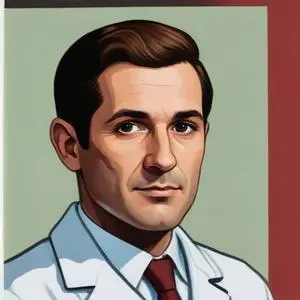
A pioneering surgeon and biologist who developed new surgical techniques and discovered ways to keep organs alive outside the body, earning a Nobel Prize in 1912.
Alexis Carrel, a French surgeon and biologist, is renowned for his groundbreaking work in vascular suturing, which earned him the Nobel Prize in Physiology or Medicine in 1912. He is also credited with inventing the first perfusion pump, paving the way for organ transplantation, and making significant contributions to tissue culture, transplantology, and thoracic surgery.
Born on June 28, 1873, in Sainte-Foy-lès-Lyon, Rhône, France, Carrel was raised in a devout Catholic family and educated by Jesuits. He studied medicine at the University of Lyon, where he developed a passion for surgery and research.
In 1902, Carrel developed a technique for suturing small blood vessels using extremely fine needles. This innovation revolutionized the field of surgery, enabling surgeons to perform complex procedures with greater precision and accuracy. He published his findings in a scientific article, which garnered international attention and acclaim.
In 1902, Carrel witnessed the inexplicable healing of Marie Bailly, a young woman who had been crippled by tuberculosis. This event had a profound impact on Carrel, transforming him from a skeptic to a believer in spiritual cures. Despite facing opposition from his peers, Carrel refused to dismiss a supernatural explanation for the event.
Carrel's conversion experience at Lourdes in 1902 had a profound impact on his life and career. He later wrote a book about the event, "The Voyage to Lourdes," which was published four years after his death. In 1904, Carrel left France for Canada, where he accepted a position at the University of Montreal. He later moved to the United States, where he spent most of his scientific career.
Carrel's work in vascular suturing and organ transplantation has had a lasting impact on modern medicine. His pioneering research has enabled the development of new surgical techniques, improved patient outcomes, and saved countless lives. Additionally, his work has paved the way for further advancements in transplantology and tissue engineering.
Carrel's spiritual conversion experience at Lourdes deepened his faith and influenced his philosophical beliefs. He remained a devout Catholic throughout his life, and his writings often reflected his spiritual perspective. Despite facing criticism from his peers, Carrel remained committed to his faith and its role in his scientific pursuits.
Alexis Carrel's work has had a profound and lasting impact on the field of surgery and medicine. His pioneering research, groundbreaking discoveries, and unwavering commitment to his faith have inspired generations of scientists, surgeons, and thinkers. Today, Carrel is remembered as a visionary who pushed the boundaries of human knowledge and achievement.
Born in 1902
The first person to fly solo non-stop across the Atlantic Ocean, completing a historic 33.5-hour flight in 1927 and becoming an international hero and aviation icon.
Born in 1919
Performed the first successful human kidney transplant, paving the way for modern organ transplantation.
Born in 1922
Performed the world's first human-to-human heart transplant, revolutionizing cardiac surgery and paving the way for modern organ transplants.
Born in 1908
Pioneering cardiovascular surgeon and educator who developed numerous surgical procedures and medical devices, revolutionizing the field of cardiovascular medicine.
Born in 1920
Performed the first human heart transplant in the United States and developed numerous cardiothoracic surgical techniques. Known for his pioneering work in cardiac surgery.
Born in 1908
Pioneering cardiovascular surgeon and educator who developed numerous surgical procedures and medical devices, revolutionizing the field of cardiovascular medicine.
Born in 1916
Pioneering scientist who discovered the structure of DNA, revolutionizing our understanding of genetics and life itself.
98 Years Old
Discovered the structure of DNA, revolutionizing our understanding of genetics and earning a Nobel Prize. Pioneering work in molecular biology has far-reaching implications for medicine and beyond.
