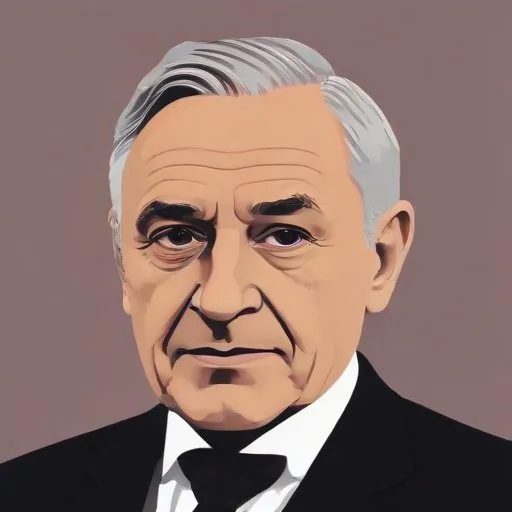
Alfred Domett: The Poetic Premier of New Zealand
Early Life and Education
Alfred Domett, the fourth premier of New Zealand, was born on 20 May 1811 in Camberwell Grove, Surrey, England. He was the sixth child and fourth son of Nathaniel Domett, a shipowner. Domett's early life was marked by travel and education, with him entering St John's College, Cambridge, but leaving in 1833 to explore the world.
Domett spent the next two years traveling in the United States, Canada, and the West Indies, where he gained experience in surveying and conveyancing during his winter stay in Upper Canada.
Rise to Prominence in New Zealand
In 1842, Domett emigrated to Nelson, New Zealand, aboard the Sir Charles Forbes, arriving with 187 settlers. This marked the beginning of his distinguished career in New Zealand politics. He was called to the bar in 1841 and soon became involved in the country's political landscape.
Wairau Affray and the Road to Premier
A broken leg may have saved Domett's life in 1843, as it prevented him from accompanying Captain Arthur Wakefield to a confrontation with local Māori beside the Wairau River. This event, known as the Wairau Affray, resulted in the deaths of Wakefield, twenty-one other settlers, and four Māori. Domett's rise to prominence continued, and he eventually became the fourth premier of New Zealand.
Literary Contributions
Domett's poetic talent is evident in his epic poem,
Ranolf and Amohia, a South Sea Day Dream. This masterpiece showcases his creative flair and provides insight into his experiences in New Zealand.
Personal Life and Family
In 1856, Domett married Mrs. Mary George, a widowed schoolteacher from Wellington. The couple had a son, Alfred Nelson Domett, and Domett also became a stepfather to Mary's two sons, John and James George.
Legacy and Impact
Alfred Domett's contributions to New Zealand's political and literary landscape are undeniable. As a premier, he played a significant role in shaping the country's early years, and as a poet, he left behind a lasting legacy in the form of
Ranolf and Amohia. His story serves as an inspiration to those who seek to make a meaningful impact in their adopted homeland.
- Interesting fact: Domett's stepson, John George, was killed during Te Kooti's War at the Battle of Te Puerue near Tongariro.
- Domett's poem, Ranolf and Amohia, speaks of his stepson John as "young, kindly, chivalrous."
Quotes and Memorable Sayings
Though Domett's quotes are not as widely known as his poetry, his writings speak to his character and experiences. One such quote is:
"I have always thought that one's view of the world is largely a matter of the spectacles through which one looks."
This quote reflects his introspective nature and highlights the importance of perspective in shaping our understanding of the world.
Historical Context and Legacy
Alfred Domett's life and work are a testament to the complexities of New Zealand's early years. His unique blend of political and literary pursuits has left an indelible mark on the country's history. As we reflect on his contributions, we are reminded of the power of creativity and leadership to shape the world around us.
Comparative Analysis with Contemporaries
Domett's story is often overshadowed by that of his contemporaries, such as
Robert Browning, with whom he was a close friend. However, his own achievements and contributions to New Zealand's literature and politics are significant in their own right. A closer examination of his life and work reveals a complex and fascinating individual who deserves recognition in his own right.
FAQ
What is Alfred Domett known for?
Alfred Domett was a prominent English-New Zealand poet, politician, and journalist, best known for his poetry and his role as the 4th Prime Minister of New Zealand.
What is Alfred Dometts poetry style?
Alfred Dometts poetry is characterized by its lyricism, romanticism, and use of natural imagery, reflecting his love of nature and his experiences in New Zealand.
What is Alfred Dometts role in New Zealand politics?
Alfred Domett played a significant role in New Zealand politics, serving as the Attorney-General and later as the Prime Minister, advocating for liberal reforms and social change.
What is Alfred Domett remembered for?
Alfred Domett is remembered as a pioneer of New Zealand literature, a champion of liberal values, and a dedicated public servant.
What is Alfred Dometts legacy?
Alfred Dometts legacy lies in his contributions to New Zealand literature, politics, and culture, shaping the countrys identity and influencing future generations of writers and politicians.