


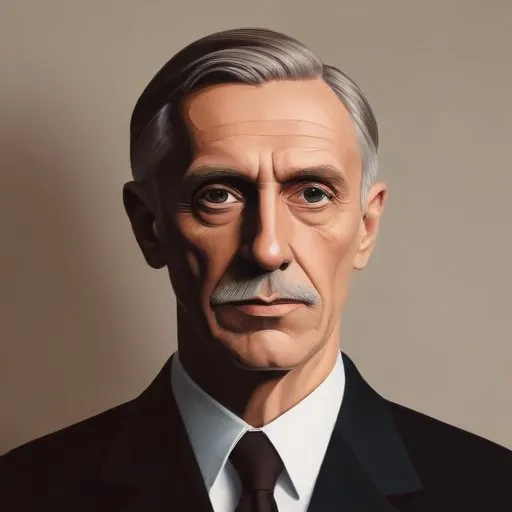
A 19th-century Swiss entrepreneur and statesman who played a key role in shaping Switzerland's economy and politics, particularly in the development of the country's rail network.
Alfred Escher, a Swiss politician, business leader, and railway pioneer, is renowned for his unparalleled influence on Switzerland's political and economic development in the 19th century. Through his multiple political posts and instrumental role in founding and managing various prominent institutions, Escher left an indelible mark on his country's history.
Born on February 20, 1819, in Zurich, Switzerland, into the esteemed Escher vom Glas family, Alfred Escher was destined for greatness. Despite his family's influential background, they had faced scandals in the past, including his great-grandfather's illegitimate child and his grandfather's bankruptcy. However, his father, Heinrich Escher, made a new fortune through land deals and trading, restoring the family's reputation.
Escher's political career began in 1848 when he was elected to the Swiss National Council, a position he held for an impressive 34 years. During this time, he championed the Free Radical Liberals and played a crucial role in shaping Switzerland's modernization. His leadership and vision led to the establishment of several iconic institutions, including the Swiss Northeastern Railway, the Swiss Federal Institute of Technology, Credit Suisse, Swiss Life, and the Gotthard Railway.
Escher's contributions extended beyond mere politics and economics. He was a strong advocate for education, innovation, and progress. His commitment to modernizing Switzerland was rooted in his belief that the country's prosperity depended on its ability to adapt and evolve. This forward-thinking approach earned him the respect and admiration of his contemporaries.
In 1857, Escher married Augusta Uebel, with whom he had two daughters, Lydia and Hedwig. Tragically, Hedwig passed away in infancy. Lydia, however, went on to marry Friedrich Emil Welti, the son of Federal Councillor Emil Welti, in 1883. Before her untimely death in 1890, Lydia invested the Escher fortune in the Gottfried Keller Foundation, named after the renowned Zurich writer who had been a close friend of her father's.
Alfred Escher's legacy is a testament to his unwavering dedication to Switzerland's development. His remarkable achievements have left an enduring impact on the country's politics, economy, and education system. As a pioneer in the railway industry, he paved the way for Switzerland's growth and modernization, earning him a revered place in the country's history.
Escher's words of wisdom continue to inspire generations: "The future belongs to those who believe in the beauty of their dreams." His vision, perseverance, and commitment to progress have left an indelible mark on Switzerland's history, serving as a reminder of the power of determination and hard work.
Escher's contributions have far-reaching implications for modern society. His advocacy for education, innovation, and progress has shaped Switzerland's development, making it the prosperous and forward-thinking nation it is today. His legacy serves as a beacon of inspiration, encouraging future generations to strive for excellence and work towards creating a better world.
Alfred Escher's illustrious career is a testament to his boundless energy, visionary leadership, and dedication to Switzerland's progress. His remarkable achievements have left an enduring impact on the country's history, ensuring his legacy continues to inspire and motivate generations to come.
Born in 1746
Developed a child-centered approach to education, emphasizing hands-on learning and emotional development, which revolutionized teaching methods and paved the way for modern progressive education.
Born in 1759
A renowned poet and playwright who crafted influential works that explored the human condition, morality, and the struggle for freedom, leaving a lasting impact on German literature.
Born in 1749
A German literary giant who penned iconic works like "Faust" and "The Sorrows of Young Werther", shaping the Romantic movement and influencing countless writers.
Born in 1729
A prominent Enlightenment thinker, he's known for his influential writings on philosophy, literature, and theology, which helped shape modern German culture. He's also credited with developing the concept of dramatic irony in literature.
Born in 1724
Developed influential philosophical frameworks, such as the Critique of Pure Reason, that shaped modern Western thought on ethics, morality, and human understanding.
Born in 1712
A pioneering thinker who shaped modern democracy and education with his ideas on social contracts, general will, and the importance of early childhood education. His writings influenced the French Revolution and modern political thought.
Born in 1694
A witty and insightful 18th-century writer and philosopher who used satire to critique societal norms and advocate for reason, tolerance, and human rights.
Born in 1689
A French lawyer and philosopher who developed the concept of separation of powers, which divides a government into legislative, executive, and judicial branches to prevent abuse of power. His ideas greatly influenced modern democracy.
