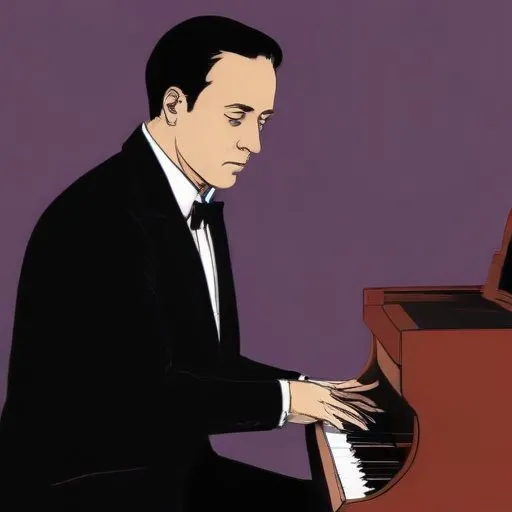
Alfred Karindi: The Estonian Organist and Composer extraordinaire
Known for his Masterful Organ Compositions and Conducting
Alfred Karindi was a renowned Estonian organist and composer who left an indelible mark on the music world with his extensive contributions to organ music, choral compositions, and orchestral works. Born on May 30, 1901, in the village of Knnu, Illuka Parish, Karindi's life was dedicated to creating music that continues to inspire and delight audiences to this day.
Early Life and Education
Karindi's passion for music began at a young age, and he pursued higher education in music at the Tartu Higher School of Music, where he studied organ under Johannes Krt and composition under Heino Eller. He graduated in 1927 and further honed his skills at Tallinn Conservatory, studying organ and composition under August Topman and Artur Kapp, respectively.
Teaching and Performing Career
Karindi's teaching career spanned several decades, during which he taught music at various institutions, including Tartu 2nd primary school, Tartu Higher Music School, and the University of Tartu. He was also an accomplished performer, serving as organist at several churches, including Tartu Maarja Church, University of Tartu Church, and Tallinn Kaarli Church. His exceptional improvisational skills on the organ earned him recognition, and he conducted numerous choirs in Tartu and Tallinn, often performing Mozart's Requiem.
Arrest and Exile
Karindi's life took a dramatic turn in 1950 when he was arrested by the Soviet authorities and imprisoned in a camp in Mordovia until 1954. This period of exile had a profound impact on his life and music, but he continued to compose and teach upon his return.
Return to Teaching and Composing
After his release, Karindi resumed teaching theory and organ at Tallinn State Conservatory, where he became head of the theory department in 1944 and a professor in 1946. He went on to found the Mixed Choir of Graduates of Higher Schools in 1957, which he conducted until his passing.
Musical Contributions
Karindi's compositional output includes a wide range of works, including choral music, organ music, solo songs, chamber pieces, and orchestral music. His vocal symphonic works are considered some of his most significant contributions to Estonian music. While his songs are complex and less frequently performed, they remain a testament to his innovative spirit.
Legacy
Alfred Karindi's life was a testament to his passion for music, and his contributions to Estonian cultural heritage continue to inspire generations of musicians and music lovers. Through his teaching, conducting, and composing, Karindi left an indelible mark on the music world, and his legacy continues to resonate to this day.
- Notable Works: Luulelaulud (Song Cycle), Püha Johannese Teine Kirja (The Second Epistle of St. John), and Te Deum
- Awards and Honors: Professor at Tallinn State Conservatory, Head of the Theory Department
- Influence on Modern Society: Karindi's music continues to be performed and celebrated in Estonia, perpetuating his legacy as a national composer
FAQ
What was Alfred Karindis contribution to Estonian music?
Alfred Karindi was an Estonian pianist and composer who made significant contributions to the countrys musical heritage. He was one of the first Estonian pianists to gain international recognition, performing in concerts across Europe and the Americas.
What style of music did Alfred Karindi compose?
Alfred Karindi composed music in a range of styles, including classical, romantic, and folk-inspired pieces. His works often featured complex harmonies and melodies, reflecting his deep understanding of Estonian folk music.
What were Alfred Karindis most famous compositions?
Alfred Karindis most famous compositions include his piano concertos, symphonies, and chamber music. His music is characterized by its lyricism, expressiveness, and technical complexity.
What was Alfred Karindis relationship with the Estonian music scene?
Alfred Karindi was a central figure in the Estonian music scene, performing and promoting Estonian music both at home and abroad. He was a founder of the Estonian Composers Union and served as its chairman from 1926 to 1940.
What was Alfred Karindis legacy in Estonian music?
Alfred Karindis legacy in Estonian music is that of a pioneering composer and pianist. His contributions to Estonian music have inspired generations of musicians, and his works continue to be celebrated for their beauty, complexity, and emotional depth.