


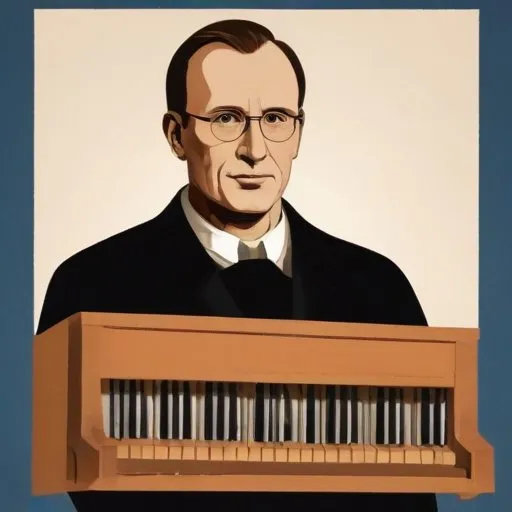
Estonian master of sacred music, renowned for his symphonic and choral works that blended folk elements with Romantic-era grandeur. His compositions continue to inspire and uplift audiences today.
Rudolf Tobias was a visionary Estonian composer and organist, renowned for being the first professional composer from his country. His remarkable contributions to the world of music include a diverse range of works, including piano pieces, string quartets, and the oratorio "Des Jona Sendung" (Jonah's Mission).
Born on May 17, 1873, in Selja, Kina Parish, on the island of Hiiumaa, Tobias received his initial musical training from his father, Johannes Tobias. Under his father's guidance, he began composing at the tender age of 9 and continued to hone his skills throughout his youth.
In 1885, Tobias attended the Haapsalu school, where he studied piano under the tutelage of Catharina von Gernet, a local pianist. After completing his studies, he moved with his parents to Kullamaa, where his father became the parish clerk. It was during this period that Tobias's passion for music continued to grow, and he eventually entered the Tallinn Nicolai High School in 1889.
In 1893, Tobias furthered his musical education at the prestigious Saint Petersburg Conservatory, where he studied organ with Louis Homilius and composition with the renowned Nikolai Rimsky-Korsakov. Upon graduating in 1897, Tobias presented his cantata "Johannes Damascenus" as his graduate work, showcasing his exceptional talent and dedication to his craft.
After completing his studies, Tobias worked as an organist and choir conductor at the Saint Petersburg Estonian St. Johns Church from 1898 to 1904. During this period, he not only performed his own compositions but also began to establish himself as a prominent figure in the Estonian music scene.
In 1904, Tobias relocated to Tartu, where he worked as a music teacher and continued to pursue his passion for music. He actively participated in organizing concerts, performing as a pianist, conductor, and organist, and collaborated with his contemporaries, including Aleksander Läte, to stage performances of oratorios.
Tobias's legacy extends far beyond his own compositions. He played a pivotal role in shaping the Estonian music landscape, inspiring future generations of composers and musicians. His contributions continue to resonate with audiences today, making him an iconic figure in the world of classical music.
Rudolf Tobias's remarkable life and career serve as a testament to his dedication to music and his country. His groundbreaking contributions continue to inspire and delight audiences, cementing his place as one of Estonia's most beloved and respected composers.
Born in 1804
A Russian composer who is often considered the father of Russian classical music, known for his operas and orchestral works that blended Russian folk melodies with Western classical music traditions.
Born in 1811
A virtuosic pianist and composer who revolutionized classical music with his technically demanding and emotionally expressive works, blending Hungarian folk influences with Romantic-era drama.
Born in 1813
A revolutionary composer who transformed opera with his epic, mythological works, creating a new era of musical storytelling. His iconic operas, such as "Der Ring des Nibelungen," continue to captivate audiences worldwide.
Born in 1813
A renowned composer of iconic operas like La Traviata and Aida, known for his masterful blending of drama and music. His works continue to captivate audiences worldwide.
Born in 1841
A Czech composer and academic who blended folk influences with classical music, creating iconic works like the "New World Symphony".
Born in 1840
A renowned Russian composer and educator, he is best known for his iconic and beloved ballets, such as Swan Lake and The Nutcracker, which continue to enchant audiences worldwide.
Born in 1833
A renowned pianist and composer, he crafted complex, expressive works that blended traditional and innovative techniques, leaving an indelible mark on classical music.
Born in 1810
A renowned Romantic-era composer and influential music critic, known for his expressive and emotionally charged works, including symphonies, piano music, and art songs.
