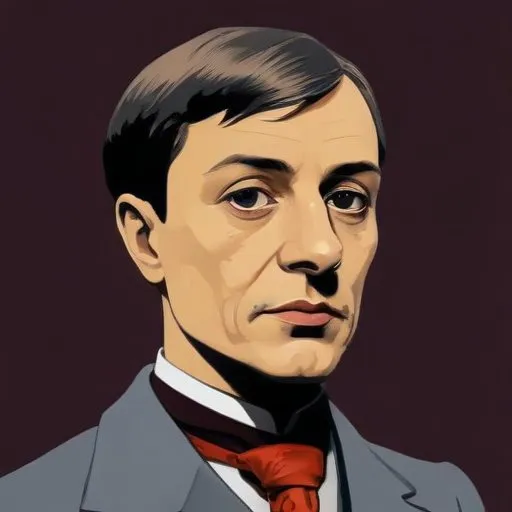
Alfred Kubin: The Visionary of Symbolism and Expressionism
A Dark and Whimsical World
Alfred Kubin, an Austrian printmaker, illustrator, and writer, is renowned for his eerie and fantastical artworks that transport viewers to a realm of Symbolism and Expressionism. His unique style, characterized by macabre and mystical themes, has made him a pioneer in the world of art, leaving an indelible mark on the modern art movement.
Early Life and Inspirations
Born on April 10, 1877, in Leitmeritz, Austro-Hungarian Empire (now Litomerice, Czech Republic), Kubin's early life was marked by turmoil and instability. He was apprenticed to landscape photographer Alois Beer from 1892 to 1896, but his true artistic journey began in 1898, when he discovered the works of
Odilon Redon,
Edvard Munch,
James Ensor, Henry de Groux, and
Félicien Rops. The prints of Max Klinger, in particular, had a profound impact on his artistic style, inspiring him to dedicate his life to creating similar works.
The Artistic Journey
Kubin's artistic style evolved significantly during his early years, as he experimented with various techniques, including aquatint, ink, and wash drawings. His works during this period featured fantastical and often macabre subjects, showcasing his fascination with the human psyche and the mysteries of life. In 1911, he became associated with the Blaue Reiter group, a collective of avant-garde artists, and exhibited with them in the Galerie Der Sturm in Berlin in 1913.
A Legacy of Symbolism and Expressionism
Kubin's artistic contributions are a testament to his innovative spirit and creative genius. He is celebrated for his dark, spectral, and symbolic fantasies, often assembled into thematic series of drawings. His works continue to inspire artists, writers, and thinkers, offering a glimpse into the human psyche and the mysteries of the universe.
Key Works and Exhibitions
Some of Kubin's notable works include:
- The Dance of Death (1902-1904), a series of aquatint prints that explore the theme of mortality
- The Kingdom of the Dead (1903-1905), a collection of ink and wash drawings that delve into the realm of the unknown
- The Dreaming Realm (1906-1908), a series of watercolors that showcase Kubin's mastery of Symbolism and Expressionism
In addition to his association with the Blaue Reiter group, Kubin's works have been exhibited in various galleries and museums, including the Galerie Der Sturm in Berlin and the Museum of Modern Art in New York.
A Lasting Impact
Alfred Kubin's artistic legacy continues to inspire and influence artists, writers, and thinkers to this day. His unique style, which blended Symbolism and Expressionism, has paved the way for future generations of artists to explore the mysteries of the human psyche and the universe.
In Memoriam
Alfred Kubin passed away on August 20, 1959, but his artistic vision continues to captivate and inspire audiences around the world. His dark, whimsical, and thought-provoking works remain a testament to his boundless creativity and innovative spirit, ensuring that his legacy will endure for generations to come.
FAQ
What was Alfred Kubins contribution to Austrian literature?
Alfred Kubin was a prominent Austrian writer and illustrator, known for his dark, expressionist works, which explored the human psyche and the mysteries of life and death.
How did Alfred Kubins experiences influence his writing?
Alfred Kubins experiences, including his time in the Austro-Hungarian army and his struggles with mental health, influenced his writing, as he often explored themes of anxiety, fear, and the unknown.
What was Alfred Kubins relationship with the Symbolist movement?
Alfred Kubin was associated with the Symbolist movement, which emphasized the use of symbols and metaphors to convey complex emotions and ideas, and his work reflects this influence.
What were Alfred Kubins contributions to the development of Austrian art?
Alfred Kubin made significant contributions to the development of Austrian art, as his unique illustrative style and dark, imaginative storytelling helped to shape the countrys literary and artistic landscape.
How did Alfred Kubins Austrian heritage influence his work?
Alfred Kubins Austrian heritage had a significant impact on his work, as he was influenced by the countrys rich cultural traditions, including its literature, art, and music.