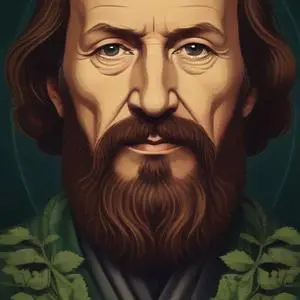
Alfred, Lord Tennyson: The Poet Laureate of Victorian England
A Master of Words and Symbolism
Alfred, Lord Tennyson is renowned for his majestic poetry, which captured the essence of Victorian England and continues to inspire generations. As the Poet Laureate during much of
Queen Victoria's reign, Tennyson's works are a testament to his mastery of language, symbolism, and emotional depth.
Early Life and Education
Born on August 6, 1809, in Somersby, Lincolnshire, England, Tennyson was the fourth of twelve children to Reverend George Tennyson and Elizabeth Fytche. He developed a passion for poetry from an early age, and his early works were heavily influenced by his love for classical mythology and medievalism.
Rise to Prominence
Tennyson's literary career took off when he was awarded the Chancellor's Gold Medal at Cambridge in 1829 for his poem "Timbuktu." This recognition led to the publication of his first solo collection, "Poems, Chiefly Lyrical," in 1830, which included some of his most celebrated poems, such as "Claribel" and "Mariana."
Major Works and Contributions
Tennyson's poetry is characterized by its vivid imagery, rich symbolism, and exploration of themes such as love, loss, and the human condition. Some of his most notable works include:
- "In Memoriam A.H.H.," a tribute to his friend Arthur Hallam, which showcases his mastery of blank verse and explores the complexities of grief and mourning.
- "Idylls of the King," a series of poems that reimagines the legend of King Arthur and the Knights of the Round Table.
- "Ulysses," a poem that explores the themes of adventure, identity, and the search for meaning.
- "The Charge of the Light Brigade," a poem that commemorates the ill-fated Charge of the Light Brigade during the Battle of Balaclava in the Crimean War.
Philosophical Contributions and Beliefs
Tennyson's poetry often grappled with the complexities of human existence, exploring themes such as the nature of reality, the power of love, and the search for meaning. His works often reflected his own introspective nature and his struggles with faith and doubt.
Influence on Modern Society
Tennyson's poetry has had a profound impact on modern literature and culture. His works have influenced generations of writers, poets, and artists, and his phrases have become an integral part of the English language.
Personal Milestones and Key Life Events
Tennyson's life was marked by both personal triumphs and tragedies. He married Emily Sellwood in 1850, and they had two sons together. He was also known for his close friendships with other prominent writers and intellectuals of his time, including
Charles Dickens and
Thomas Carlyle.
Legacy and Historical Context
Tennyson's poetry provides a unique window into the social, cultural, and intellectual landscape of Victorian England. His works reflect the era's fascination with classical mythology, medievalism, and the Romantic movement, and offer a glimpse into the lives and concerns of the era's aristocracy.
Quotes and Memorable Sayings
Tennyson's poetry is filled with memorable phrases and quotable lines that have become an integral part of the English language. Some of his most famous quotes include:
- "'Tis better to have loved and lost than never to have loved at all."
- "Theirs not to reason why, theirs but to do and die."
- "Knowledge comes, but wisdom lingers."
Awards and Honors
Tennyson's contributions to literature were recognized during his lifetime. He was appointed Poet Laureate in 1850 and was elevated to the peerage in 1884, becoming Baron Tennyson of Freshwater and Freshwater East.
Trivia and Fun Facts
* Tennyson's poetry was often criticized for being overly sentimental, but he remained unapologetic about his emotional approach to his work.
* He was known for his love of nature and the outdoors, and often drew inspiration from the landscapes of England and Scotland.
* Tennyson's poetry has been translated into numerous languages, including French, German, Italian, and Spanish.
Conclusion
Alfred, Lord Tennyson's poetry continues to captivate readers and inspire writers to this day. His mastery of language, symbolism, and emotional depth has left an indelible mark on literature, and his works remain a testament to the power of poetry to capture the essence of the human experience.
FAQ
What were Alfred, Lord Tennysons most famous poems?
Alfred, Lord Tennyson is best known for his poems In Memoriam A.H.H., The Charge of the Light Brigade, and Idylls of the King, which are considered some of the greatest works of Victorian poetry.
What was Alfred, Lord Tennysons role as Poet Laureate?
Tennyson served as Poet Laureate of the United Kingdom from 1850 until his death in 1892, using his position to promote literature and poetry.
What was Alfred, Lord Tennysons relationship like with Queen Victoria?
Tennyson was a favorite of Queen Victoria, who appointed him Poet Laureate, and he wrote several poems in her honor, including The Ode Sung at the Opening of the International Exhibition.
What were Alfred, Lord Tennysons views on literature and poetry?
Tennyson believed in the power of literature to shape national identity and promote moral values, and he saw poetry as a way to explore the human condition.
What was Alfred, Lord Tennysons legacy in English literature?
Alfred, Lord Tennyson is remembered as one of the greatest poets of the Victorian era, and his works continue to be studied and celebrated for their beauty, depth, and emotional power.